
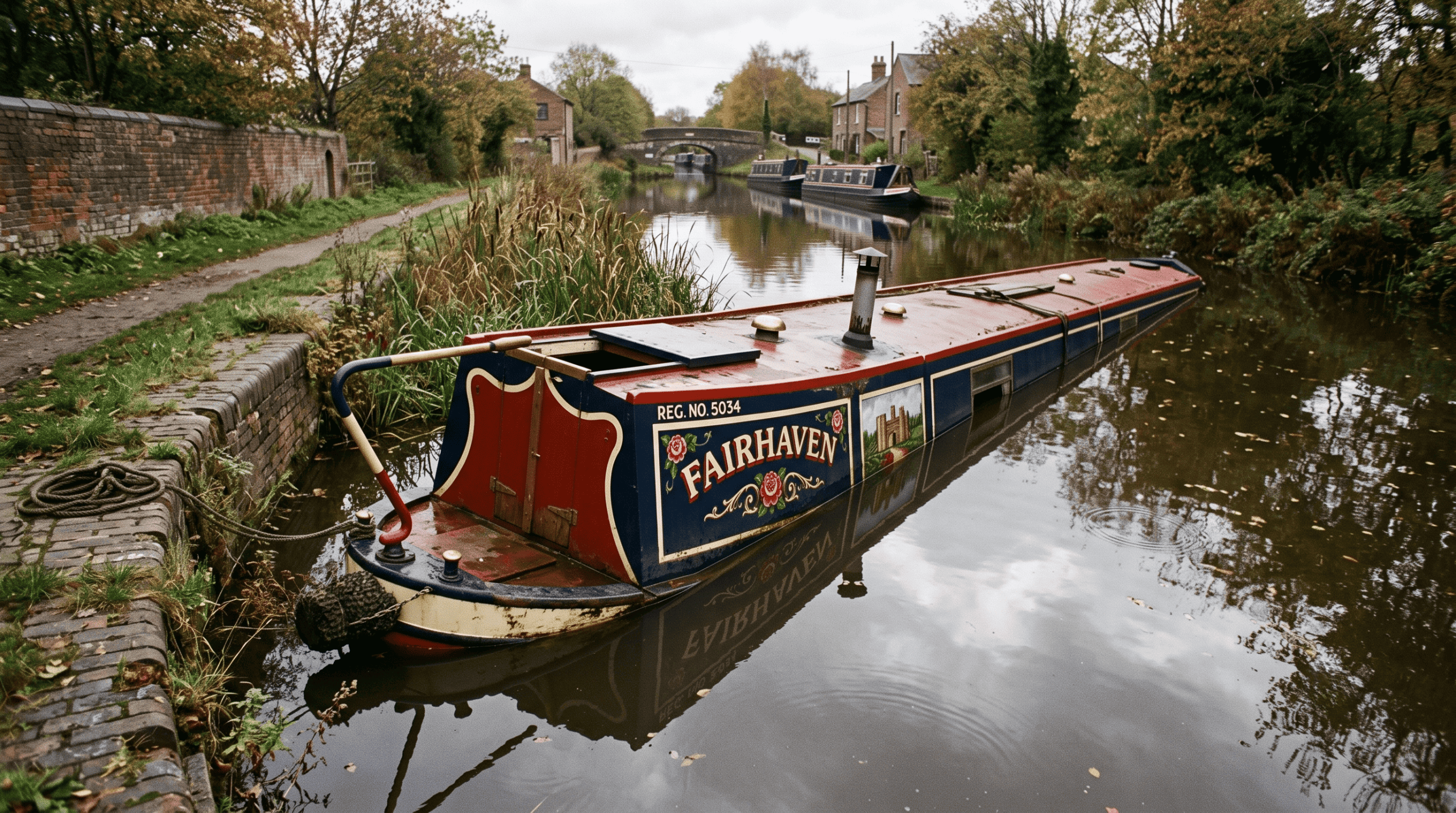



If you’ve been on the canal Facebook groups lately, you’ve probably seen the worrying images of narrowboats sitting on the bottom of the cut. There has even been a widely shared news investigation by the Hackney Gazette looking into why so many London narrowboats are suddenly sinking.
While heavy rain and failed bilge pumps are often to blame, a terrifying number of these sinkings trace back to the stern—specifically, a fundamental misunderstanding of how a traditional stern gland actually works.
There is a persistent and dangerous myth that the stern gland greaser is what keeps the canal water out of your boat.
It isn’t.
If your stern gland is leaking and you try to stop the water by simply pumping more grease into it, you are using a soft blob of grease to hold back the pressure of the canal water. Eventually, the water pressure pushes that grease right out, the water pours in, your bilge pump gets overwhelmed (or the battery dies), and the boat goes down.
Here is exactly how your stern gland works, and the correct way to maintain it.
The Myth vs. The Reality: What Actually Forms the Seal?
Your stern gland is the assembly where the propeller shaft exits the hull of the boat. It has to allow a metal shaft to spin at hundreds of RPMs, while simultaneously keeping the canal out.
The true watertight seal is created by packing rope—lengths of specialised square rope compressed tightly around your propeller shaft inside the stuffing box.
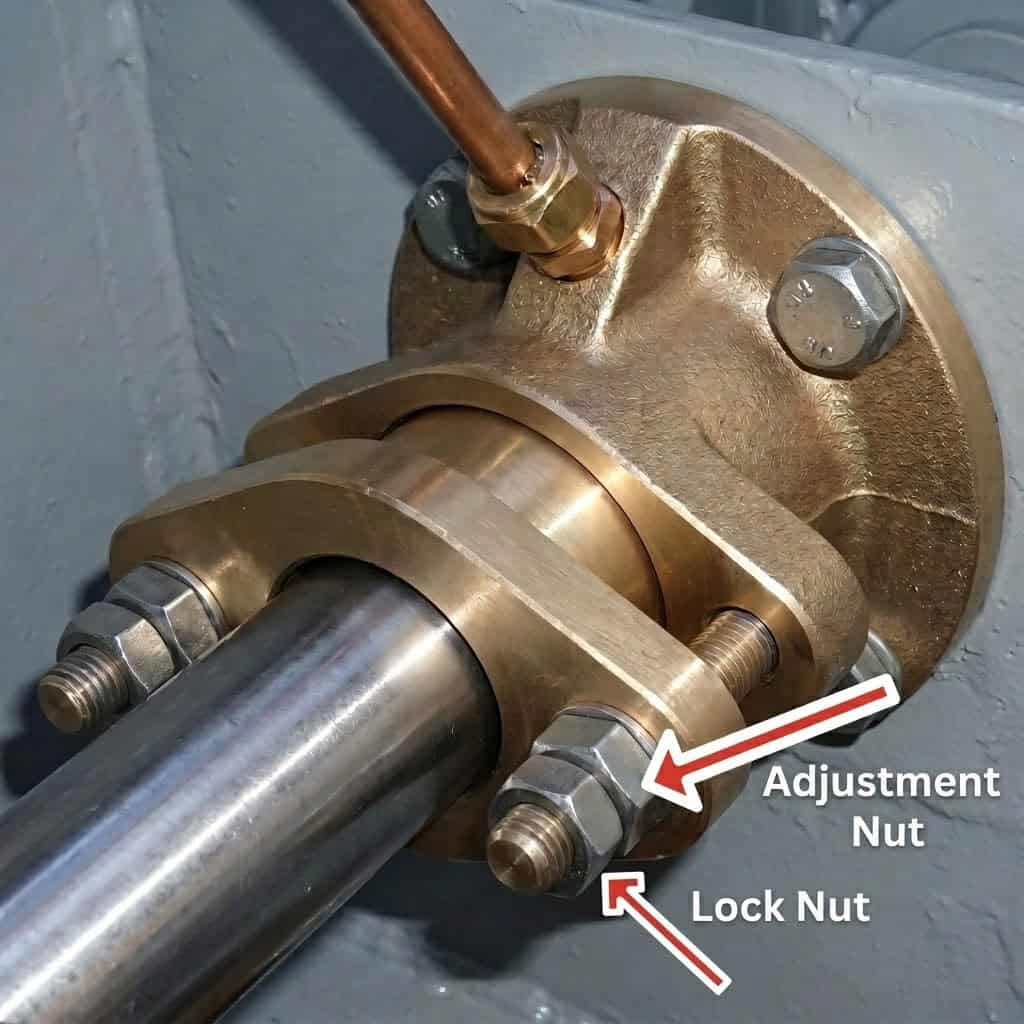
When you tighten the adjustment nuts on your stern gland, a metal plate (the flange, or pusher) squashes that rope tightly against the shaft. It is this mechanical compression that forms the barrier.
So what is the grease for?
Lubrication. Because the packing rope is squeezed so tightly against a spinning steel shaft, the friction generates immense heat. The grease is simply there to stop the rope from burning up and wearing a groove into your prop shaft. It is not a structural seal.
How to Stop a Dripping Stern Gland (The Right Way)
It is normal for a traditional stern gland to drip very slightly (about one drop per minute) while the engine is running and in gear. However, when you are stationary with the engine off, the gland should be practically dry.
If you have a steady drip while moored up, you need to adjust the gland to compress the rope.
1. Loosen the Lock Nuts:
Identify the two sets of nuts.
Look at the threaded studs on either side of the propeller shaft. You will usually see two nuts on each stud. The outer nuts are the lock nuts. Use a spanner to loosen these outer nuts and wind them away from the inner adjusting nuts to give yourself room to work.
2. Tighten the Adjusting Nuts:
⚠️Crucial: Work evenly to avoid jamming⚠️
Now, take your spanner to the inner adjusting nuts. Do not tighten one side all the way and then the other. You must turn the nuts exactly a quarter-turn at a time, alternating sides (left, right, left, right). This ensures the flange moves in perfectly parallel to the shaft. If you tighten one side too much, the flange will jam diagonally, fail to compress the rope evenly, and likely damage the thread.
3. Check the Drip:
Continue the alternating quarter-turns until the dripping stops. You do not want to overtighten it—crushing the rope too hard will cause it to burn the next time you run the engine.
4. Secure the Lock Nuts:
Once the drip has stopped, hold the inner adjusting nut in place with one spanner, and tighten the outer lock nut firmly against it with your other spanner. This prevents engine vibration from undoing your adjustment.
5. Apply grease. Turn the stern gland greaser handle a couple of times to grease the newly tightened rope. This should also be done every time before you start cruising.
How to Refill Your Stern Greaser (Without Trapping Air)
Eventually, the brass greaser cylinder will run empty. When refilling it, the goal is to get as much grease in—and as little air trapped—as possible.
Method 1: The “Center-Hole” Tub Method (Fastest & Cleanest)
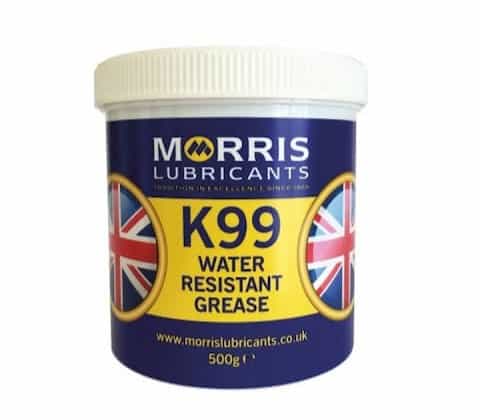
If you buy your stern tube grease in a dedicated tub with a floating plastic plate and a centre hole, refilling is a breeze:
- Press the open end of the barrel firmly down against the hole in the plastic disc inside the grease tub.
- Slowly unwind the greaser handle as you push the barrel downward into the tub.
- The downward pressure forces fresh grease up into the cylinder, while unwinding the handle at the same pace creates room for the grease to fill the barrel cleanly without drawing in air pockets.
- Once full, wipe the base, screw the barrel back onto the body, and you’re good to go.
Method 2: The Manual Method (Butter Knife or Spoon)
If you’re filling from a standard tub without a centre hole, you’ll need a flat butter knife or a small spoon:
Unwind and fill: Unwind the handle a bit, add grease, repeat until the barrel is full. Working in stages helps you push the grease down and minimise empty pockets.
Pack the sides first: Scoop grease onto your knife or spoon and press it firmly into the bottom and along the inner walls of the barrel, rather than just dropping a large dollop right in the centre
While it’s ideal to minimise air bubbles, don’t worry if a few get trapped—it is virtually impossible to avoid 100% when filling manually, and it won’t cause any technical problems. If you hit a small air pocket while greasing, simply give the greaser handle a few extra turns until you feel solid resistance again.
When Do I Need to Repack the Gland?
As you regularly tighten the adjusting nuts over the months and years, the metal flange will move further and further into the stuffing box.
Eventually, the flange will “bottom out” (metal touches metal), and it won’t be able to compress the rope any further. If your flange is bottomed out and the gland is still dripping, your rope is completely worn away. You must repack the gland with fresh rope.
Best Practice: The safest time to replace your stern gland packing is when your boat is out of the water for its regular hull blacking (usually every 2-3 years). We highly recommend changing the rope packing during blacking regardless of whether it has fully worn away yet or not.
In-Water Repacking: It is possible to repack a stern gland while the boat is in the water, provided you are fast, know exactly what you are doing, and have a reliable bilge pump to handle any incoming water.
Keep the Water Out, and the Warmth In
Now that you know how to keep the canal out of your bilge, how is the rest of your boat faring? At Marine Heating Solutions, our main speciality is keeping you cozy all winter long. Whether your diesel heater needs an annual marine heating service, or you are looking to upgrade your setup with our range of marine heating appliances, we can help.