
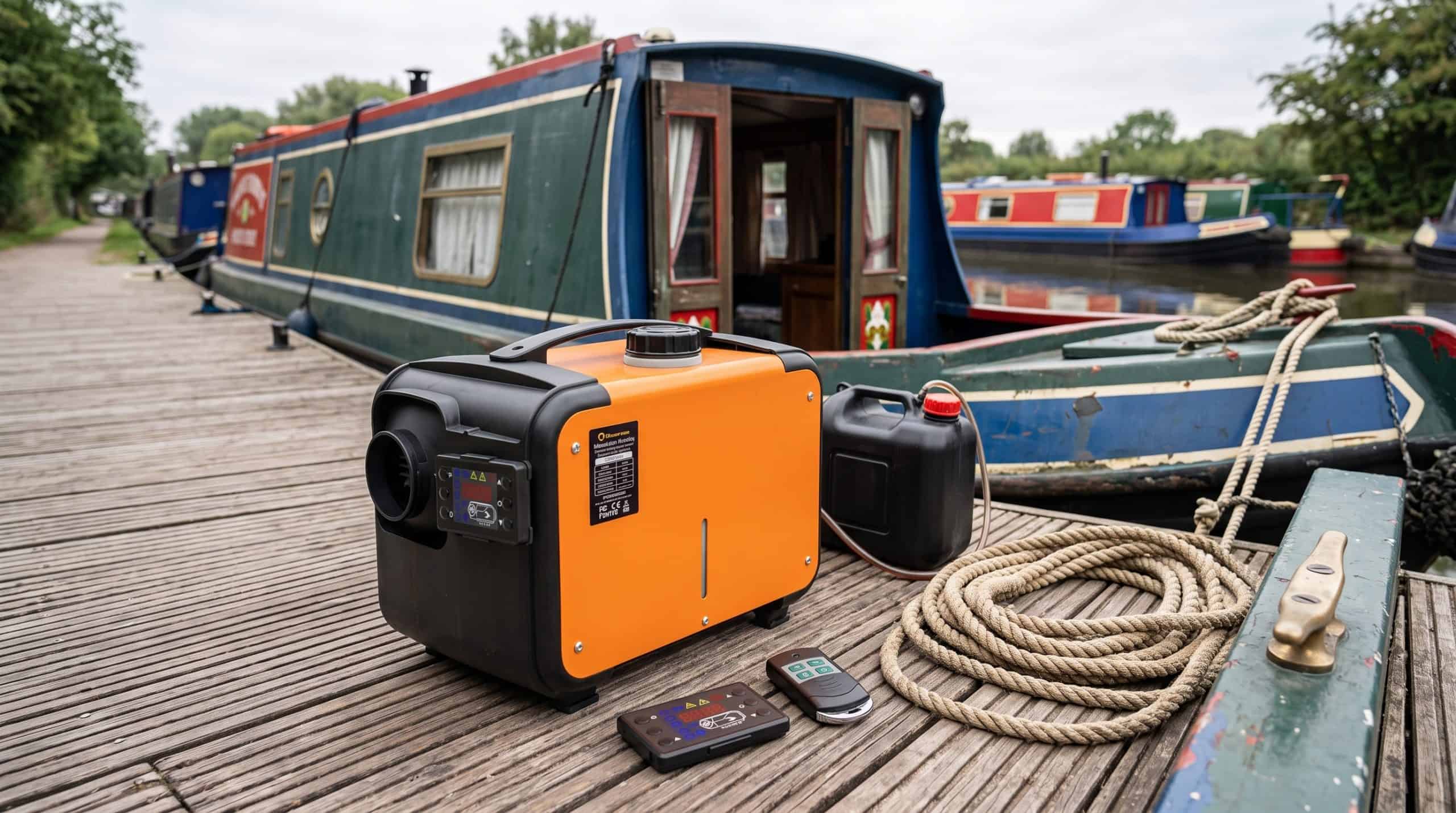

It is easy to understand the temptation. You are browsing eBay or Amazon for a way to keep your narrowboat or cruiser warm this winter, and you spot a complete blown-air heating kit for under £100. Compared to premium marine systems, it looks like an absolute bargain. But as a specialist mobile marine engineer who spends a lot of time ripping out failed, dangerous heating systems, I can tell you exactly what that £80 truly buys you.
Whether you are looking at a no-name import or heavily marketed “budget” brands that are simply rebadged and repackaged from the exact same overseas factories, these units pose severe risks to both your vessel and your life. Here is the unvarnished truth about budget imported heaters from an OFTEC-qualified engineer and BSS Examiner.
The Reality of “Bargain” Boat Heating
Many boaters are shocked to learn that modern budget heaters—even those wrapped in glossy packaging with polished marketing—are virtually identical to the cheapest unbranded units rolling off overseas assembly lines. Certain importers exploit the fact that launching a sleek website today is simple and cheap. By marking up their repackaged units to just below the price of genuine, certified European marine heaters, they create a false sense of legitimacy, leading buyers to believe they are paying for proven safety standards. Do not let a high price tag fool you: underneath that expensive packaging, you are still getting paper-thin castings, unreliable safety sensors, and the same fatal flaws as a cheap bottom-tier import.
When it comes to blown air or hydronic marine heating, the only legitimate manufacturers we trust and install are those rooted in strict European or UK quality control:
- Wallas: The absolute premium choice for marine environments.
- Webasto: The rugged, reliable, industry-standard workhorses.
- Autoterm: A fully certified, European-built option for those seeking value without compromising safety. However, spare parts can have longer lead times, so we only recommend them as a secondary heat source or for weekend/leisure boats.
- Eberspächer: Resting on a legacy reputation, these are now arguably the most expensive yet least reliable premium option. Finding an engineer can be difficult.
Why Budget Diesel Heaters Fail (The Technical Flaws)
I recently kept a standard imported budget heater on a test bench in my workshop. Within a remarkably short period, it demonstrated exactly why we refuse to install them. If you fit one of these to your boat, you can expect:
- Premature Component Failure: Broken fuel pumps and burned-out glow plugs are incredibly common, often within the first days or weeks of operation.
- Rapid Carbon Build-Up: The heat exchangers soot up aggressively due to poor combustion design, leading to clogged sensors and filters.
- Substandard Electrics: The wiring utilises dangerously thin cables, and the waterproofing on external plugs is either entirely non-existent or completely ineffective against marine conditions.
- Fatal Exhaust Flaws: The exhaust walls are paper-thin and, worst of all, frequently fail to be gas-tight. On a boat, a leaking exhaust means fatal carbon monoxide could enter your cabin.
The Ultimate Safety Risk: Fake Sensors
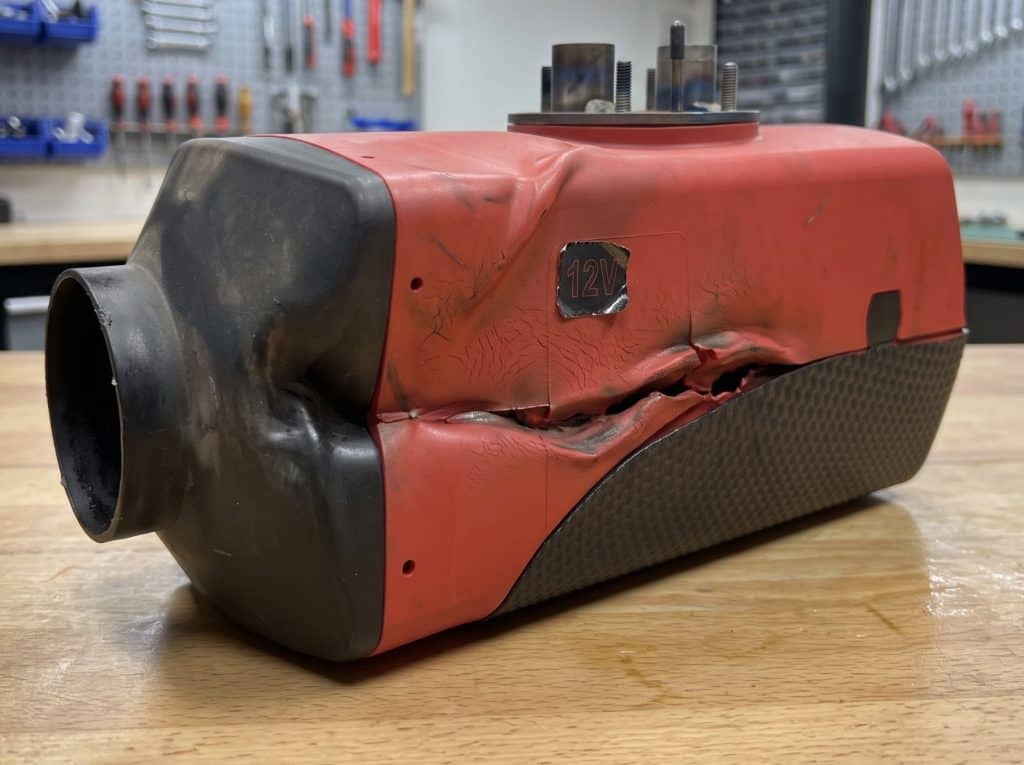
The most terrifying discovery during our bench testing was the safety mechanisms—or lack thereof. On several cheap models, the crucial overheat sensor appeared to be entirely decorative or not responding when needed.
I have witnessed budget heaters that continued to pump fuel and run during a severe overheat event. They kept going until the outer casing physically melted and the exhaust pipe glowed cherry red. Radiating that level of extreme heat next to fuel lines, wiring, and vessel electrics is a catastrophic fire waiting to happen.
Do not let CE or UKCA markings give you a false sense of security. On many uncertified cheap appliances, these safety stamps are easily replicated and entirely meaningless.
The BSS Perspective: Do It Right the First Time
As an authorised Boat Safety Scheme (BSS) Examiner, I see firsthand how cheap heater setups lead straight to failed inspections. Due to the flood of budget imports, the BSS issued an interim diesel heater policy: examiners can currently accept small, unmarked plastic tanks (up to 10 litres) and plastic fuel lines, but only if they are undamaged, leak-free, and securely mounted. Crucially, the BSS warns that this is a temporary grace period that could change at any time.
Where there is zero tolerance, however, is exhaust safety and fire risk. Any soot deposits around exhaust connections, unsecured fuel lines, or heat damage to surrounding structures will trigger an immediate BSS fail. The official BSS guidance itself explicitly advises boat owners to always choose an appliance and fuel system specifically marketed for small craft by a legitimate manufacturer. Saving £500 on a cheap kit vanishes quickly when you are paying for BSS Examiner re-tests, replacement parts, and emergency callouts to make it safe.
Invest in a genuine, certified marine system—such as Webasto, Wallas, Autoterm or Eberspächer. It is not just about passing your BSS inspection; it is about knowing your heating system is safe when you close your eyes at night.
If you want a reliable, fully compliant system fitted by a professional who guarantees a first-time BSS pass, we offer exceptional value on genuine marine hardware.