


Maintaining your vessel’s gas system is a critical safety requirement. Since 2018, Marine Heating Solutions has provided BSS-compliant gas services across the UK inland waterways.
Despite clear regulations, we frequently encounter dangerously outdated equipment. This guide provides the mandatory replacement cycles and technical standards for the 2026 season.
1. The 5-Year Hose Rule (BS EN 16436-1)
LPG hoses degrade due to temperature fluctuations and salt-air exposure.
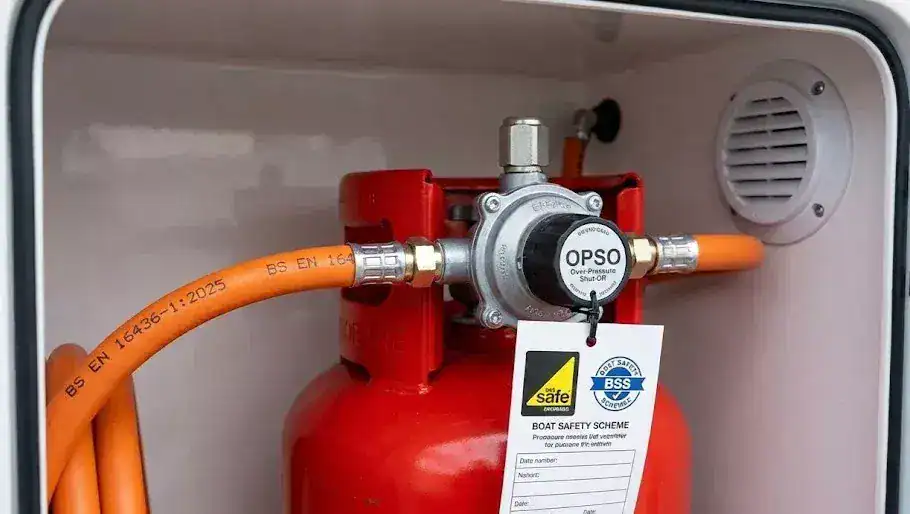
- Replacement Cycle: High-pressure orange hoses must be replaced every 5 years.
- Technical Standard: New hoses should be marked BS EN 16436-1 Class 3 and stamped with the year of manufacture.
- Visual Check: Replace immediately if you see “crazing” (fine cracks), stiffness, or bulging.
2. The 10-Year Regulator Rule & OPSO
The regulator controls the gas pressure from the cylinder to your appliances.
- Replacement Cycle: Regulators must be replaced at least every 10 years.
- OPSO Requirement: Since 2014, all new marine LPG replacements must incorporate an Over-Pressure Shut-Off (OPSO) device. This prevents high-pressure gas from entering your cabin if the regulator fails.
3. Quick Reference: LPG Component Lifespan
| Component | Required Standard | Life Expectancy | Sign of Failure |
| High-Pressure Hose | BS EN 16436-1 | 5 Years | Cracking or drying out / discolouring |
| LPG Regulator | BS EN 16129 | 10 Years | Yellow flames or a gas smell |
| Sealing Washers (if fitted) | High-nitrile rubber | Replace at every bottle change | Flattened or brittle rubber |
4. Professional Installation & BSS Compliance
A “DIY” gas repair is a significant safety risk. For insurance and BSS compliance, all LPG work must be performed by a registered engineer.
- Crimped Connections: Modern standards require factory-swaged assemblies or professional crimping; worm-drive clips are often insufficient.
- Tightness Testing: A full gas leak test must be performed every time a regulator or hose is replaced.
Expert Resource: For detailed gas locker requirements, consult the Gas Safe Register’s Boat Safety Guide or visit our Boat LPG Certificates page.
Comments are closed.