Why Would a Gas Engineer Turn Off Your Gas? What Really Happens When We Find Something Unsafe
Nobody likes finding a “Danger Do Not Use” label on their cooker, or hearing that their boat hasn’t passed its[…]
Read more

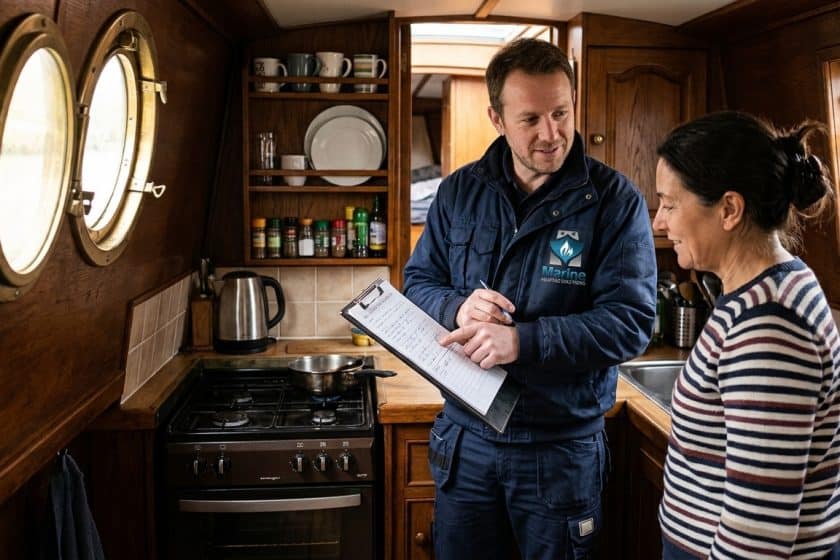
At Marine Heating Solutions we carry out LPG gas safety checks and issue gas safety certificates for narrowboats, widebeams and barges. As Gas Safe registered engineers who specialise in boats, we check the whole gas system, from the cylinders in the gas locker to every appliance, and tell you plainly whether it is safe to use.
A gas safety certificate is valid for 12 months, so we recommend a check once a year. Insurers, marinas and residential moorings may also ask to see one.
Gas on a boat has to cope with things a house never sees: vibration, damp, corrosion and small cabins with limited ventilation. We check everything that keeps your gas safe on the water:

At the end of the check you get a proper report on the condition of your gas installation. It shows:
It’s the same check and the same certificate, whoever it is for.
We don’t work on hire boats or other commercial boats. Our guide to boat gas safety certificates explains more about the check.
If we find a problem, we explain what’s wrong and what needs doing to put it right. If something is dangerous, we are obligated to take measures under the Gas Industry Unsafe Situations Procedure (GIUSP) there and then: our post on why a gas engineer might turn off your gas explains what happens. As we also install and service LPG appliances, we can usually put faults right ourselves.
Gas work on boats needs its own qualifications. We are Gas Safe registered for LPG work on boats, OFTEC certified for diesel and oil appliances, and BSS examiners. We work to BS EN ISO 10239 and the appliance makers’ instructions, and often go further than Gas Safe, OFTEC or BSS require.
A gas safety certificate isn’t the same as a Boat Safety Scheme (BSS) examination, which most boats need every four years to be licensed. As BSS examiners, we carry out those too. For our solid fuel and diesel certificates, see all our boat safety certificates.
Many LPG appliances depend on other systems on board: a 12V supply for ignition and controls, and the plumbing for water heaters and boilers. As we also offer boat plumbing and electrical connections for the appliances we fit, we look at how it all works together, not just the gas.
Tell us where your boat is moored and which gas appliances are on board.
Nobody likes finding a “Danger Do Not Use” label on their cooker, or hearing that their boat hasn’t passed its[…]
Read more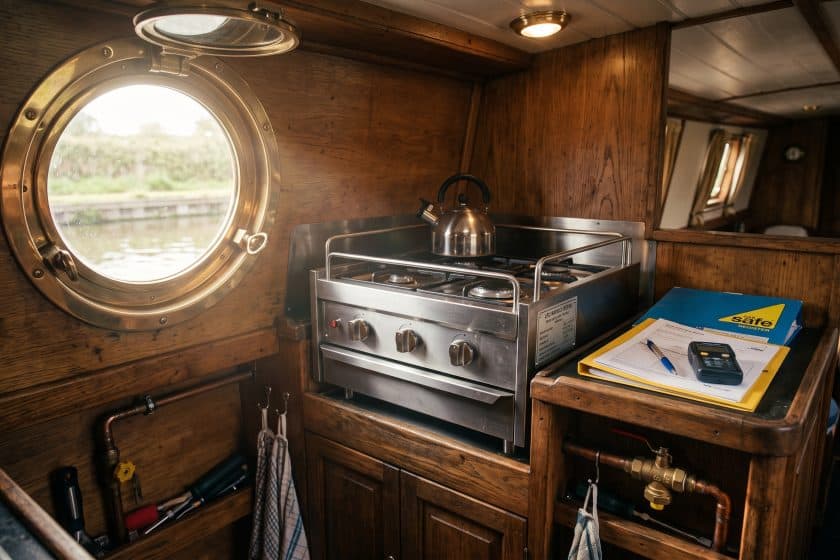
For decades, boat owners, builders, and marine gas engineers turned to familiar brand names like Thetford for galley cookers and[…]
Read more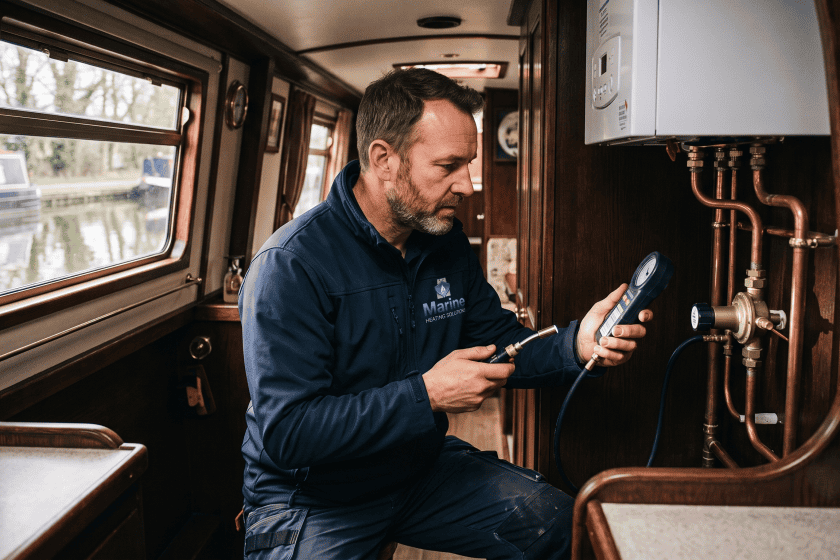
Running a recent Q&A session over on our new Reddit community, r/CanalBoatWorkshopUK, brought up some fantastic conversations. Boat owners asked[…]
Read more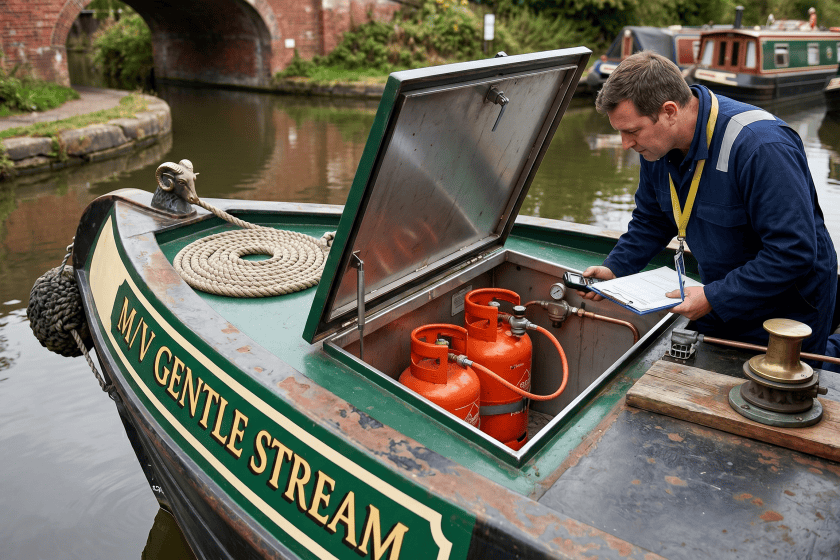
Over almost two decades working on the UK’s inland waterways, I have seen it all. I’ve fixed countless terrifying “DIY”[…]
Read more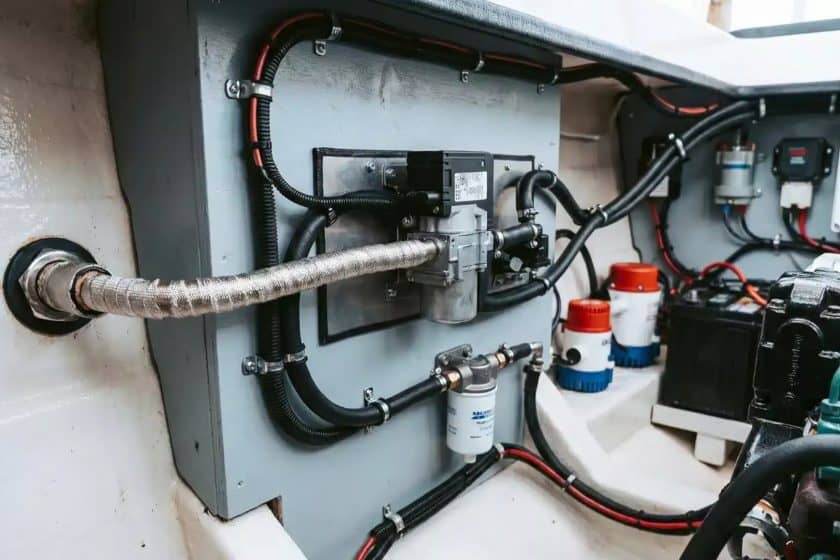
Since August 2018, Marine Heating Solutions has been the UK’s premier specialist for mobile marine engineering. As we move through[…]
Read more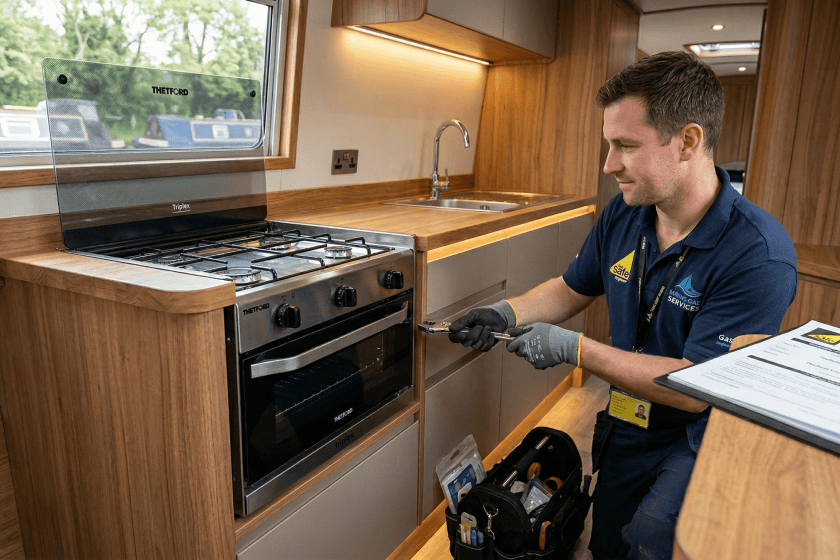
When it comes to outfitting a galley or a compact mobile home, the temptation to “make do” with a standard[…]
Read more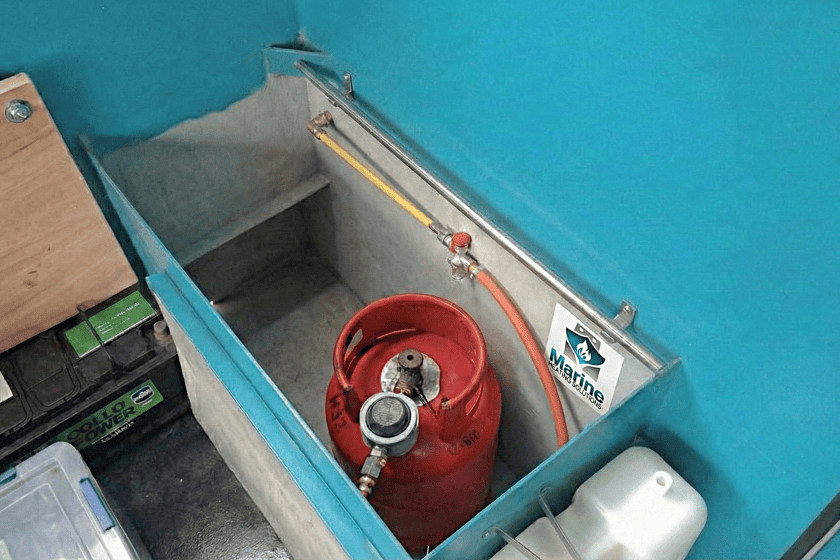
For many boat owners on the UK’s inland waterways, the gas locker is a “set and forget” compartment—until it’s time[…]
Read more
Let’s be honest: nobody buys a boat because they’re excited about “gas compliance.” You bought it for the misty mornings[…]
Read more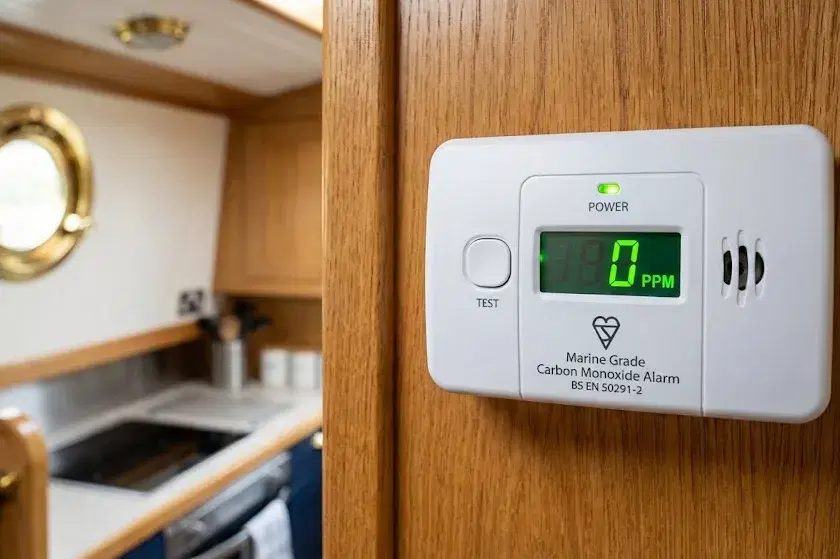
Guarding against the “silent killer” on a narrowboat, canal boat, or barge is built upon three non-negotiable pillars: installing certified[…]
Read more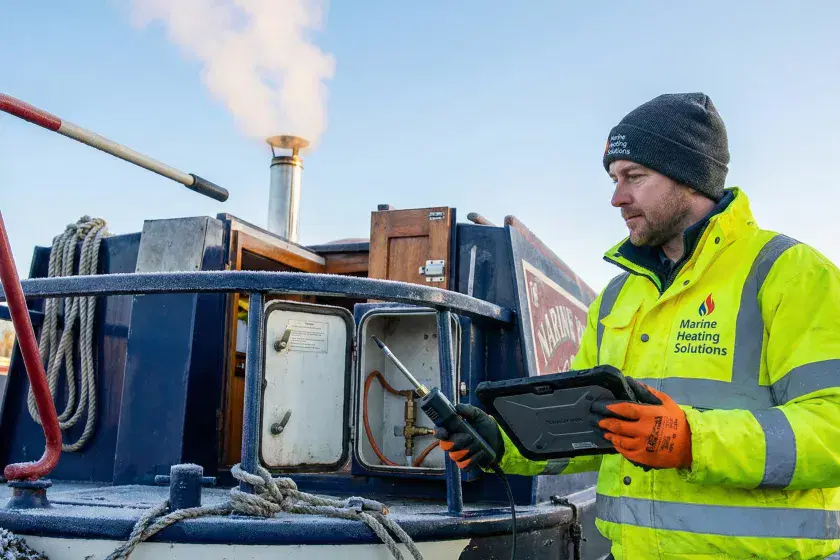
Securing a certified marine professional for your vessel’s LPG system is a critical step for any owner. Unlike a stationary[…]
Read more