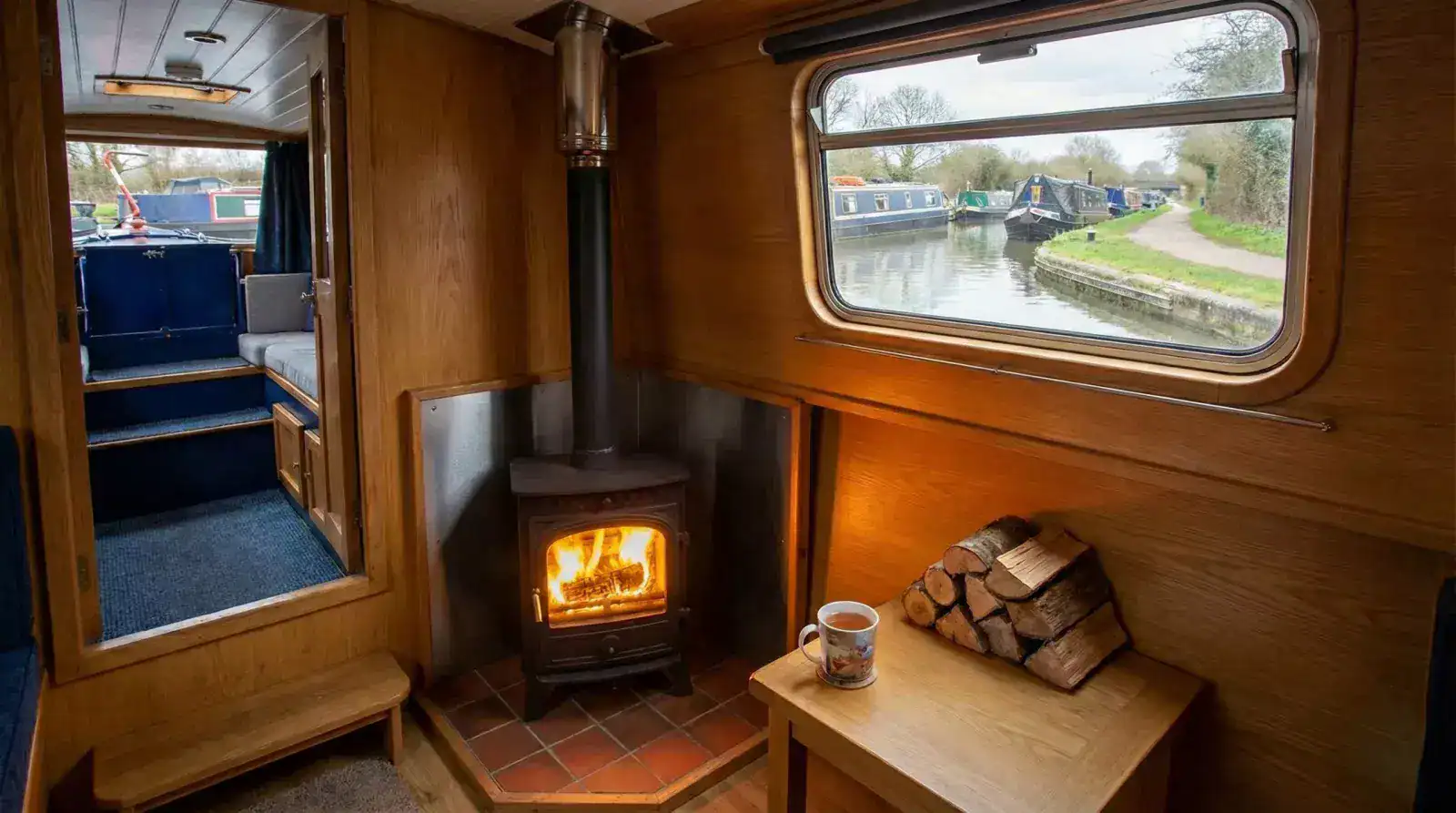
There is nothing quite like the warm, glowing fire from a cast-iron heater to make a narrowboat feel like home. Choosing the right configuration for a wood stove on a boat is a big decision, but it is one that pays off on those chilly canal mornings. It is not just about looks; consequently, it is about finding that perfect balance between style and the practical safety demands of life on the UK’s inland waterways.
Finding Your Perfect Boat Stove
Picking out the ideal heating solution for your narrowboat or barge goes deeper than just finding a design you like. For instance, you need to match the appliance to your specific vessel to guarantee comfort, safety, and efficiency. We follow the safety guidelines set out by the Canal & River Trust to ensure your stove becomes a reliable, welcoming centrepiece.
Matching Heat Output to Your Space
One of the most common mistakes we see is boat owners choosing a stove that is far too powerful for a compact cabin. The heat output, measured in kilowatts (kW), is absolutely critical; if you get it wrong, you will end up with a sweltering environment and waste fuel. For the vast majority of narrowboats, a stove with an output between 3.5kW and 5kW is the recommended range.
Compact Design and Marine-Grade Materials
Space is always at a premium on a boat. That is why our range of solid fuel appliances features compact designs with a small footprint. The best units are built not just for heat, but for the rigours of a moving environment, using robust cast iron or heavy-gauge steel.
Key factors for a marine-ready unit include:
- Robust Construction: Heavy-duty bodies retain and radiate heat effectively.
- Secure Latches: A reliable door latching mechanism is essential to prevent the door from swinging open during transit.
- Safety Clearance: Specialised designs allow for smaller clearances to combustible materials when used with heat shielding.
Our Safe and Compliant Installation Service
Choosing the stove is only the first step; a professional installation is what truly brings warmth and comfort aboard. When it comes to fitting a wood stove on a boat, a safe installation is a necessity. We provide a fully certified service that meets the technical standards required for marine environments.
Our Meticulous Installation Process
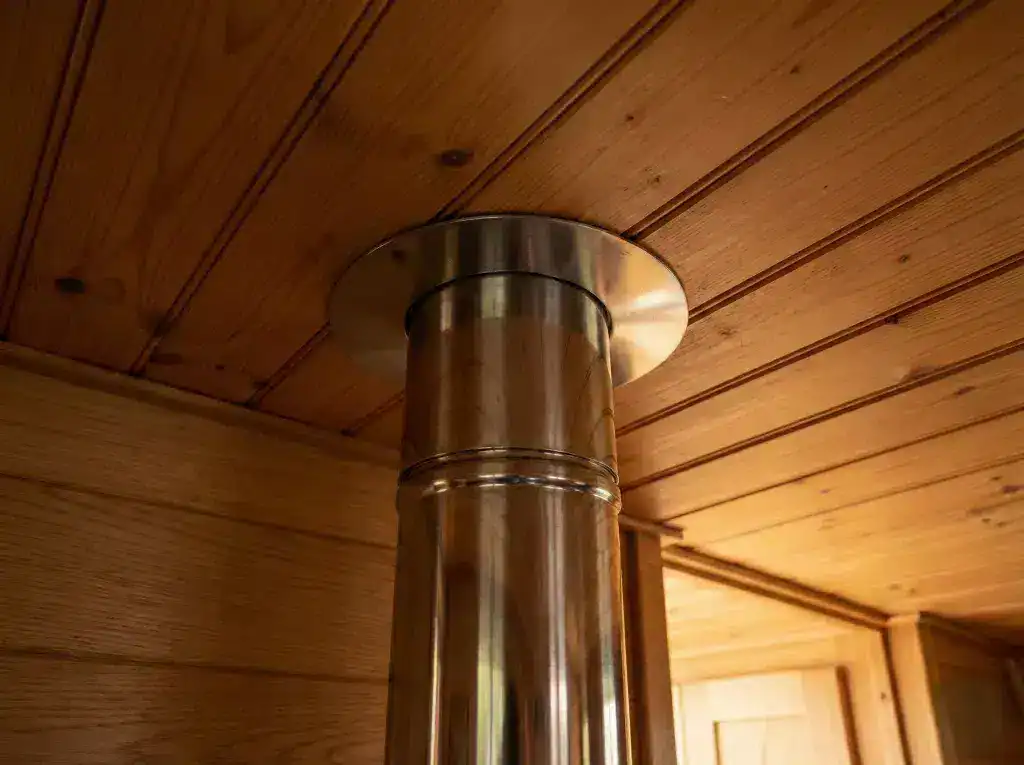
We follow a process that leaves absolutely no room for error. Every job begins with establishing a safe foundation, including a compliant hearth made from non-combustible materials. The flue system is the most critical component, starting with a single-skin pipe from the unit and transitioning to a twin-wall insulated flue before passing through the cabin roof.
Essential Safety Features Handled by Experts
Beyond the physical fitting, our service covers all the safety elements required for life afloat. For instance, a critical part of any setup is a reliable marine carbon monoxide detector. We ensure your hardware is positioned correctly as per the Boat Safety Scheme fire safety guidelines to give you the earliest possible warning.
Our installation guarantees include:
- Certified CO Alarms: Positioned for maximum effectiveness.
- Compliant Flue Systems: Ensuring all exhaust gases are vented safely outside.
- Secure Stove Anchoring: Bolting the unit to the hearth to prevent movement while cruising.
Navigating 2026 Emissions Regulations
The stoves in our collection are hand-picked for efficient designs that meet today’s strict emissions guidelines. Since January 2022, all new stoves must meet Ecodesign standards to lower particulate matter. If you operate in a Smoke Control Area, you must use an exempt appliance and follow Government guidance on wood burning.
Key Safety and Compliance Features: Our Service Guarantees
| Feature | Why It Is Crucial | How Our Service Delivers |
| BSS Compliance | Essential for your boat licence, insurance, and safety. | We follow all current BSS recommendations to ensure your installation meets inspection standards. |
| Correct Flue System | Prevents dangerous fumes and ensures efficient draw. | We only install correctly specified twin-wall insulated flue systems. |
| Appropriate Hearth | Protects the boat’s structure from intense heat. | We construct hearths using specified non-combustible materials with correct air gaps. |
| Fixed Ventilation | Stoves need oxygen to burn safely and prevent CO build-up. | We calculate and install ventilation to match your stove’s kW output. |
Fueling and Maintenance for a Safe Burn
A high-quality stove is only half the story; to get the best out of your investment, you must be particular about the fuel you burn. Poor quality, damp wood creates smoke and creosote, which can clog your flue and create a serious fire hazard.
Choosing the Best Fuel for Clean Heat
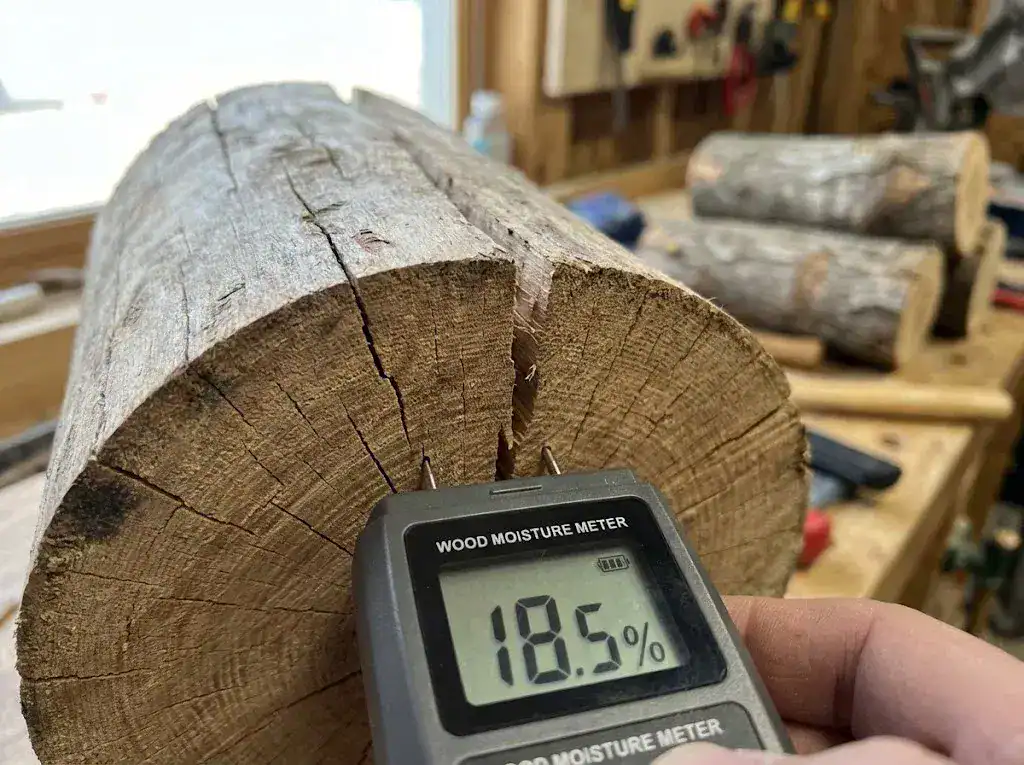
For a clean, efficient burn, you cannot beat properly seasoned hardwood with a moisture content below 20%. Many units are also designed to burn approved smokeless fuels, which are ideal for a steady, long-lasting heat overnight.
- Seasoned Hardwoods: Ash, oak, and beech provide high heat output with minimal smoke.
- Approved Smokeless Coals: Manufactured fuels designed for low smoke; perfect for marinas.
- Heat Logs: Made from compressed sawdust, these are an excellent, dry alternative.
Ready to Upgrade Your Boat Heating?
Don’t leave your safety to chance. Our team of certified professionals understands the unique demands of heating a vessel on the UK’s inland waterways.