

A dependable heating setup is fundamental to making a narrowboat or barge a proper home, especially during the challenging British winter. Unlike a traditional house, a vessel is a compact, moving environment subject to unique challenges like persistent dampness and restricted space. Consequently, domestic heating solutions are both unsuitable and unsafe for marine use. To ensure long-term comfort and safety, every installation must meet strict marine safety regulations and be meticulously fitted by certified specialists who understand the demands of life on the water.
Why Professional Marine Installation is Essential
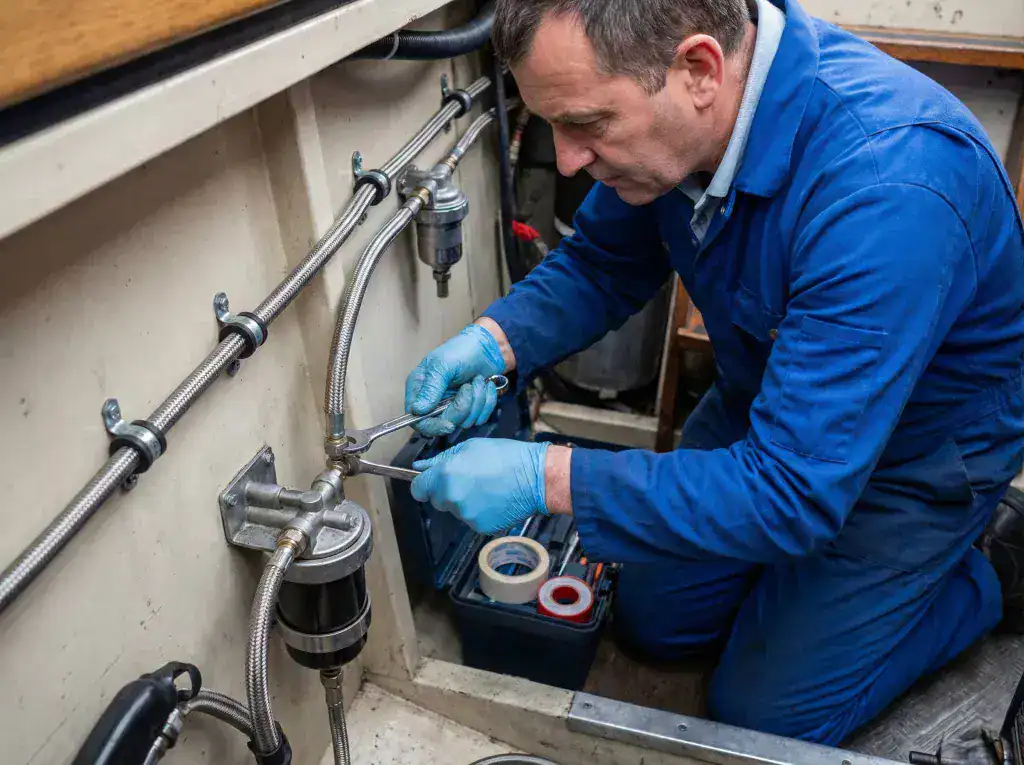
Life on the UK’s inland waterways offers unparalleled freedom, but the climate demands a system you can trust. Professional installation drastically reduces high-stakes risks such as carbon monoxide leaks and fuel-line failures. By choosing a specialist service, you ensure that every electrical connection handles the damp environment and that every fuel line is securely routed and fastened to handle the boat’s constant movement.
Diesel Central Heating: The Liveaboard Standard
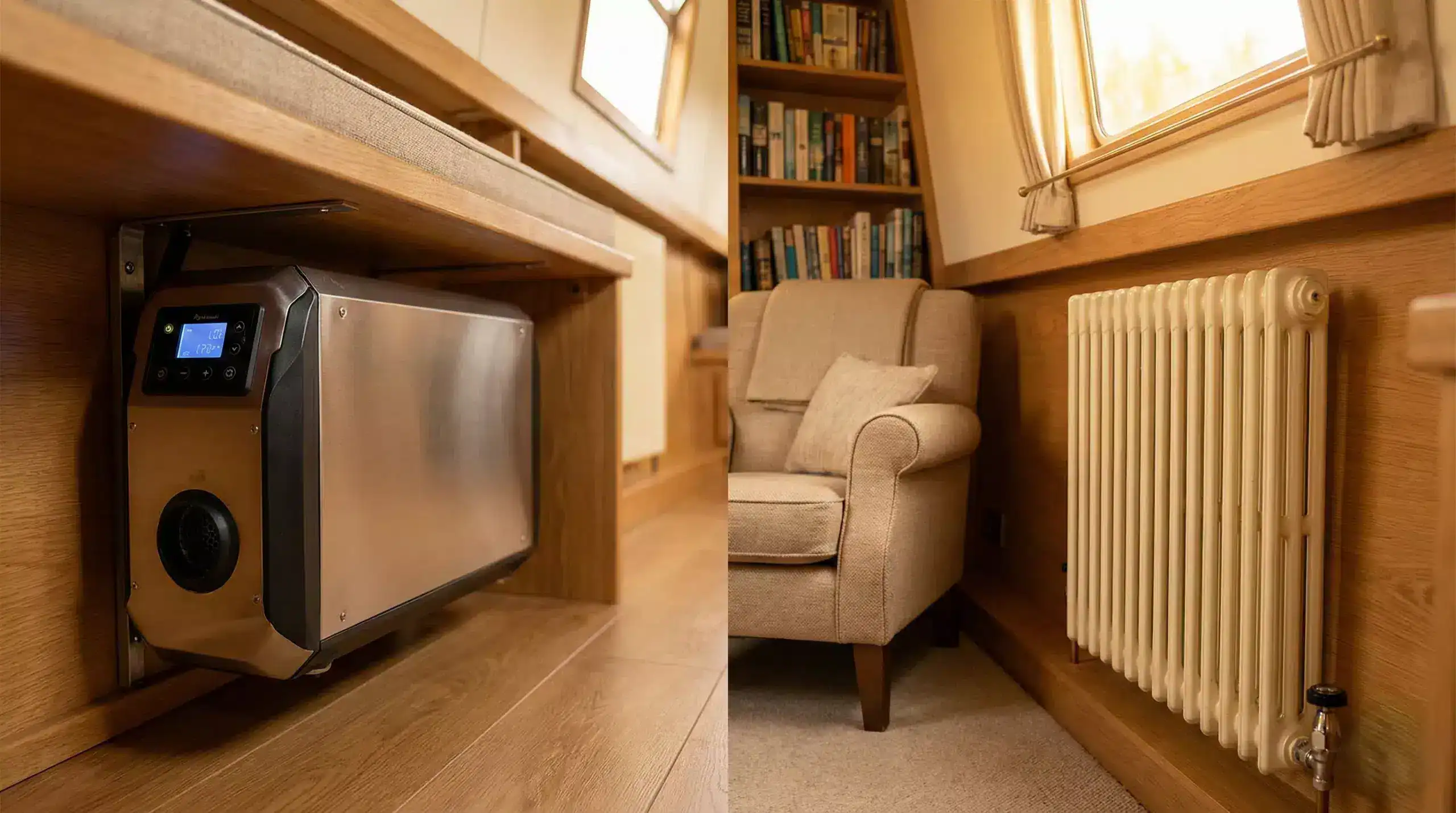
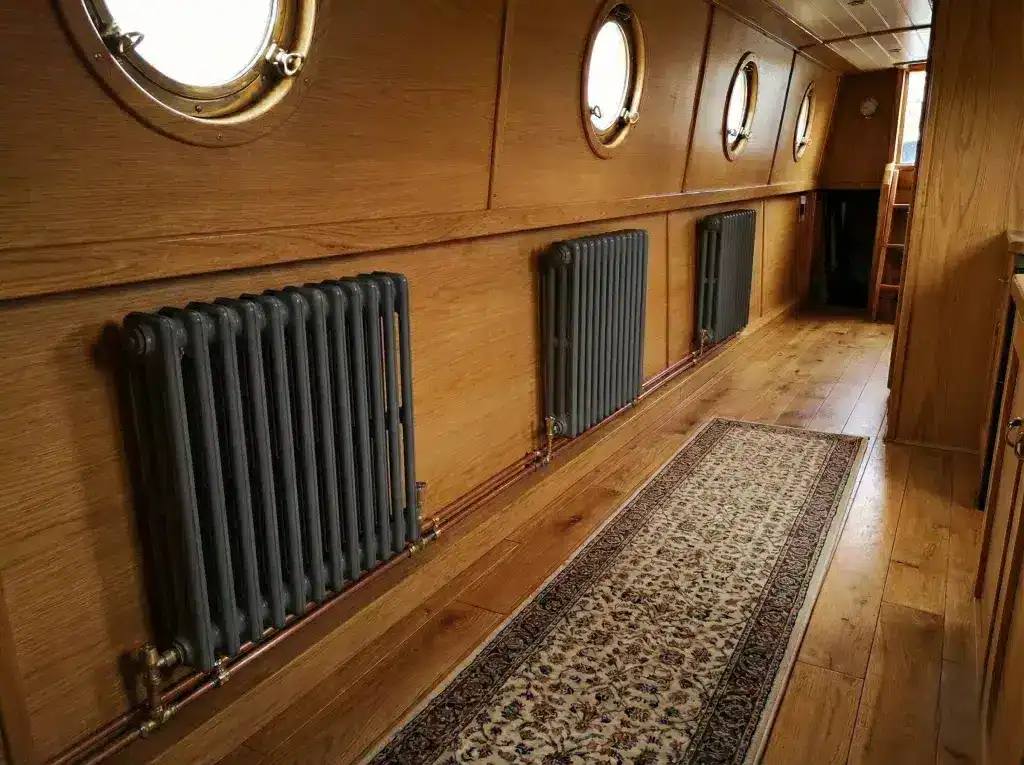
For those who live on their vessels year-round, our diesel liquid heater installations are often considered the gold standard. These systems work by heating a liquid coolant that is pumped through a network of radiators or towel rails, providing even, programmable warmth throughout the entire boat.
- Whole-Boat Warmth: Provides consistent temperatures in every cabin, from the bow to the stern.
- Hot Water Integration: These systems can be connected to your water calorifier, providing domestic hot water for showers and sinks without running the engine.
- Fuel Efficiency: Modern units are designed to sip fuel directly from your main tank, offering incredible convenience for long-term cruising.
Diesel Blown Air Heating: Instant Response
If you require quick heat to take the chill off a cabin after a day on the towpath, diesel air heaters are an excellent choice. These units draw in cool air, pass it through a high-efficiency heat exchanger, and circulate warm air via a system of ducts and vents.
- Rapid Warming: Ideal for weekenders or those who want an instant boost of heat.
- Compact Design: These small units can be installed in lockers or engine bays, saving valuable cabin space.
- Low Power Draw: Once the core temperature is reached, they operate at a significantly reduced power level to preserve battery life.
Solid Fuel Solutions: Tradition and Dry Heat
Many boaters prefer the radiant, comforting glow of a traditional stove. Beyond the atmosphere, a solid fuel stove provides a powerful “dry heat” that is exceptionally effective at fighting condensation and protecting your boat’s interior from mould.
Every installation we perform is strictly checked against the Boat Safety Scheme (BSS) requirements, ensuring secure mounting and compliant flue systems. You can read more about the requirements for boat solid fuel safety certificates to understand the technical standards we uphold.
Calculating Your Heating Requirements
Choosing a system with the correct heat output (kW) is vital for efficiency. An underpowered system will struggle in deep winter, while an oversized one will waste fuel and lead to soot build-up.
| Vessel Length | Recommended Output | Recommended Outlets |
| Sub 30ft | 2kW | 2 Outlets |
| 30ft – 40ft | 4kW | 4 Outlets |
| 40ft – 50ft | 5kW – 6kW | 5-6 Outlets |
| 50ft+ | 8kW+ | 8+ Outlets |
Maintenance: Ensuring Long-Term Reliability
Even the best marine heating units require regular professional attention to remain safe and efficient. We recommend an annual service just before the cold season begins.
- Burner Cleaning: Meticulous cleaning of the combustion chamber ensures a clean, efficient burn.
- Fuel Filter Checks: Clogged filters can starve your heater of fuel and cause premature failure.
- Flue Inspection: A clear and secure flue is a non-negotiable safety requirement to prevent carbon monoxide build-up.
Ready to Upgrade Your Life on the Water?
Don’t settle for a cold cabin this winter. Whether you need a sophisticated diesel central heating system or a classic wood burner, our team provides the expert guidance and certified installation you need.
Comments are closed.