Running a recent Q&A session over on our new Reddit community, r/CanalBoatWorkshopUK, brought up some fantastic conversations. Boat owners asked everything from troubleshooting smoky diesel heaters to the legalities of installing open-flue water heaters.
But one specific question from a user named tigralfrosie really stood out. They asked:
“In general, what’s the best approach—find an engineer that’s available for the job, then allow them to determine the kit and source it, or find the kit then the engineer? Is there much specialisation about?”
It’s a brilliant question. Finding a reliable tradesperson on the inland waterways can feel like a minefield. You want someone who knows what they are doing, but you also don’t want to compromise on safety or end up with an installation that fails its next Boat Safety Scheme (BSS) inspection.
Here is a practical guide on how to spot a properly qualified marine engineer, what questions to ask, and how to protect your floating home—whether you choose to work with us or another qualified professional on the cut.
1. Look for System Integration, Not Just Brand Names
On land, a domestic heating engineer can easily specialise in just one brand of boiler because standard house layouts and utility connections are almost identical.
On a boat, things are completely different. Your boat’s systems are deeply integrated. An LPG cooker or water heater, a diesel central heating system, a solid fuel stove, the 12V electrics, and the plumbing all live in a tight space and constantly interact with one another.
If you hire someone who only knows how to fit appliances for one specific fuel type or brand, they may struggle to understand how that appliance impacts the rest of your boat’s ecosystem. A great marine engineer doesn’t just look at the heater; they look at your battery bank, your ventilation, your fuel lines, cabin layout, and other installations on board.
2. The Order of Operations: Engineer First, Kit Second
It is incredibly tempting to browse online, find a heating unit on sale, buy it, and then look for someone to fit it. However, this often backfires.
Every boat layout is unique. Sourcing the equipment beforehand can lead to compatibility issues, incorrect kW ratings for your space, or buying components that don’t comply with current marine standards (like the BS EN ISO 10239 standard for gas).
The best approach is always to find your engineer first. A reputable professional will:
- Carry out an initial survey of your boat.
- Determine exactly what parts, fittings, and copper weights are legally required.
- Provide a clear, transparent, written estimate for the whole job.
Once you have that estimate, you have a clear technical blueprint of what a correct installation requires. This allows you to choose an engineer based on their knowledge and commitment to safety, rather than just chasing the lowest price.
At Marine Heating Solutions, we are always happy to let you buy your own equipment and parts if you can find a better price elsewhere. However, you should first discuss with us what exactly it is that you will be buying.
3. The Qualification Checklist (Don’t Skip This!)
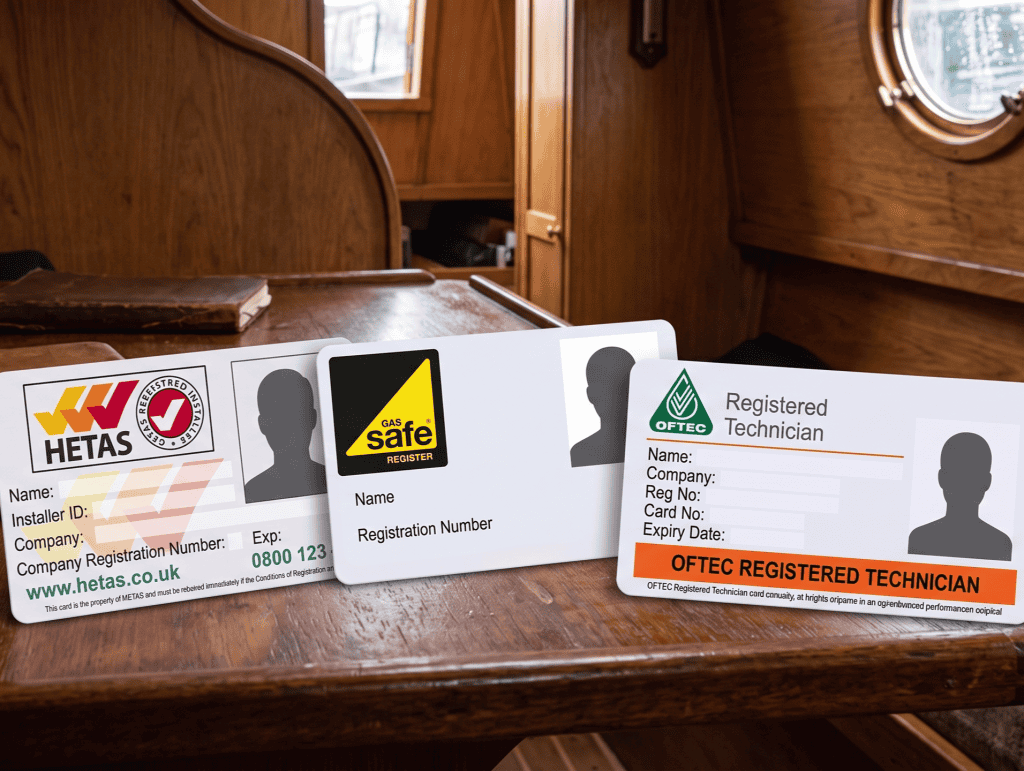
This is the most critical part of hiring help on the waterways. There is a misconception that a “handy” person or a standard domestic plumber can legally work on a boat. They cannot. Because a liveaboard boat is legally classified as a domestic dwelling, the regulations are strict.
Before anyone touches a tool on your boat, you should comfortably be able to ask them for their credentials. Here is the benchmark you should look for:
| System / Fuel Type | Required Baseline Credentials | Why This Specific Token Matters |
| LPG Gas Appliances (Cookers, Water Heaters) | Gas Safe Registered + Marine / LPG boat-specific qualifications | Household tickets do not legally cover work on inland waterways or LAVs. |
| Diesel Heating Systems (Webasto, Eberspächer, Refleks) | OFTEC Certified (Core Oil & Wet Systems) | Simple manufacturer attendance certificates do not replace core, statutory liquid fuel qualifications. |
| Solid Fuel & Stoves (Multi-fuel, Backboilers) | HETAS or OFTEC Solid Fuel Installer Certified | Qualifications must be for Installation, not just retail advice or sales knowledge. |
- Gas Safe Registered: They must hold specific LPG and Marine (Boat) tokens. A standard household Gas Safe engineer is not legally insured or qualified to touch a boat’s gas system.
- OFTEC Certified: If you have a diesel air heater (like a Webasto, Eberspächer, or Autoterm) or a diesel stove (like a Refleks or Bubble), your engineer should hold core OFTEC qualifications for domestic oil appliances. For diesel stoves running central heating, separate wet-system and back-boiler certifications must also apply. Note: A quick one-day manufacturer course to fit a heater does not substitute for core oil qualifications. It is only an add-on to care qualifications.
- HETAS / OFTEC Solid Fuel: If you are having a multi-fuel stove or a back-boiler system installed, they need separate solid fuel and wet-system certifications.
Look Past the “Digital Polish”
In the modern digital age, it’s remarkably easy to build a small website, generate social media buzz, or claim impressive statistics regarding the sheer volume of work a company completes. However, an artificial online image doesn’t always translate to valid, active expertise on the water.
It is not uncommon to find operations that look like large, multi-person teams but are actually uncertified individuals using expired trade credentials—or displaying certificates for basic retail courses that are meant as brand-specific, add-on certificates that should be backed up with core OFTEC, HETAS, or Gas Safe certificates.
The 5-Year Expiry: Credentials Aren’t For Life
It is also crucial to understand that these credentials are not a “one-and-done” lifetime achievement. Core trade qualifications for LPG, liquid fuel, solid fuel, and marine electrical systems all come with a strict five-year expiry date. Because safety regulations are frequently updated and marine technology evolves, legitimate engineers must return to the assessment centre every five years to refresh their training and certificates. When verifying an engineer’s qualifications, don’t just look at the logos—always check the expiration or issuing dates. If their qualifications have lapsed, their public liability insurance will not cover them.
Note: This strict five-year renewal mandate applies solely to the heavy-hitting legal requirements like Gas Safe, OFTEC, HETAS, and core electrical qualifications. Minor add-on certificates and manufacturer-specific appliance training courses generally don’t expire.
Why does this paperwork matter so much?
If an engineer carries out uncertified work on your vessel, their public liability insurance may be completely void. This doesn’t just apply to major safety failures down the line like fuel leaks or fires. It also applies to accidental damage during the work itself. If an uncertified installer drops a heavy stove and cracks your flooring, their insurer will question why they were undertaking that specific installation without the correct credentials. If the insurer finds they were working outside their certified scope, they won’t pay out—leaving you entirely unprotected and stuck with the bill.
Finding the Right Fit for You
There are some incredibly talented, fully certified marine engineers on the UK waterways who do phenomenal work. The good ones will always be happy to show you their certificates, explain their processes, and provide a transparent quote.
If you want an idea of what standard of paperwork and certification an engineer should be able to produce upon request, you can view our public listing here as a reference point: Marine Heating Solutions Qualifications.
Keep your boat safe, keep its insurance valid, and don’t be afraid to ask the tough questions before handing over your keys!