
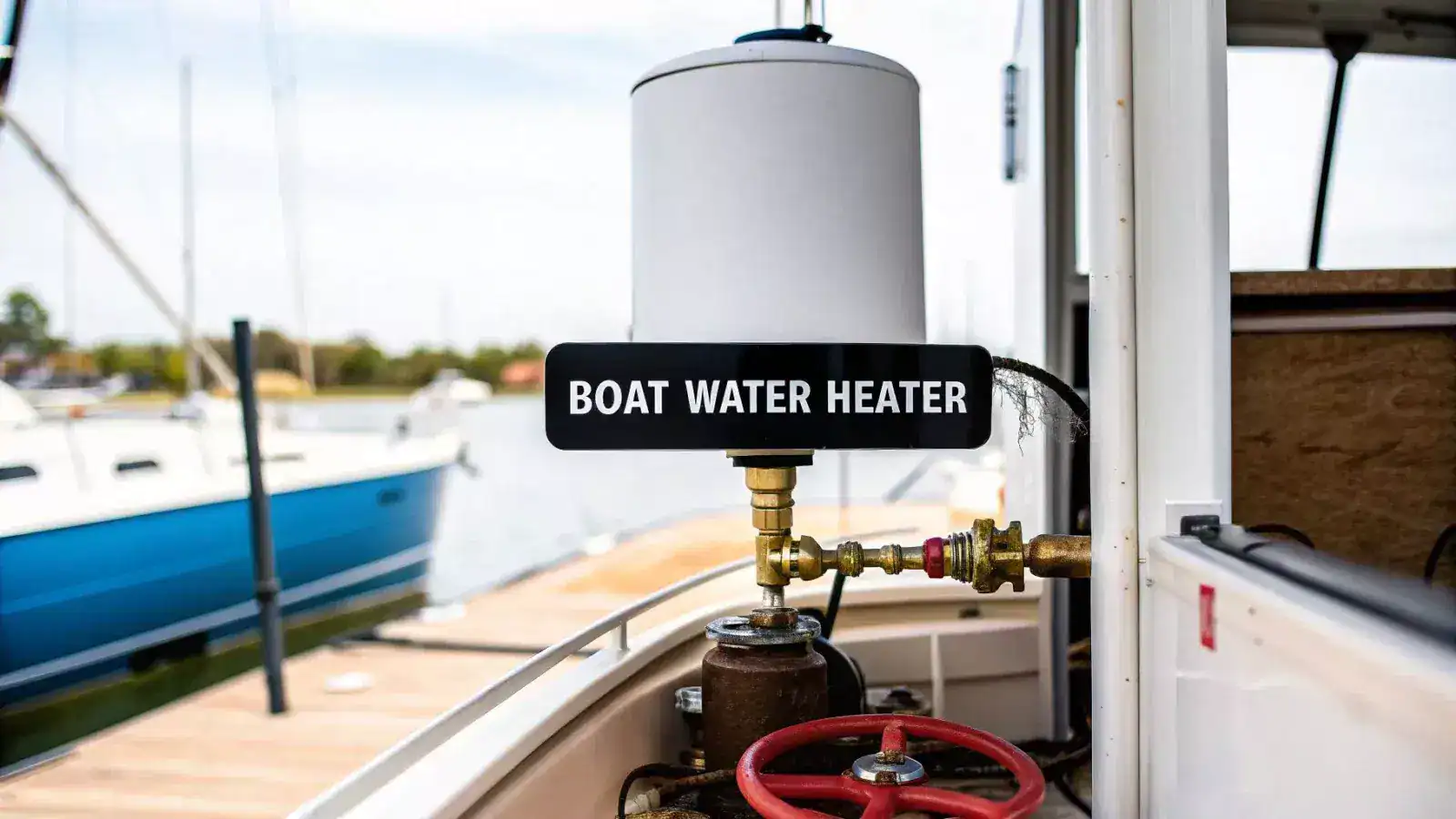


Think of a tank water heater – or a calorifier, as we call it on the canals – as a big, well-insulated flask built right into your boat’s plumbing. It heats up a good amount of water and keeps it hot and ready, so you’ve always got a proper shower or hot water for the washing up, whenever you need it. For a comfortable life afloat, it’s an absolute must-have.
Understanding Tank Water Heaters for Your Boat
Life on a narrowboat or any cruising vessel is all about having reliable, efficient systems, and hot water is right at the top of that list. Unlike the instant heaters that heat water on the fly, tank water heaters (calorifiers) work by heating a reserve of water and storing it. This method is perfectly suited to the unique power and living patterns you find in a marine environment.
The idea is simple but brilliant. Water is kept in an insulated tank and warmed up by one or more sources. This gives you a steady, predictable supply, which means no more surprise blasts of cold water halfway through a shower. If you’re living aboard or just out for a long trip, that kind of reliability is priceless.
To give you a quick overview, here’s how they stack up for life on the water.
Marine Tank Water Heater at a Glance
| Aspect | Description for Boats & Narrowboats |
|---|---|
| Primary Function | Heats and stores a volume of hot water for on-demand use. |
| Common Name | Calorifier |
| Key Advantage | Provides consistent, stable water temperatures. |
| Heating Sources | Can use engine heat, a diesel heater, or a 240V immersion heater. |
| Energy Efficiency | Excellent, especially when using ‘free’ heat from the engine while cruising. |
| Best For | Liveaboards and long-distance cruisers needing a reliable hot water supply. |
As you can see, they’re designed from the ground up for the realities of boating life.
Key Benefits for Marine Living
Choosing the right system means knowing what it brings to the table. A good quality calorifier offers some real advantages on the water:
- Consistent Water Temperature: Because it stores a large volume of hot water, you get a lovely stable temperature. It’s perfect for a decent shower without any sudden shocks.
- Flexible Heating Options: Marine calorifiers are designed to play nicely with the power sources you already have. They can cleverly tap into the waste heat from your engine’s cooling system, connect to a diesel boiler or diesel heater, or use a 240V electric immersion element when you’re plugged into shore power.
- Energy Efficiency: Using your engine’s waste heat is a fantastic way to get ‘free’ hot water while you’re on the move. You pull up to your mooring with a full tank of hot water, ready to go, without burning any extra fuel just to get it.
“We upgraded to a Surejust calorifier last year, and it’s been a game-changer for our narrowboat life. Arriving at a mooring after a long day of cruising and having a hot shower ready and waiting is pure luxury. No more running the engine just for water!” – John S., Canal Boat Owner
Of course, getting the right one involves thinking about size, your power sources, and the safety rules for marine installations. A smart choice here means more comfort and less hassle, whether you’re a weekend boater or a full-time liveaboard.
How Marine Calorifiers Actually Work
Ever wondered what the proper name for a boat’s tank water heater is? It’s a marine calorifier, and the easiest way to think of it is as a sort of thermal battery for your plumbing. It doesn’t just heat water on demand; it heats up a whole tank full and keeps it piping hot inside a well-insulated cylinder, ready for when you need it. This stored-hot-water approach is what gives you a decent, predictable shower without those wild temperature swings you can get with instant heaters.
At its heart, the system is brilliantly simple. Cold water comes in, gets heated by one or more sources, and then stays hot for hours thanks to some seriously good insulation. It’s a robust design that’s perfectly suited to the realities of life on the water.
This diagram lays out the key things you’ll need to think about when picking a system for your boat.
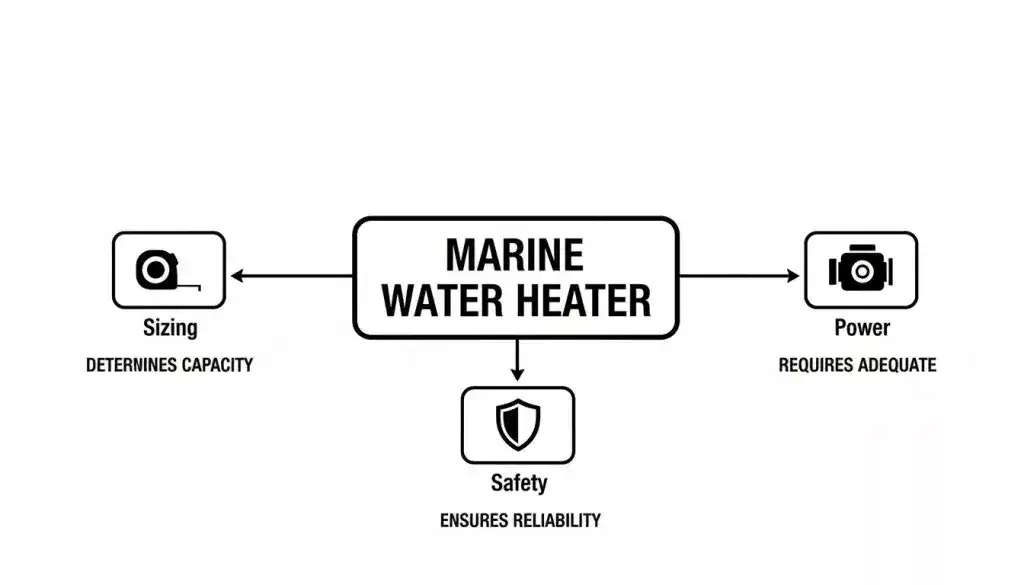
As you can see, getting the setup right is a balancing act between the tank capacity, your available power sources, and those all-important safety features.
The Key Components Inside Your Tank
Inside every calorifier, a few essential parts work together to give you hot water safely and reliably. Once you know what they do, the whole system makes perfect sense.
- The Heat Exchanger Coil: This is the real engine room of the unit. It’s a coil of pipe, usually copper, that snakes through the inside of the tank. Hot liquid from another source – most often your engine’s coolant or a diesel heater – runs through this coil. It transfers its heat to the fresh water in the tank without the two liquids ever actually mixing.
- The Immersion Heater: Think of this as an electric kettle element sitting inside the tank. You’ll use this mainly when you’re hooked up to 240V shore power in a marina. It’s a super convenient way to get hot water without having to run your engine or a separate heater.
- The Pressure Relief Valve (PRV): This is a non-negotiable safety device. Water expands when it heats up, which builds pressure inside the tank. The PRV is designed to automatically open and let out a bit of water if the pressure or temperature gets too high, preventing the tank from ever becoming dangerous.
- The Thermostat: This little device is the brains of the operation, regulating the water temperature. It tells the heating source to switch off when the water is hot enough and turn back on if it starts to cool down. This keeps things efficient and stops the water from getting dangerously hot.
- Thermostatic Mixer Valve (TMV): A device that blends hot water with cold water to ensure a constant, safe outlet temperature, helping to prevent scalding and ensuring comfort in showers and baths. This device can also extend the capacity of tank water heaters by up to 40%.
How The Heat Gets In There
The real magic of a marine calorifier is its knack for recycling energy that would otherwise go to waste. The most common way to heat the water is by plumbing the heat exchanger coil into your boat’s engine cooling system. While you’re motoring along, hot coolant from the engine is pumped through the coil. This is then heating up your domestic water for ‘free’.
Another popular method is to use a feed from a diesel central heating system, which works in exactly the same way. When neither the engine nor the diesel heater is running, the electric immersion heater is there as a reliable backup. This ability to use multiple heat sources is what ensures you’ll nearly always have hot water on tap. We stock a fantastic range of Surejust calorifier water heaters built to work seamlessly with these setups. It’s this simple, effective process that makes a calorifier an essential bit of kit for anyone serious about comfortable, long-term cruising.
Powering Your Hot Water on the Water
Your calorifier is a brilliant bit of kit, but it’s essentially just a well-insulated tank. It needs an energy source to actually heat the water inside it. The power source you choose is one of the biggest decisions you’ll make, dictating when and how you get a hot shower or do the washing up.
Fortunately, marine tank water heaters are built to work with the systems you already have on a boat, giving you several reliable options.
Most boaters end up using a combination of methods. This gives them the flexibility to have hot water whether they’re cruising down the canal, moored up in a quiet spot, or plugged into the mains at a marina. Let’s break down the pros and cons of each so you can figure out what’s right for your life on the water.
Using Engine Heat Exchange
This is the most common and, arguably, the most elegant way to get hot water on a boat. When your inboard engine is running, it generates a massive amount of excess heat that its cooling system has to get rid of. A calorifier with a heat exchanger coil cleverly taps into this otherwise wasted energy.
Hot coolant from the engine is diverted through a coil inside your water tank. This heats your domestic water for free while you’re on the move. You run the engine to get from A to B, and as a welcome side effect, you arrive at your destination with a full tank of piping hot water. It’s an incredibly efficient setup.
Integrating a Diesel-Fired Heater
What about those times when you aren’t running the main engine but still want a hot shower? That’s where a diesel-fired heating system comes in. These stand-alone diesel liquid heaters, like the powerful Autoterm Flow 5D, are designed to be plumbed directly into your calorifier’s heat exchanger coil.
With the flick of a switch, the diesel heater fires up. It then circulates its own hot coolant through the tank, heating your water quietly and efficiently without you having to fire up the big engine. This is perfect for liveaboards who are stationary for long periods or for those chilly mornings when you want a hot shower before setting off. It gives you complete independence.
“Having an Autoterm heater hooked up to our calorifier was a revelation. We can be moored up for days on end and still have all the hot water we need without the noise and expense of running the engine. It’s made winter cruising so much more comfortable.” – Sarah H., Narrowboat Owner.
The Role of an Electric Immersion Heater
The third weapon in your arsenal is the 240V electric immersion heater. This is basically an electric element, just like the one in your kettle at home, fitted directly inside the calorifier tank.
It’s the perfect solution for when you’re connected to shore power in a marina. It provides a silent, effortless way to keep a full tank of hot water ready to go.
While they’re incredibly convenient, immersion heaters are really only practical when you’ve got a reliable mains connection because they draw a significant amount of power. Trying to run one from a 12V battery bank through an inverter just isn’t feasible for heating a whole tank of water—it would drain your batteries in no time. Think of it as a brilliant marina-based luxury.
The demand for these versatile systems keeps growing. In fact, the UK water heater market is projected to surpass USD 1 billion by 2028, with a clear trend towards more efficient, higher-capacity units. The 100-200 litre models, common on larger boats, are expected to see steady growth in particular. You can learn more about these market findings here.
Sizing Your Calorifier for Life Afloat
Choosing the right size for your tank water heater, or calorifier, is probably one of the most important decisions you’ll make for your boat. Get it right, and you’ll enjoy satisfying hot showers and easy washing up. Get it wrong, and you’re in for a world of constant frustration. The real trick is to find the sweet spot between tank capacity, how you actually use your boat, and what your power systems can handle.
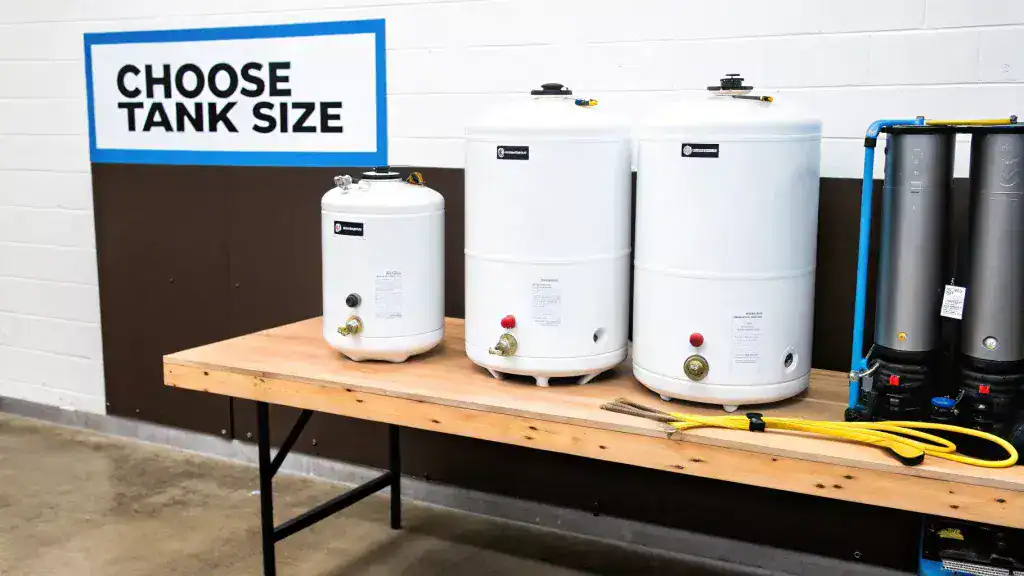
First, have a realistic think about your daily hot water needs. A quick wash-up in the galley might only use 5-10 litres, but a proper, satisfying shower can easily guzzle 20-30 litres. You need to figure out what your peak demand will be, especially if you’ve got a couple of people on board who all want hot water around the same time.
Matching Tank Size to Your Crew
The perfect tank size comes down to who’s on board and how you’re using the vessel. A solo sailor just out for the weekend has completely different needs to a family living the dream on their narrowboat full-time.
- Solo Sailors & Weekend Cruisers (15-25 Litres): For occasional jaunts, a smaller tank is usually more than enough. A compact 15-25 litre calorifier provides plenty of hot water for a quick shower and the dishes, without taking up precious space or energy to heat water you simply don’t need.
- Couples & Small Families (40-55 Litres): This is the go-to size range for many narrowboats and cruisers, and for good reason. A 40-55 litre tank can comfortably handle back-to-back showers and all the daily galley tasks, striking a brilliant balance between capacity and heating time.
- Liveaboard Families (55-100 Litres): When the boat is your home, a larger capacity is non-negotiable. A 55-100 litre tank ensures there’s enough hot water for everyone’s showers, maybe some laundry, and all the day-to-day chores without having to plan your life around the reheat cycle.
To give you a better idea of what might work for you, we’ve put together a simple table.
Recommended Calorifier Size by Boat Type
This table is a rough guide to help you match a tank size to your vessel and the number of people typically on board. It’s a great starting point for making an informed decision.
| Vessel Type / Crew | Typical Hot Water Needs | Recommended Tank Size (Litres) |
|---|---|---|
| Small Day Boat / 1-2 people | Washing hands, making tea, occasional rinse-off | 15 – 20 Litres |
| Weekend Cruiser / 2 people | One or two quick showers, washing up | 20 – 30 Litres |
| Narrowboat / Couple | Daily showers, regular galley use | 40 – 55 Litres |
| Liveaboard Family / 3-4 people | Multiple daily showers, galley, potential laundry | 55 – 100 Litres |
| Large Yacht / 4+ people | High demand, multiple outlets used simultaneously | 100 Litres+ |
Remember, these are just recommendations. If you love long, luxurious showers, you might want to size up!
Understanding the Recovery Rate
Now, tank size is only half the picture. The other crucial piece of the puzzle is the recovery rate. In simple terms, this is how quickly your calorifier can heat a fresh tank of cold water right up to temperature. A fast recovery rate means less waiting around between showers.
This is almost entirely down to your heat source.
- Engine Heat: This is a good way to get hot water, but less effective in the winter, capable of heating a full tank in as little as 60 minutes while you’re cruising along.
- Diesel Heaters: Very effective. They’ll typically take around 30-45 minutes, depending on the power of the heater itself and the size of the hot water tank
- 240V Immersion Element: Generally, the slowest of the bunch, sometimes taking 1-2 hours or even longer to heat the whole tank from cold.
If you have a system with a really quick recovery rate, you might find you can get by with a slightly smaller tank, because you can top up your hot water supply so much faster. For a deeper dive into how all these parts work together, have a look at our guide, “What are Calorifiers?“.
“We used to have a tiny 20-litre tank on our narrowboat, and it was a nightmare for the two of us. We contacted Marine Heating Solutions, and they recommended upgrading to a 40-litre twin coil unit. The difference is unbelievable. We can both have proper showers in the morning, and the water is still hot for washing up afterwards. It’s completely changed our comfort level on board.” – David and Carol, Liveaboards on the Kennet & Avon Canal.
Safe Installation in a Marine Environment
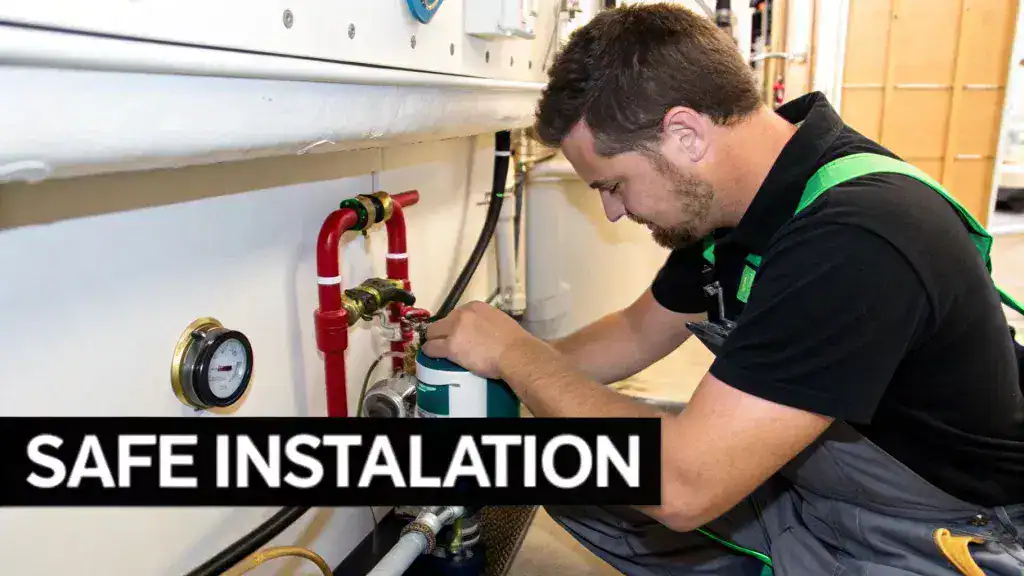
Putting a new calorifier in a boat isn’t just a plumbing job—it’s a critical safety task that absolutely needs a professional touch. A boat isn’t like a house; it’s a dynamic space that’s constantly moving, vibrating, and dealing with the stresses of being on the water. Get the installation wrong, and you’re not just looking at an inconvenience. You could be facing a serious hazard miles from shore.
This is exactly why professional installation isn’t negotiable. Every single part, from the tank itself to the smallest fitting, has to be chosen and installed to handle the unique challenges of life afloat. It’s all about guaranteeing safety, reliability, and giving you complete peace of mind when you’re out on the water.
Securing the Unit Against Motion
The first rule of any marine installation? Nothing should ever come loose. A calorifier is heavy to begin with, and once it’s full of water, that weight goes up significantly. It must be securely bolted or strapped down to a solid part of the boat’s structure. This could be a reinforced bulkhead or a purpose-built shelf.
This is what stops the tank from shifting or breaking free in rough seas. Movement could easily rupture pipes and lead to catastrophic flooding. An experienced engineer knows how to assess the best location. They’ll make sure the spot can handle the load and absorb the constant vibration from the engine and movement of the vessel.
Pressure-Tight Plumbing Connections
The pipework hooked up to your calorifier is under constant pressure, and that pressure climbs as the water heats up. Every joint, pipe, and fitting has to be properly rated for hot, pressurised water and installed with absolute precision to prevent leaks. Even a small, unnoticed drip in the bilge can lead to water damage, mould, and eventually, serious structural problems.
A professional installation will always cover these points:
- Using the right materials: All pipework must be suitable for hot, pressurised systems. No cutting corners.
- Securing pipe runs: Pipes have to be clipped securely, stopping them from chafing against other parts as the boat vibrates.
- Proper sealing: Every connection must be perfectly sealed to stay watertight under the combined forces of pressure and movement.
This level of attention to detail is second nature to a pro but is so easy to miss if you’re attempting it yourself.
The Critical Role of the Pressure Relief Valve and Expansion Vessel
In a marine heating system, the Expansion Vessel and Pressure Relief Valve (PRV) are essential for safety. Because water expands when heated, the expansion vessel acts as a flexible cushion to absorb this extra volume and prevent pressure spikes. If pressure still reaches dangerous levels, the PRV acts as a fail-safe, venting water to prevent pipes or the boiler from bursting. Together, they protect your system from internal damage and ensure reliable, safe operation on board.
An incorrectly installed or blocked PRV is one of the most dangerous faults a calorifier can have. It must be fitted correctly, with its outlet pipe leading safely to an overboard drain, completely free from any kinks or blockages.
Ventilation for Fuel-Fired Systems
If your calorifier is part of a diesel-fired system, getting the ventilation right is a matter of life and death. All fuel-burning appliances produce exhaust gases, including carbon monoxide—the silent killer. The heater’s exhaust flue needs to be professionally installed, fully sealed, and routed safely outside. It should be well clear of any windows, vents, or open cockpits where those deadly fumes could find their way back inside.
For any LPG-powered systems, the law is crystal clear: all work must be done by a Gas Safe registered engineer. The risks are just too high to ever attempt to install or fix a gas system yourself. Our certified engineers are fully qualified to handle these critical jobs. You can find out more about why you must hire a professional boat gas engineer.
Keeping Your System Shipshape for the Long Haul
To get a long and trouble-free life from your tank water heater, a little bit of preventative maintenance goes a very long way. A well-looked-after calorifier isn’t just more reliable; it’s a whole lot safer. Running through a simple checklist every so often will help you spot minor niggles before they escalate into major headaches. This way, you are making sure you always have hot water when you fancy a brew or a shower.
Regular checks are the absolute bedrock of a healthy system. You don’t need an engineering degree to do these basic inspections, and they can save you a world of hassle down the line.
Your Routine Maintenance Checklist
Keeping on top of these simple tasks will drastically extend the lifespan of your calorifier and ensure it’s running at its best.
- Test the Pressure Relief Valve (PRV): At least once a year, give the lever on your PRV a manual lift. A small spurt of water should come out. This simple check confirms the valve isn’t seized and is ready to do its job.
- Inspect All Hoses and Lines: Regularly run your eye over the coolant lines from your engine and any fuel lines coming from a diesel heater. Look for any signs of wear, perishing, or leaks. A failing hose is one of the most common causes of system failure.
- Winterise the System: This one is non-negotiable unless you live aboard and heat your boat throughout the winter. Before the first hard frost hits, you must completely drain your calorifier. Any water left inside will freeze, expand, and can easily split the tank or the internal coil, causing irreparable damage.
“I learned about winterising the hard way. One forgotten drain-down cost me a brand new calorifier. Now, it’s the first job I do at the end of the cruising season. It takes ten minutes and saves a fortune.” – Mike P., Canal Boat Owner.
Simple Troubleshooting Tips
If you suddenly find yourself with no hot water, a few quick checks can often help diagnose the problem. First off, confirm your heat source is actually running. If you’re on shore power, check the circuit breaker. If you’re using the engine or a diesel heater, make sure the system is up to temperature and that the circulation pump is working.
Is the water only lukewarm? That could point to a faulty thermostat or a build-up of limescale on the heating elements.
While these simple checks can sort out many common issues, it’s crucial to remember that any work involving gas or LPG systems is a job for the professionals. By law, only a Gas Safe registered engineer can work on these appliances. Never attempt to carry out your own repairs on gas systems. If you’re ever in doubt, the safest bet is always to call in an expert.
Your Questions Answered
We get asked a lot of questions about calorifiers and tank water heaters. Here are a few of the most common queries our engineers hear from boaters, along with our straightforward answers.
What is a Twin Coil Calorifier?
Think of a twin coil calorifier as a clever, multi-talented hot water tank. It has two separate heat exchanger coils inside, which means you can hook it up to two different heat sources at the same time.
A classic setup is connecting one coil to your engine and the other to a diesel heater, like the Autoterm Flow 5D. This gives you incredible flexibility, ensuring you’ve got hot water on tap whether the engine is running or you’re quietly moored up.
Twin coil calorifers can also be used to speed up water heating times. Both coils could be connected to a diesel heater, for example. This doubles the surface area available for the heat transfer inside the water heater tank.
Can I Get Hot Water While Cruising?
You certainly can. In fact, it’s one of the biggest perks of having a calorifier linked to your engine’s cooling system. As you’re chugging along, the system cleverly captures ‘waste’ heat from your engine and uses it to heat the water in your tank.
This means that by the time you arrive at your destination, you’ll have a full tank of piping hot water ready to go – all without using any extra fuel for the job.
How Long Does a Full Tank Take to Heat?
That really comes down to the size of your tank and which heat source you’re using at the time. As a rough guide, here’s what you can expect:
- Diesel Heater: This is usually the quickest way to get things steaming. A dedicated diesel heater will typically get the job done in around 30 to 45 minutes.
- Engine Heat: Also a fantastic performer. While you’re on the move, it can heat a whole tank in as little as 60 to 90 minutes. Note that these times will increase dramatically during winter.
- 240V Electric Immersion: When you’re hooked up to shore power, the immersion heater is a reliable option, but generally the slowest. Depending on tank size, expect it to take 1-2 hours to heat the tank from cold.
Our Installation and Maintenance Services for Tank Water Heaters
For expert advice on choosing, installing, or servicing the perfect tank water heater for your boat, trust the professionals at Marine Heating Solutions. Our specialist GasSafe-registered and OFTEC-qualified engineers ensure every unit is seamlessly integrated with your vessel’s engine and electrical systems using durable, marine-grade components. Whether you need a brand-new installation or a routine safety check. We guarantee a reliable supply of hot water for all your boating adventures.
Comments are closed.