
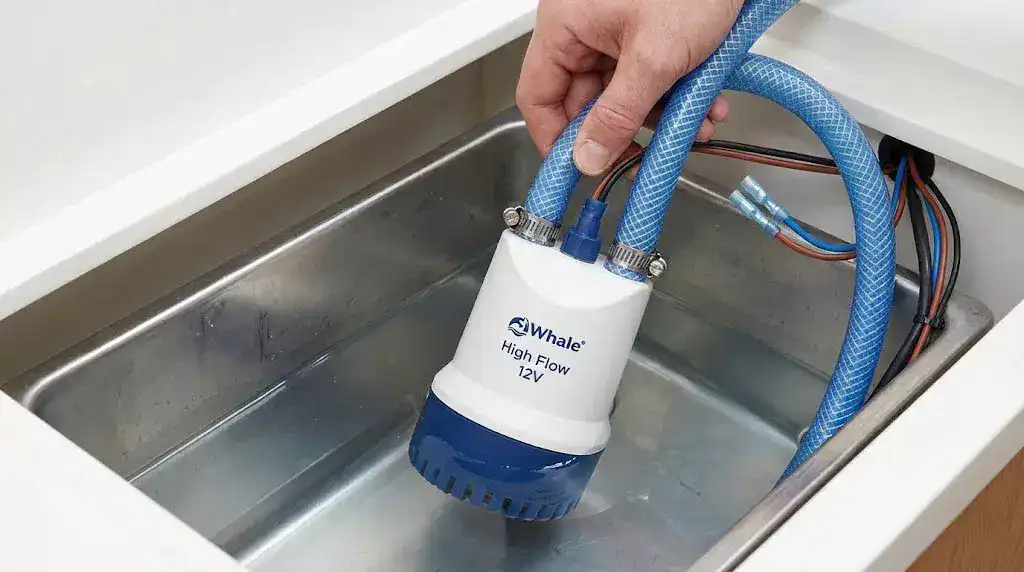



The Heart of Your Onboard Water System
For narrowboats and campervans, the submersible water pump 12V is essential for daily life. It provides the flow for your galley taps and ensures consistent pressure for your shower. As we head into 2026, modern pumping technology from industry leaders like Whale Pumps offers higher flow rates with lower power consumption, making it easier than ever to maintain a high-performance freshwater system.
For professional plumbing support or a system overhaul, get in touch with our marine engineers here.
1. Comparing Standard vs. High-Flow Pumps
The right pump depends on how many outlets you need to serve simultaneously.
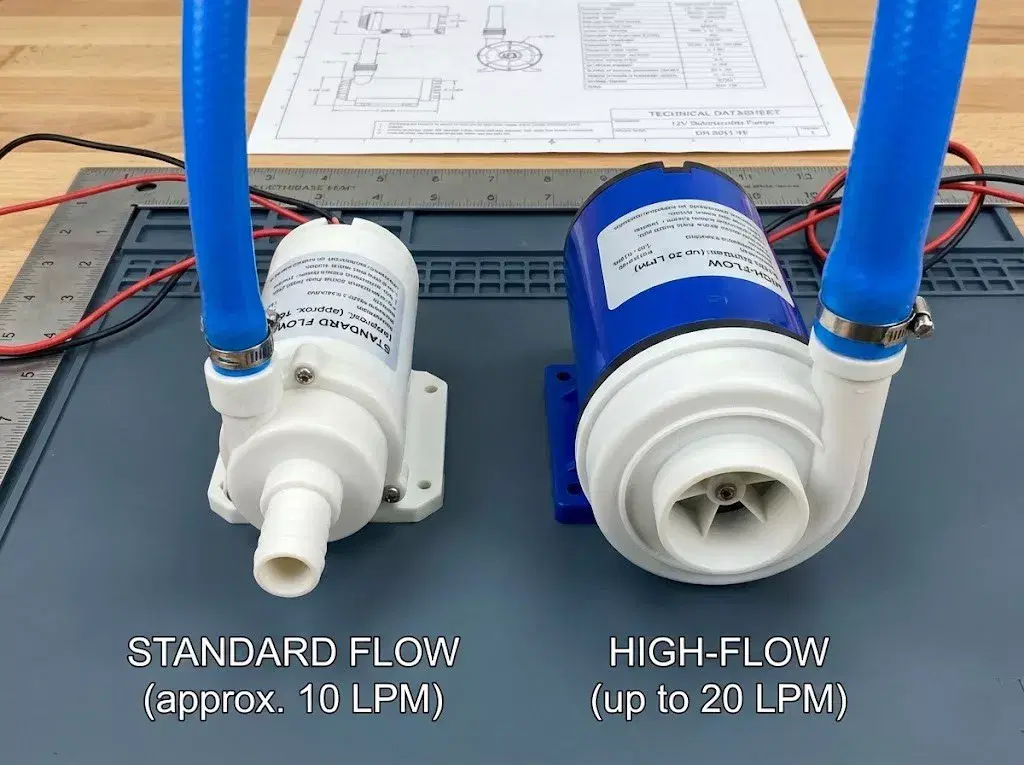
- Standard Flow (Approx. 10 LPM): Best for smaller vessels with a single cold-water tap. Units like the Whale Standard are quiet and have a low current draw (approx. 2.4A), preserving your leisure battery.
- High-Flow (Up to 20 LPM): Essential for multi-outlet systems, such as a sink and shower running together. Models like the Comet VIP-PLUS ensure that shower pressure doesn’t drop when a tap is opened elsewhere.
2. Technical Specs for 2026 Installations
When selecting your pump, prioritise these three metrics for long-term reliability:
- Delivery Head: Ensure the pump can lift water to the vertical distance required (10m is standard for most narrowboats).
- Dry Running: Look for pumps rated to run dry for short periods to prevent motor burnout if the tank runs empty.
- Fusing: Always protect your 12V circuit with the manufacturer’s recommended fuse (typically 5A) to prevent wiring damage.
3. Maintenance “Pro-Tip”: Curing Air Locks
The most common cause of “pump failure” is actually an airlock. If your pump is running but no water is flowing, submerge the unit and shake it gently to release trapped air from the impeller.
Conclusion
A quality 12V submersible pump is a small investment that guarantees reliable water access. Whether you need a simple replacement or a high-flow upgrade, the right pump keeps your freshwater supply dependable.

Comments are closed.