
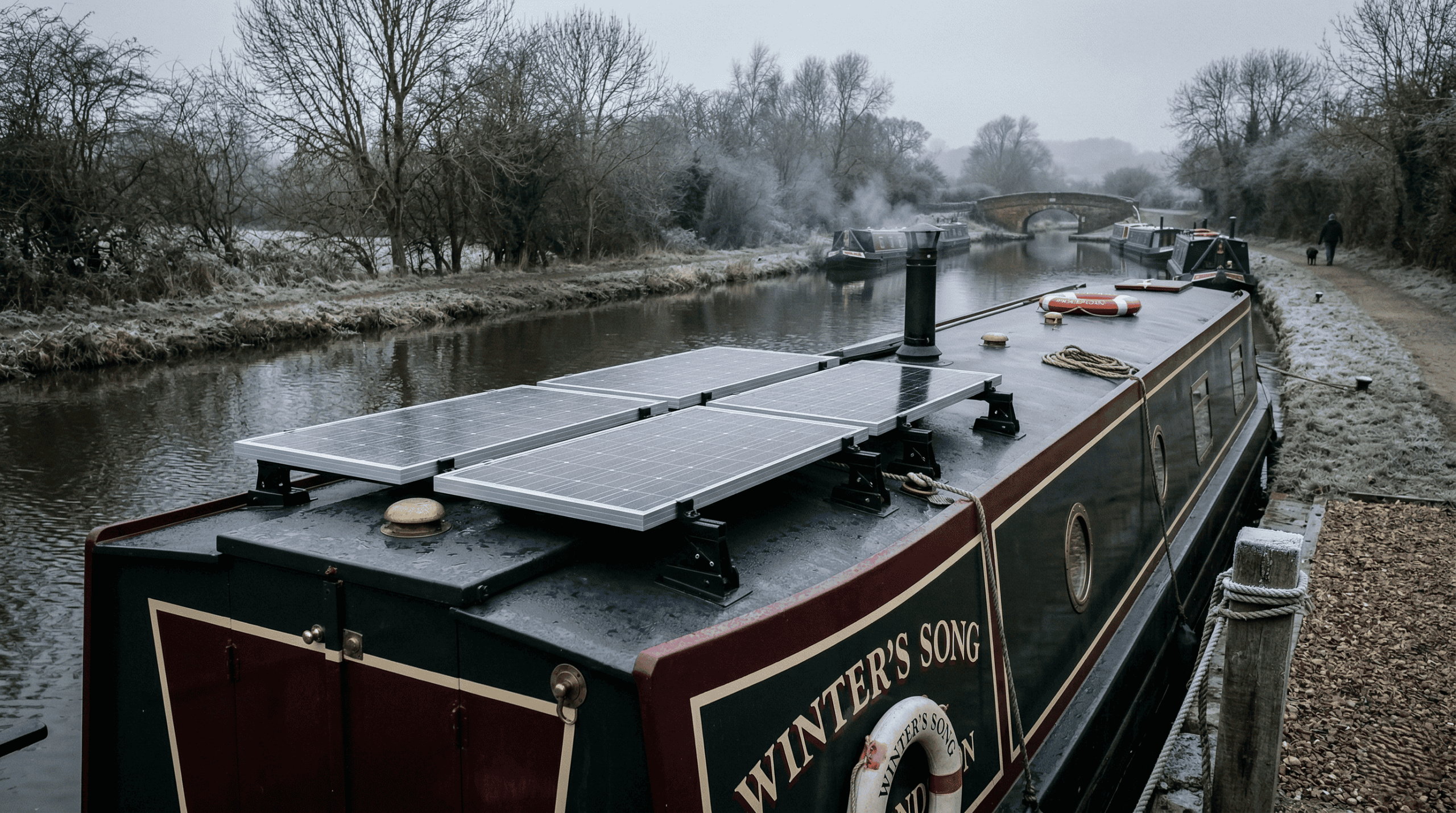



For the average boat owner, solar power feels like a simple “plug and play” upgrade. But as a BSS Examiner with 20 years of experience on the inland waterways, I see the reality: a vast number of solar installations are failing prematurely. In the cold, damp engine bays and exposed roofs of the UK canal network, “budget” components and DIY wiring don’t just lose efficiency—they become a safety liability.
Why Your Solar System “Disappears” in Winter
Most marine solar panels perform well in the height of July. The real test is October through March. In the UK, we deal with low sun angles and persistent moisture. If your panels are mounted flat to the roof without airflow, or if you are using low-grade “PWM” regulators, your battery bank might not see a meaningful charge for weeks at a time.
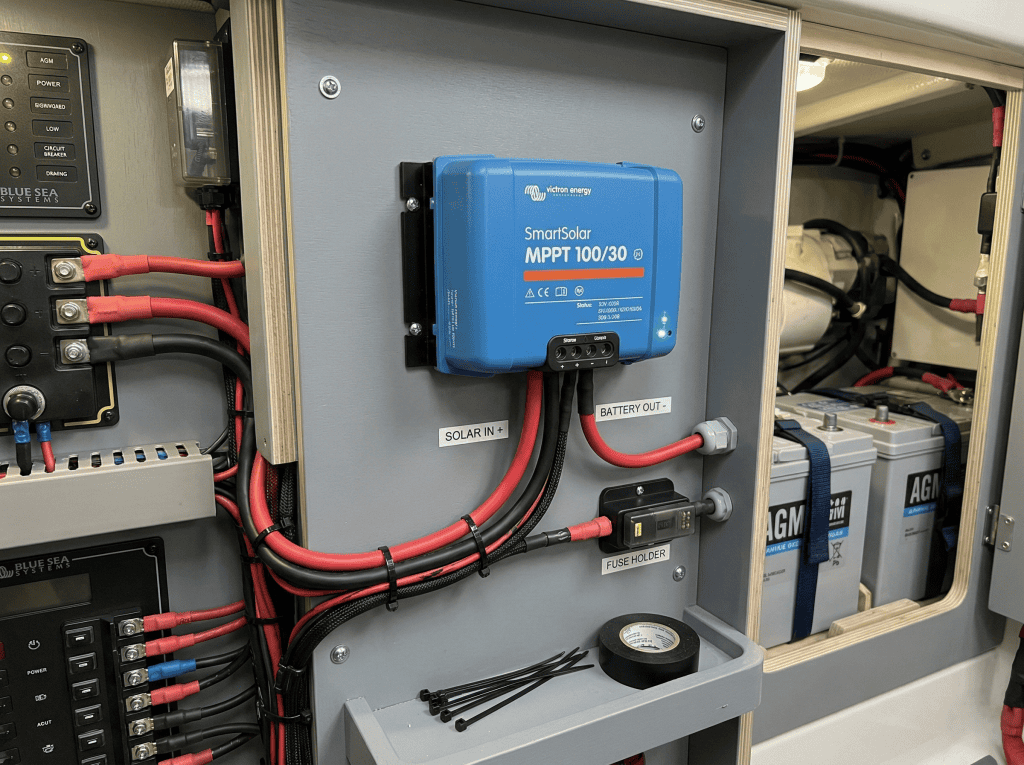
Efficiency isn’t just about the panels; it’s about the harvest. Using high-efficiency monocrystalline cells paired with a correctly sized MPPT (Maximum Power Point Tracking) controller can increase your winter yield by up to 30%. This is the difference between your lights staying on or having to run your engine for two hours just to top up your bank.
The “Damp Factor”: Protecting Your Investment
Boat engine bays are notoriously harsh environments—cold, damp, and prone to condensation. This is where most “land-based” solar components fail. When I audit a system, I often find corroded terminals and non-tinned copper wiring that has turned “black” inside the insulation due to moisture ingress.
As a specialist, I only install components designed for high-vibration and high-moisture environments. Ensuring every connection is sealed, and every cable is correctly rated for marine use, isn’t just about performance—it’s about preventing the “volt-drop” that kills your charging efficiency before it even reaches your batteries.
BSS Compliance: The Examiner’s Checklist
When I step onto a boat for a Boat Safety Scheme inspection, the solar array is often the first place I find a failure. To keep your vessel safe and compliant, we ensure:
- Correct Fusing: Many DIY installs skip the fuse between the panels and the controller, or the controller and the battery.
- Secure Mounting: Panels must be able to withstand high winds and the occasional low-hanging branch without becoming a projectile.
- Isolation: The ability to safely isolate the solar array during maintenance or an emergency.
The “Killer Deal” Strategy
You don’t need to be a marine electrician to get a reliable power system. At Marine Heating Solutions, we take the guesswork out of the equation. We provide professional-grade components that are designed to survive the UK waterways.
Upgrading your power system shouldn’t be a headache. At Marine Heating Solutions, we specialise in “System Synergy”—ensuring your solar array works in perfect harmony with your boat’s unique electrical load. You get the benefit of my two decades of engineering experience, ensuring your system is safe, efficient, and—most importantly—fully BSS compliant from the moment it’s switched on.