


For many boat owners on the UK’s inland waterways, the gas locker is a “set and forget” compartment—until it’s time for a Boat Safety Scheme (BSS) examination. As a BSS examiner and Gas Safe registered engineer, I’ve seen more failures due to neglected lockers than almost any other category.
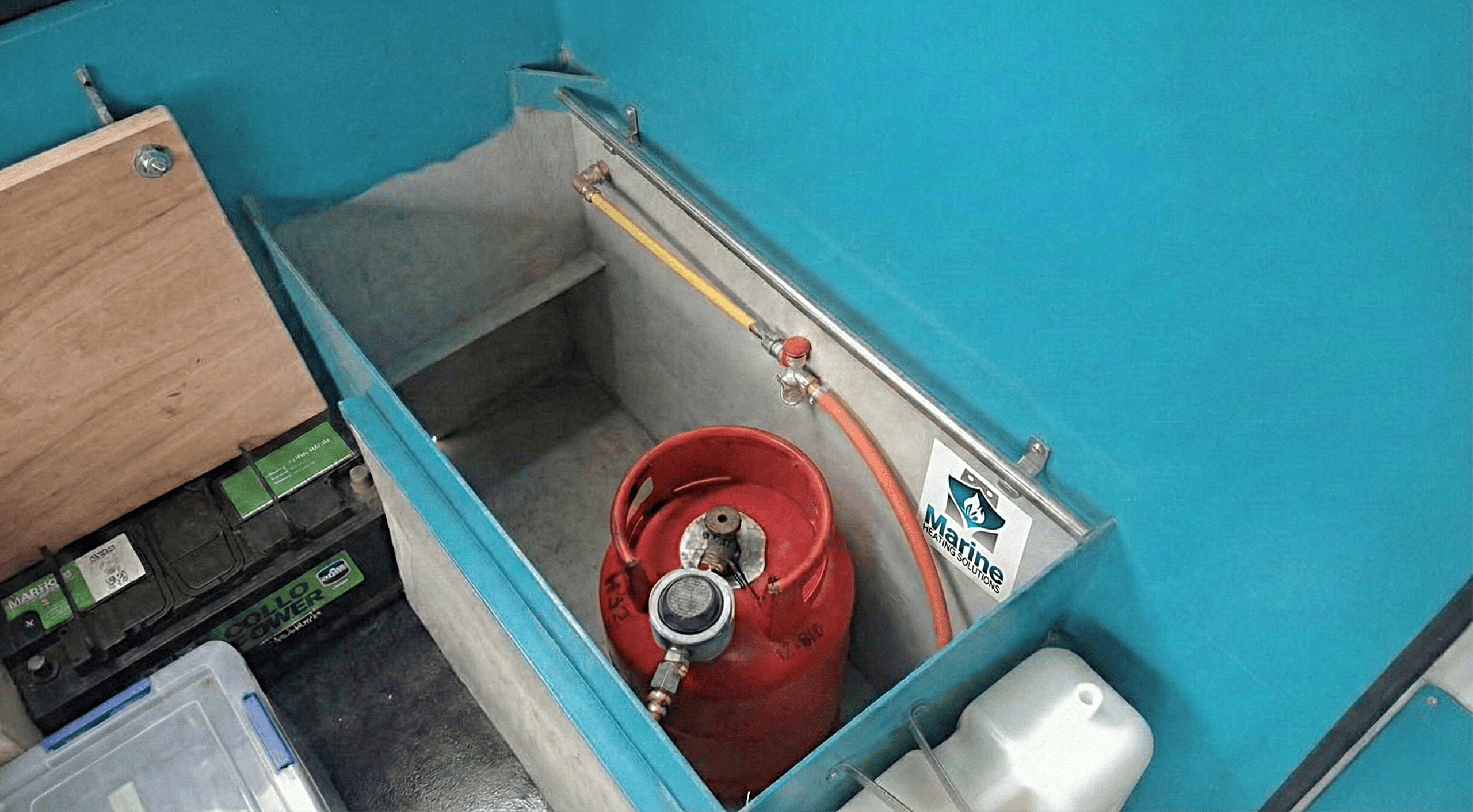
A gas locker isn’t just a storage box; it is a critical safety enclosure designed to contain and vent leaked LPG, which is heavier than air and highly explosive. If your locker is corroded, poorly sealed, or cluttered, you aren’t just risking a BSS “fail”—you are risking a catastrophic event.
Why Gas Locker Integrity is Non-Negotiable
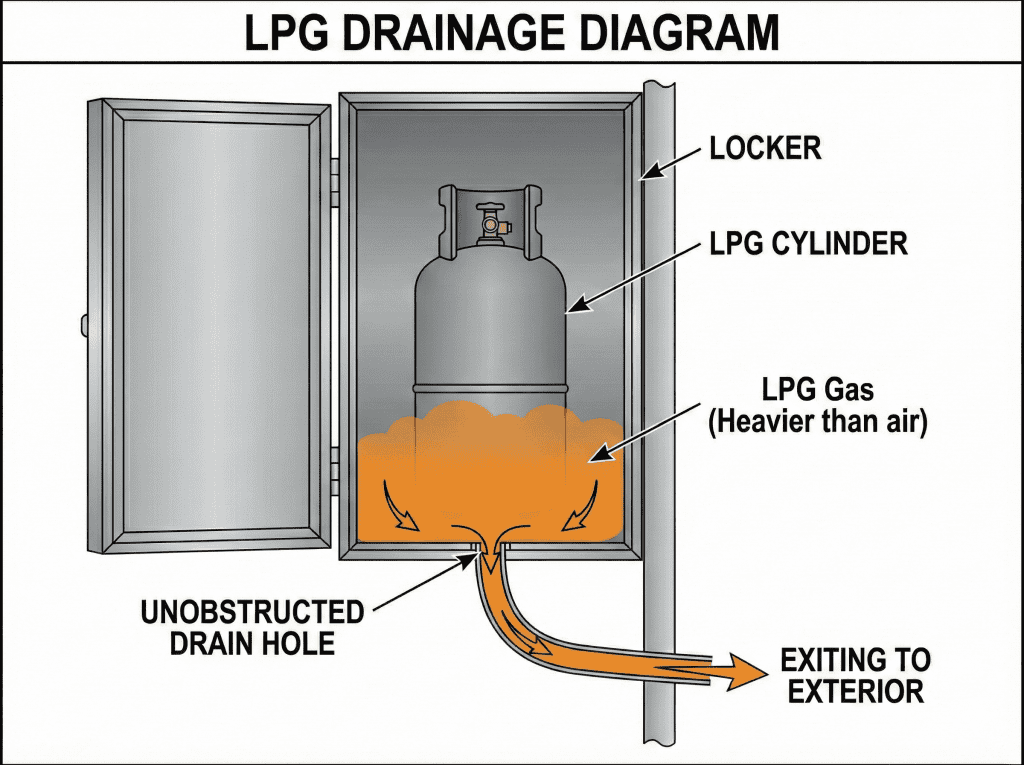
LPG (Propane or Butane) behaves different than natural gas. If a leak occurs at the cylinder or regulator, the gas settles at the lowest point. In a boat, this means the gas will pool in the locker and, if the locker is breached, flow directly into your bilge.
The Boat Safety Scheme (BSS) requirements for lockers are stringent for a reason. As an engineer working in the field on a daily basis, I focus on three pillars of locker health: Watertight Integrity, Effective Drainage, and Secure Stowage.
Common Causes of BSS Failure (And How to Fix Them)
1. Corrosion and “Holes”
Rust is the primary enemy of steel narrowboat gas lockers. Because lockers are often damp, the base can thin out over time. If I can see heavy corrosion on the bottom of your locker—or if water can leak from the locker into the hull—it is an immediate BSS and GasSafe failure.
- The Fix: Removing the rust and applying a high-zinc primer followed by a bitumen-based paint or specialist marine epoxy. For structural holes, professional over-plating or welding is required.
2. Blocked or High Drains
The locker drain must be at the lowest point of the locker and must exit out of the hull above the waterline. I frequently find drains blocked by spiders’ webs, debris, or even paint. If the drain is higher than the floor of the locker, gas will pool below the drain line—a major safety risk.
3. “Storage” Contamination
Your gas locker is for gas cylinders and their immediate brassware only. It is not a place for windlasses, anchors, or tins of paint. These items can damage the copper pipework or block the vent.
Expert Tip: “I often see owners storing heavy anchors in the gas locker. One rough turn on the canal and that anchor shifts, snapping a regulator or kinking your copper supply line.” — Marine Heating Solutions Lead Engineer
Maintaining Your Regulators and Hoses
The “pigtails” (high-pressure hoses) connecting your cylinder to the regulator have a lifespan. While the BSS doesn’t strictly dictate an expiry date, industry best practice is to replace them every 5 to 10 years, or sooner if they show signs of cracking or stiffness.
We offer a range of LPG kits that include high-specification Clesse regulators and BS EN-compliant hoses. By using components built for the marine environment, we help ensure your gas system meets the highest safety standards from the moment it’s installed.
The Professional Advantage
When we perform a gas locker overhaul, we don’t just “paint over the cracks.” We pressure test the entire system using a digital manometer to ensure there are zero leaks. If your locker requires welding to pass its BSS, our mobile boat welding service can handle the fabrication and the LPG certification in one visit.
Whether you are preparing for your 4-yearly BSS inspection or you’ve noticed a smell of gas near the bow, don’t wait. A compliant locker is the foundation of a safe boat.