
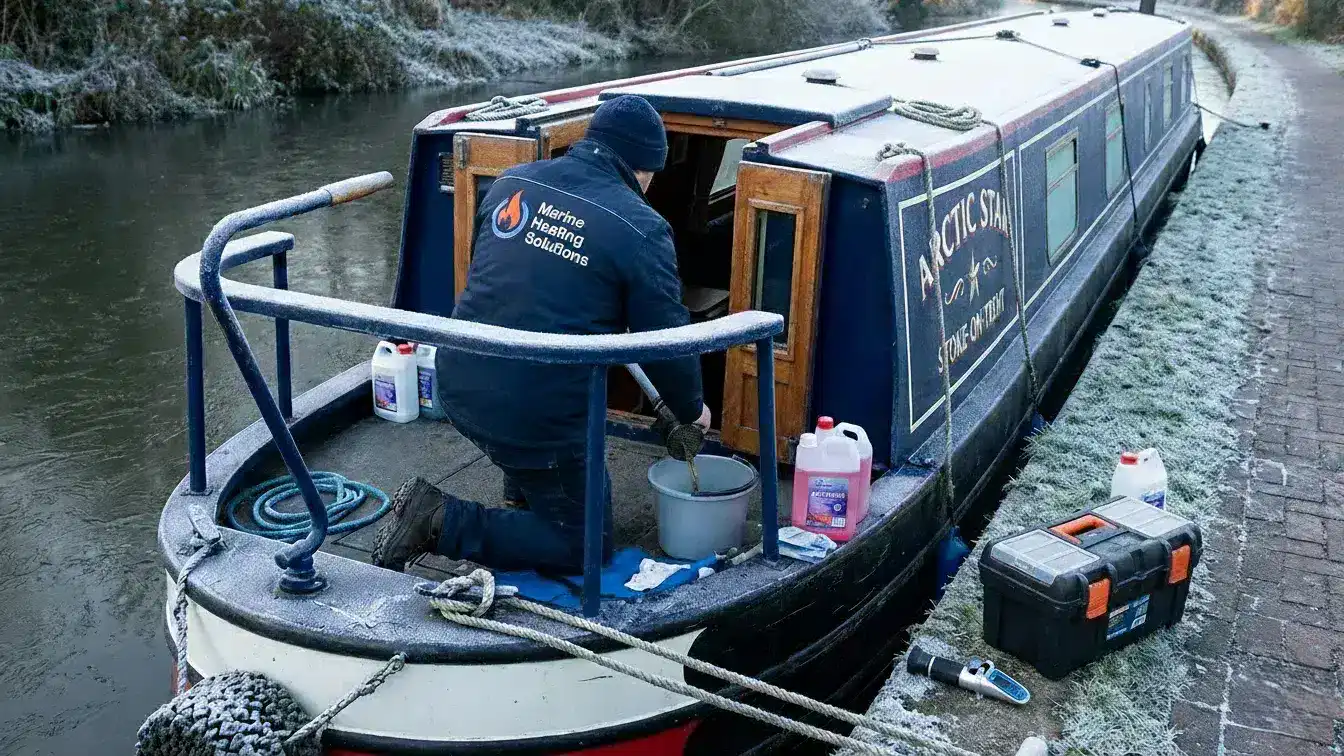



Don’t Let the Frost Bite
Winterising your boat is the single most important maintenance task of the year. In the UK, a sudden cold snap can lead to cracked engine blocks, burst pipes, and ruined upholstery. As we look toward the 2026 winter season, the standard for protection has evolved from simple “drain downs” to integrated climate management.
Whether you are staying aboard or leaving your vessel in a marina, this guide covers the essential steps to ensure you return to a dry, functional boat in the spring.
Worried about your system? Book a Professional Winter Health Check.
1. Engine & Propulsion Protection
The engine is the most expensive component to repair if frost damage occurs.
- Antifreeze Levels: Check your engine’s internal coolant with a refractometer. For 2026, we recommend a 50/50 mix of coolant to provide protection down to -37°C.
- Raw Water Systems: If your boat is raw-water cooled (common on yachts), drain the heat exchanger and the water strainer. Many owners now pump food-grade antifreeze through the intake to protect the internal seals.
- Diesel Stability: To prevent “diesel bug” over the winter, fill your tanks to 95% to reduce condensation and add a biocide treatment.
2. Plumbing & Domestic Water
A single cup of water left in a plastic pipe can crack a joint when it freezes.
- Drain the Tank: Empty your freshwater tank completely.
- Bypass the Water Heater: Most calorifiers have a non-return valve. Ensure this is drained or bypassed to prevent the tank from splitting.
- The “Air Blowout”: For 2026, we recommend using a low-pressure air pump to blow out the lines after draining. This ensures no water remains in low points of the pipework.
3. Interior & Humidity Control
A winterised boat isn’t just about pipes; it’s about preserving the interior.
- Ventilation is Key: Never seal your boat completely. Ensure your Boat Safety Scheme (BSS) mandated vents are clear to allow air to circulate and prevent “stale air” mould.
- Mattress Care: Prop up your boat mattresses to allow airflow underneath, or use anti-condensation matting
- Heating: If you have shore power, a low-wattage “tube heater” or a Webasto Heater set to “frost-stat” mode can keep the ambient temperature just above freezing
4. Electrical & Solar
Batteries hate the cold. A discharged battery can freeze and crack at just -1°C, whereas a fully charged one can survive -50°C.
- Keep it Charged: If you have boat solar panels, ensure they are clear of snow and debris. Even in winter, they can provide the “trickle charge” needed to keep your battery health high.
- DC-DC Conversion: If you are running a 24V winter monitoring system on a 12V boat, ensure your 24 to 12 V converter is fused correctly for unattended operation.
Conclusion
Effective winterisation is a series of small steps that prevent massive costs. By following this 2026 guide, you protect your vessel’s value and ensure a stress-free start to the next cruising season.

Comments are closed.