
As the 2026 winter season settles across the UK inland waterways, a common frustration for many boaters is a heating system that sounds like a percolating coffee pot. If you have noticed cold spots at the top of your radiators or heard persistent gurgling from your Webasto or Eberspacher unit, you likely have air trapped in the circuit.
Maintaining a narrowboat central heating system is significantly different from a domestic home setup. Due to the horizontal nature of boat plumbing and the low-pressure header tanks often used, airlocks can be stubborn and, if left unaddressed, can lead to system shutdowns or pump damage.
Why Air Traps in Your Boat’s System
On a boat, the “high points” where air collects aren’t always obvious. While a traditional house has a vertical rise, a boat’s pipework often snakes under gunwales and behind cabinetry. Air usually enters the system during a coolant change, a calorifier replacement, or simply through the natural “burping” of the header tank. The Canal & River Trust – Winter Boat Maintenance guide highlights airlocks as a primary cause of heating failure during the colder months.
Step 1: Identify the Air Location
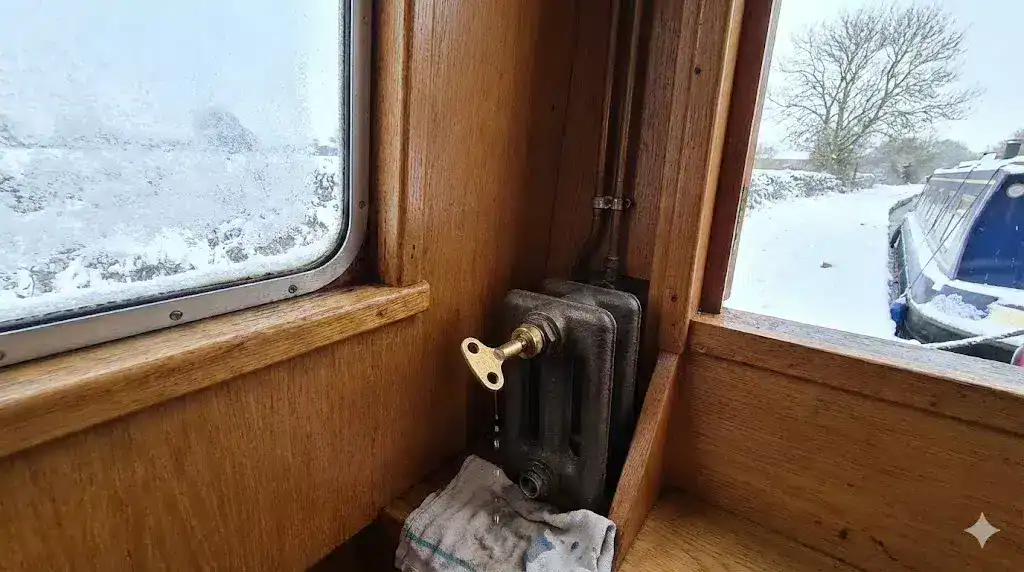
Before you reach for the bleed key, run your heater for 15 minutes. Safely feel the radiators. If the bottom is hot but the top is cold, the air is in the radiator. If the entire radiator is cold but the pipes leading to it are hot, you likely have an airlock in the main 22mm flow pipe.
Step 2: The Tools You’ll Need
- A standard radiator bleed key (or a flat-head screwdriver for some modern valves).
- An absorbent rag or “pig mat” to catch water (marine coolant often contains antifreeze, which can stain timber floors).
- A small container to catch drips.
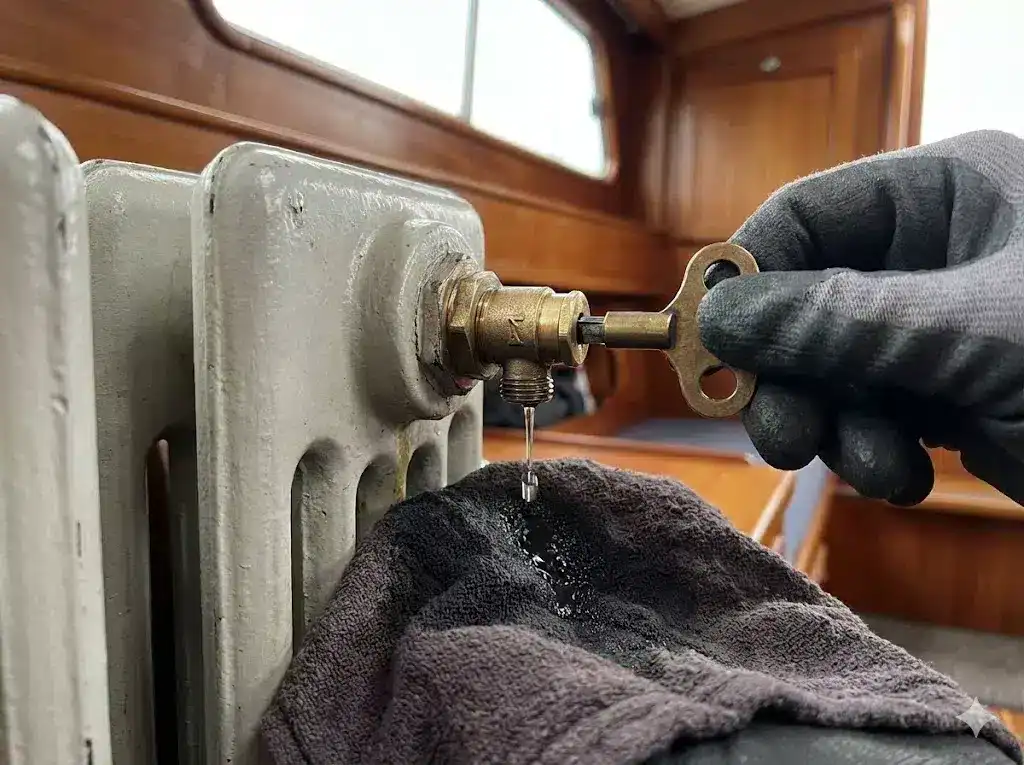
Step 3: The Bleeding Process
- Turn off the Heater: Never bleed the system while the circulation pump is running, as this can actually draw more air into the circuit.
- Start at the Lowest Radiator: Work your way from the radiator closest (and lowest) to the heater towards the one furthest away.
- Open the Valve Slowly: Insert the key and turn anti-clockwise. You should hear a distinct hissing.
- Wait for the Fluid: Close the valve as soon as a steady stream of fluid appears. In a marine system, this fluid should be a clear blue, green, or red (depending on your antifreeze mix). If the water is brown or “rusty,” it’s time to book a full plumbing system flush.
Troubleshooting Stubborn Airlocks
If bleeding the radiators doesn’t solve the issue, the air might be trapped in the heater’s heat exchanger. Some diesel units, such as those found in the Webasto Marine Product Manuals, have specific bleed points on the top of the unit that must be accessed to fully clear the circuit.
Expert Tip: If your header tank is located too low (a common design flaw on some builds), you may need to temporarily “pressure fill” the system or raise the header tank to force air out of the higher loops in the pipework.
When to Call a Marine Engineer
If you find yourself bleeding the system every few days, you likely have a small leak or a failing pressure cap. Marine heating involves complex LPG or Diesel components that require professional calibration to remain BSS compliant. Furthermore, the Gas Safe Register – LPG in Boats guidelines state that only qualified engineers should work on gas-fired heating systems to ensure vessel safety.
If you are unsure about your system’s integrity or need a professional to troubleshoot a persistent airlock, our team is available for nationwide call-outs.