
Nobody likes finding a “Danger Do Not Use” label on their cooker, or hearing that their boat hasn’t passed its BSS examination. It’s inconvenient, often at the worst possible time, and it’s natural to wonder whether it was really necessary.
I’m a Gas Safe registered engineer and an authorised BSS Examiner, so I see this from the other side. In this post, I explain what an engineer has to do when they find something unsafe, why we can’t simply walk away, and what your options are afterwards, including using a different engineer for the repair.
What does a gas engineer check on your boat?
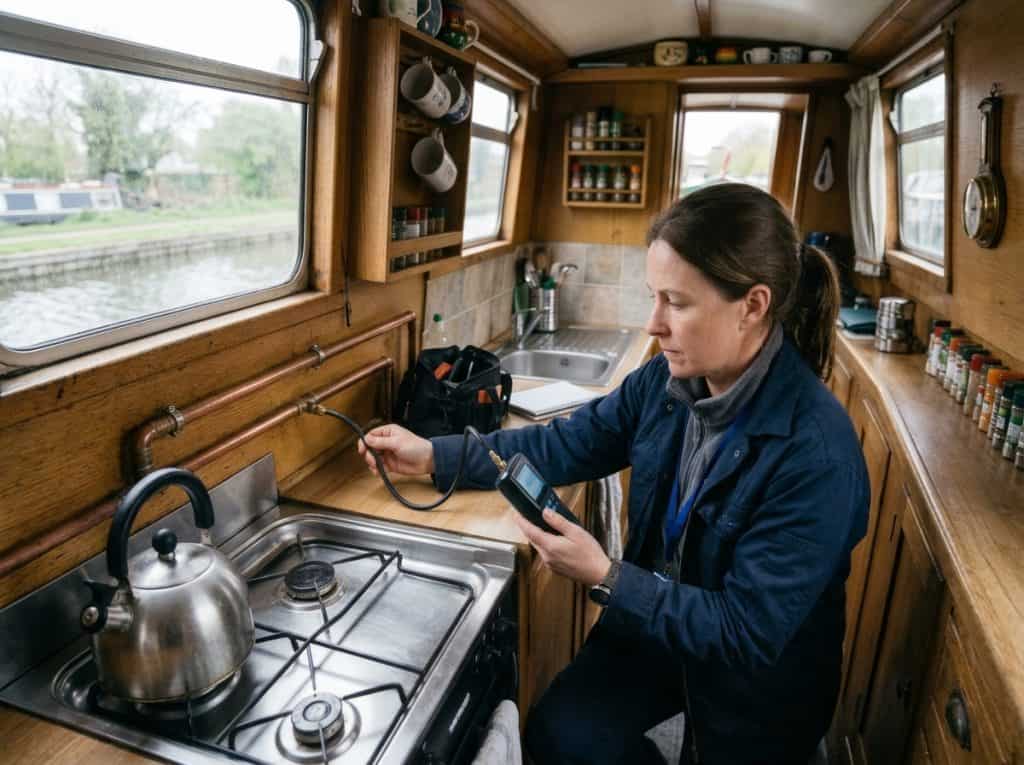
When I carry out a gas safety check or service an appliance, my checks include:
- checking the whole system for leaks (a tightness test)
- inspecting the gas locker, regulator and hoses
- checking how the pipework is run and supported
- checking each appliance’s flame, flue and ventilation
- testing the safety devices that shut off the gas if a flame goes out
Under my Gas Safe registration, I’m required to check the whole installation and every gas appliance on board, not just the one I came for. Once I’ve inspected or worked on any part of it, I’m accountable for all of it. I check everything against the manufacturer’s instructions and the current standards. Most of the time it’s all fine, and I sign it off and move on.
What happens when I find something unsafe?
First, I explain what’s wrong and why it matters. If it’s a quick fix, such as a loose pipe clip or a fitting that needs tightening, I’ll offer to sort it there and then.
If it can’t be fixed on the spot, the Gas Industry Unsafe Situations Procedure decides which category the fault falls into, and that category decides what I must do.
- Immediately Dangerous: a danger to life right now. Examples include a gas leak, fumes getting into the cabin, or a flame safety device that doesn’t work.
- At Risk: not dangerous yet, but it could become so. Examples include poor ventilation, a worn gas hose, or a gas locker that doesn’t drain overboard.
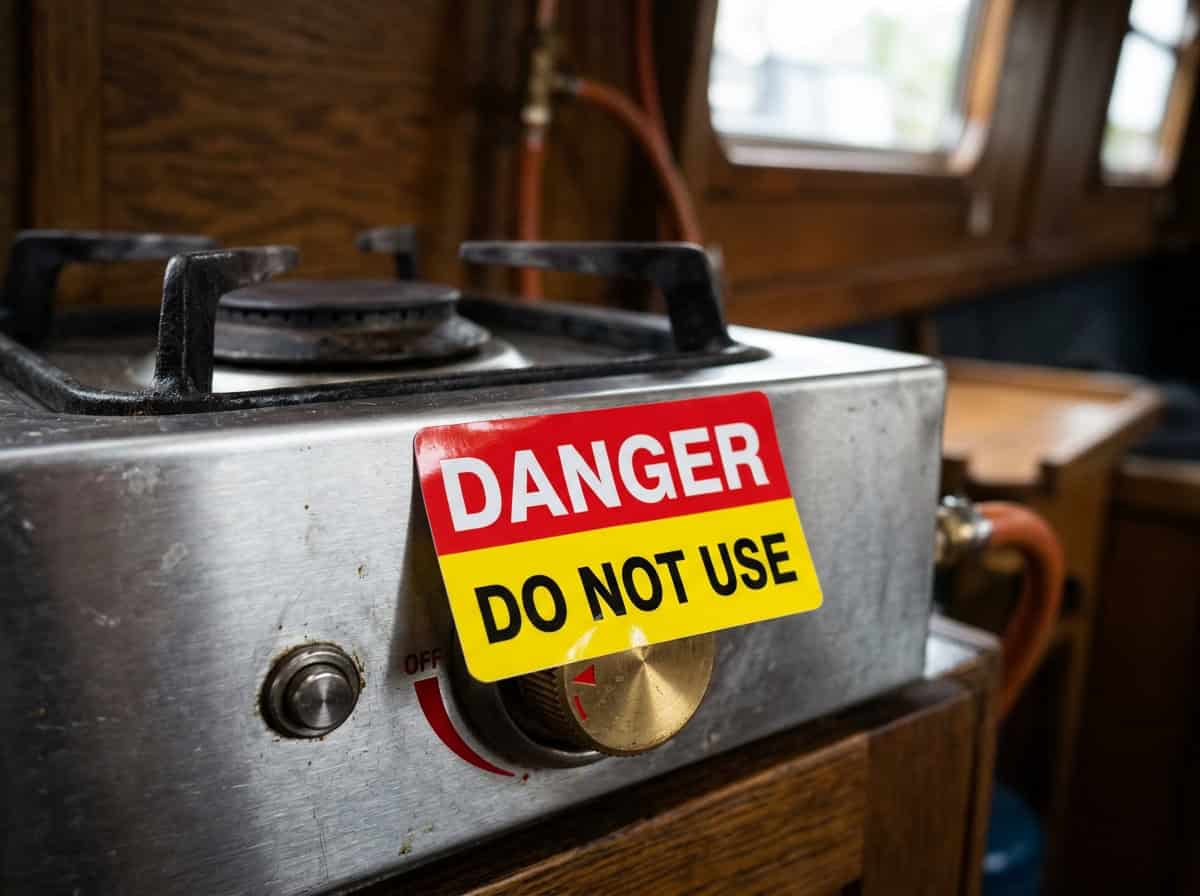
These are examples, not a complete list. In either case, I must complete a warning notice explaining the fault and what’s needed to fix it. With your permission, I’ll also fit a “Danger Do Not Use” label and make the appliance or installation safe.
Why can’t an engineer just sign it off and walk away?
Because the law and my registration don’t allow it. Gas safety law requires anyone working on gas who finds a dangerous appliance to tell the person responsible for it. Health and safety law requires me not to put other people at risk through my work. Gas Safe Register expects me to follow the industry procedure and inspects my work against it. As a BSS Examiner, I must record every fault accurately, as I find it at the time of the examination, and I may also need to issue a BSS Warning Notice.
If I ignored a fault and someone was hurt, I would be answerable for it, and I could lose my registration or face prosecution. No engineer can take that risk just to keep a customer happy.
Why do I need your permission?
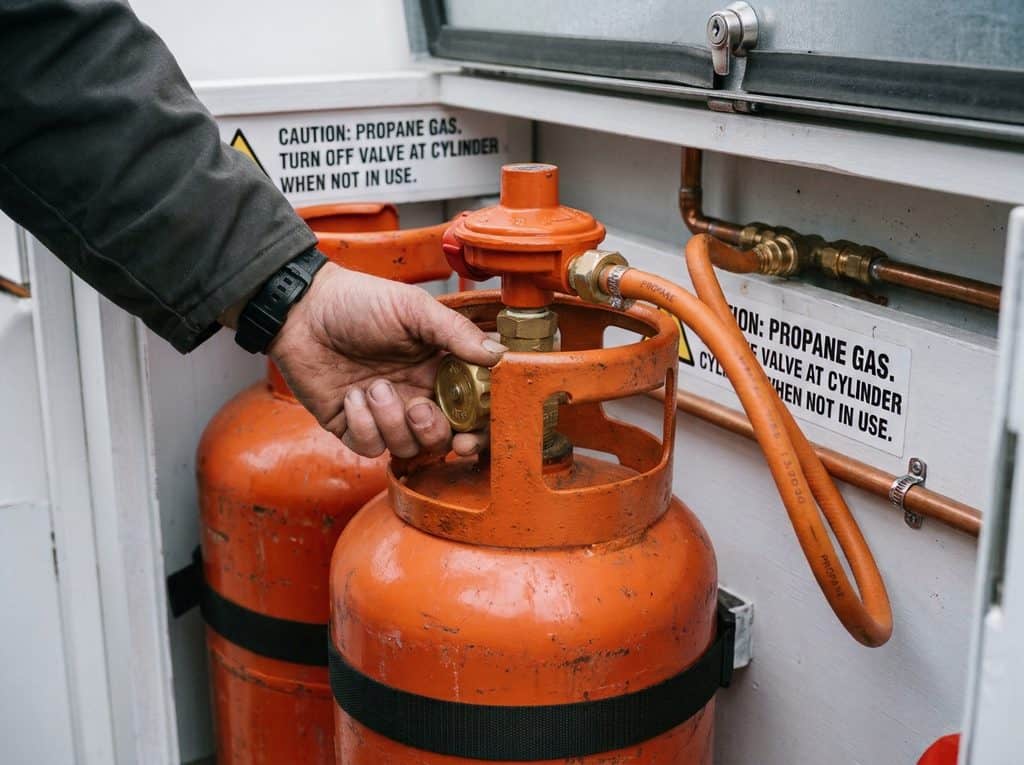
It’s your boat, and I can’t work on it without your agreement. With your permission, I’ll fit a “Danger Do Not Use” label and make it safe. For an At Risk fault, that usually means turning the appliance off at its valve. For an Immediately Dangerous fault, I shut off and seal the supply so no gas can reach it.
Whether you agree is your choice, and I won’t judge either way. If you don’t:
- At Risk: I complete the warning notice, ask you to sign it, and leave a copy with you.
- Immediately Dangerous: lives may be at risk, including people on neighbouring boats. So I must report it straight away to your gas supplier, the company your cylinders come from. They have a duty to respond and make the situation safe, and they may charge for that visit. As I’m already on board, letting me make it safe there and then is usually quicker and costs you less.
If I make it safe, do you have to pay me to fix it?
No. Making something safe and repairing it are two separate things. The warning notice records the fault and what’s needed to put it right, so any suitably qualified engineer can take it from there.
You’re free to choose who does the repair. I’m happy to give you a quote, but you don’t have to use me. If you use someone else, make sure they’re Gas Safe registered for LPG on boats. You can check this on their ID card or on the Gas Safe Register website.
Do engineers make money from turning gas off?
Making something safe is part of the job, but it’s not where the money is. In most cases, it’s covered by the minimum charge you’ve already paid for the inspection, so there’s nothing extra to pay.
What follows is usually a small, fiddly repair. Add travel time and paperwork, and I often can’t fit much else into that day. That’s a day I could have spent on a straightforward installation, earning a full day’s pay. I have plenty of work, so I’ve no reason to go looking for faults.
Honestly, I’d much rather sign a boat off and move on. When I do turn something off, it’s because the procedure leaves me no choice, and because it keeps you safe.
What is the BSS, and what happens if a check fails?
The Boat Safety Scheme examination is a safety check that navigation authorities such as the Canal & River Trust require, usually every four years, before they’ll licence your boat. It looks for risks of fire, explosion and pollution. It isn’t a gas safety certificate or a survey.
If a check fails, I record it on your report, and you’ll need to put it right. If the re-check happens within three months, usually only the failed items need checking again.
If I find something dangerous, such as leaking gas, I issue a BSS Warning Notice, and the gas cylinder must be turned off and labelled. For some hazards, I must also inform the moorings operator and the BSS Office.
My legal duties under gas safety law still apply during a BSS examination.
I don’t carry out repairs as part of a BSS examination. You can have the fault put right by anyone you choose. Many owners find it easiest to ask me to sort it on the day, once the BSS examination has concluded, but that’s a separate job under a separate agreement, with no obligation.
Why are some gas repairs harder than they used to be?
When I repair or replace part of a gas system, the new work must meet today’s standards and the manufacturer’s instructions. Many boat installations were fitted to standards that are now out of date, or to no standard at all. So a simple job can mean changes to the pipework, regulator or other parts of the installation as well.
When I sign something off, I’m taking responsibility for it, so it needs to meet the current standard. A few older items can stay as they are because they’re not unsafe, but that’s the exception.
There are also fewer appliances suitable for marine use than there used to be, which limits the options. I explain this in my guide to ISO 10239 appliance compliance.
“But it’s been like this for years”
It may have been, but that doesn’t make it safe. We also used to put children on the back seat without a seat belt or child seat, and nobody would do that now. Safety rules usually tighten after people get hurt, so that the next person doesn’t. That’s why new work has to meet today’s standards.
How does my pricing work?
My prices are published on my Service Rates & Terms page, so you know where you stand before I arrive.
- LPG and gas work, including LPG safety certificates: £96 an hour
- BSS examination: £285 fixed
- A two-hour minimum applies to all call-outs, which usually covers an LPG inspection
- Call-out travel: no charge in the Stoke-on-Trent area, £85 within an hour’s drive, and quoted individually further away
For larger repairs, I give you an estimate first, so you can decide who does the work. Prices can change, and the rates page is always up to date.
Can I use a different engineer or examiner?
Yes. You’re free to have the repair, a further gas check or your next BSS examination done by someone else. You don’t need me involved.
What I’ve recorded stays on record, as I found it on the day.
Any competent engineer following the same procedure should reach the same conclusion. If someone is prepared to overlook a fault I’ve found, it’s worth asking whether you want them working on your gas system. A safety certificate is only worth having if it’s done properly.
If you’ve been given a warning notice and aren’t sure what it means, or you’d like a quote to put things right, get in touch. I’ll explain what I found, what your options are and what it will cost, before any work starts.