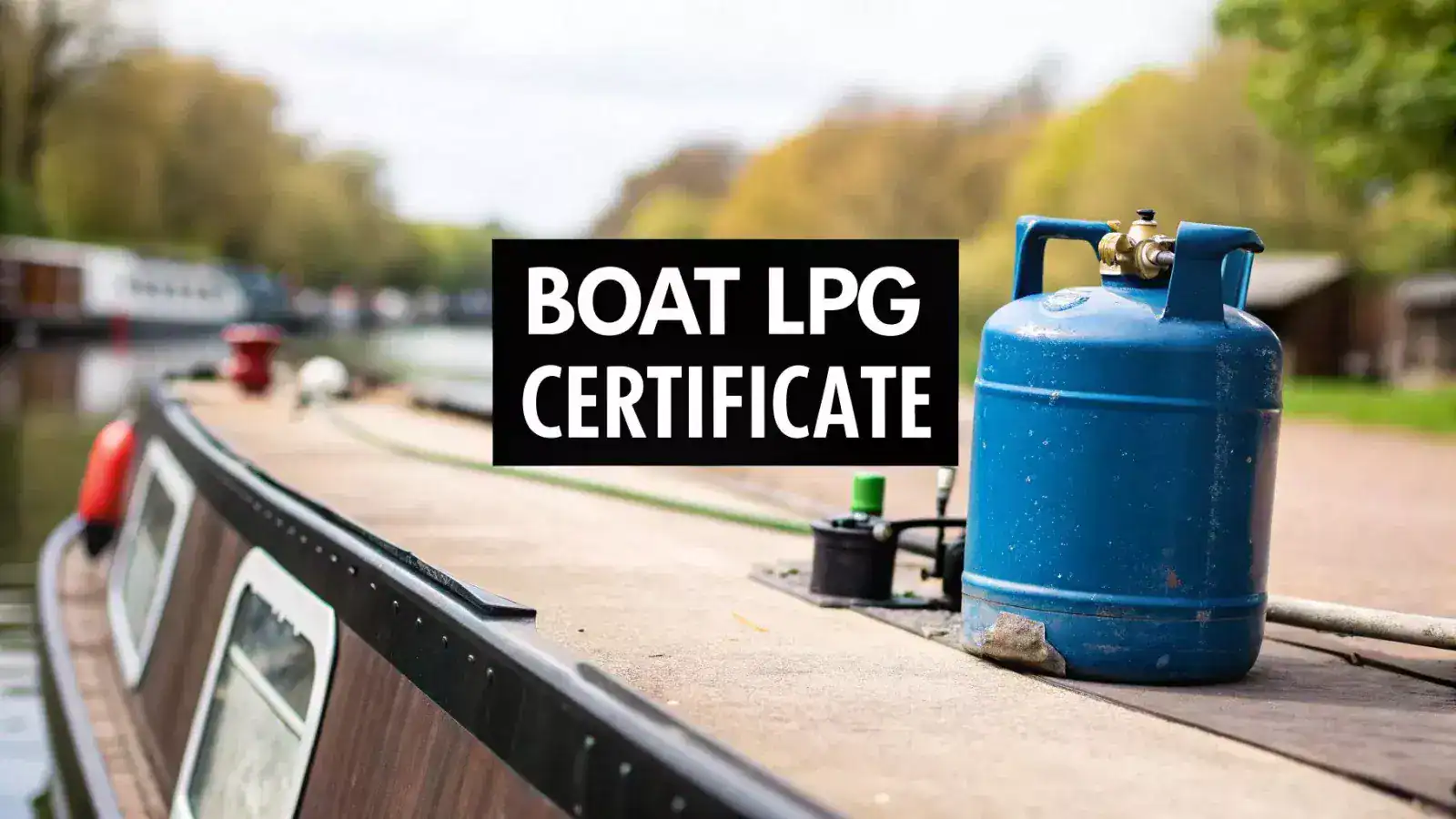

So, what exactly is a boat LPG certificate? Think of it as the official thumbs-up confirming your boat’s gas system has been professionally checked over and meets UK safety standards. It’s a vital piece of the puzzle for the wider Boat Safety Scheme (BSS) examination, something most of us on inland waterways need for insurance and mooring. This certificate is your proof that the system is safe from leaks, fires, and the dreaded carbon monoxide.
Understanding Your Boat LPG Certificate and Why It Matters
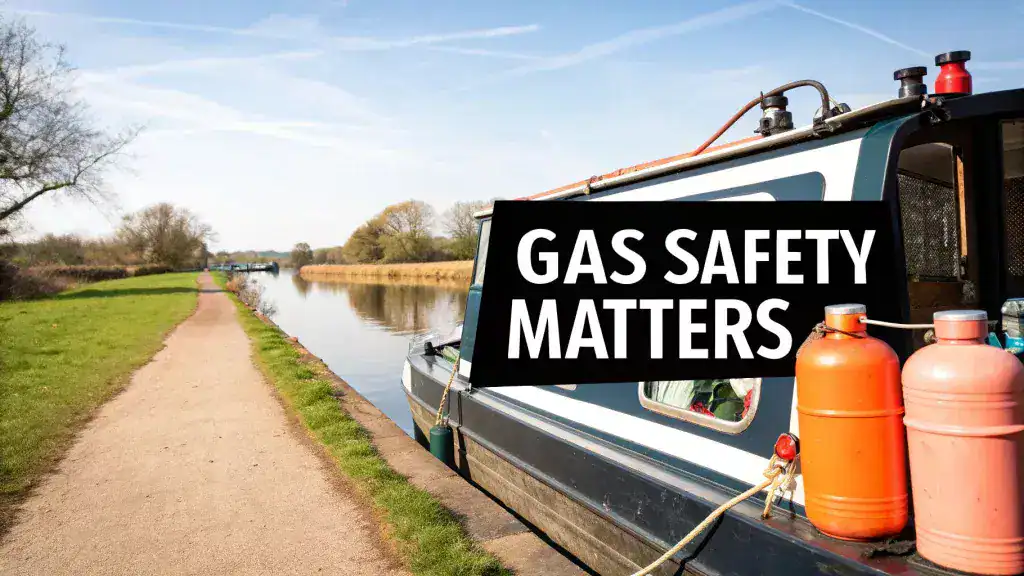
For anyone living on or just enjoying a narrowboat, barge, or cruiser, the gas system is pure convenience. It powers everything from your morning cuppa to the water heater for a hot shower. But with that convenience comes a big responsibility. Let’s be honest, a dodgy or poorly maintained LPG system is one of the biggest dangers you can have on a boat.
This is where the boat LPG certificate steps in. It’s so much more than a bit of paper; it’s a formal declaration from a qualified, Gas Safe registered engineer. They’re basically signing off on your entire system—from the gas locker and pipework right down to the appliance burners—confirming it’s all up to scratch and, most importantly, safe.
The Link to the Boat Safety Scheme
You can’t really talk about the LPG certificate without mentioning the Boat Safety Scheme (BSS). To get your full BSS certificate, which you absolutely need to navigate most of the UK’s inland waterways, your boat has to pass a whole series of safety checks. The gas system inspection is one of the most thorough parts of that exam.
You can dive into the full list of requirements in our detailed guide on the Boat Safety Scheme.
In a nutshell, you cannot pass your BSS without getting the all-clear on your gas safety. A fail here means no BSS certificate, and that will stop your cruising plans dead in their tracks.
More Than Just a Legal Hurdle
Beyond ticking the boxes for regulatory compliance, a valid certificate gives you genuine peace of mind. The BSS, which sets these standards, requires these inspections every four years. They check for everything: potential gas leaks, the condition of your regulators, and whether your appliances are installed correctly.
Sadly, BSS incident data shows that a worrying number of boating incidents involving LPG are down to faulty installations or a lack of proper certification. This really brings home just how important this check is for preventing accidents. Because of this, marinas and insurance companies almost always demand a valid BSS certificate before they’ll do business with you.
“Getting our first LPG certificate felt like a big step, but it was so reassuring. The engineer pointed out a minor issue with our pipework we’d never have noticed. Knowing it’s all been checked professionally lets us relax and actually enjoy being on the water without that nagging worry.” – Clair and Dave S., Narrowboat Why Knot.
To give you a quick overview, here are the key bits of information you’ll need.
Boat LPG Certificate Key Facts at a Glance
| Aspect | Key Information |
|---|---|
| What is it? | A certificate confirming your boat’s LPG system is safe and compliant. |
| Who issues it? | A Gas Safe registered engineer qualified for LPG work on boats (look for the “LPG” and “Boats” qualifications). |
| Validity Period | Recommended to be renewed every 12 months. |
| Key Checks | Gas locker, ventilation, pipework, regulators, hoses, appliance installation, and a gas tightness test. |
| Cost | 1 – 2 hours of labour. See our rates and terms page. |
Remember, this isn’t just about passing an exam. It’s about ensuring the safety of everyone on board and protecting your floating home.
What an LPG Gas Safety Inspection Actually Covers
Ever wondered what a Gas Safe engineer is really looking for when they step aboard with their clipboard and toolkit? It’s a lot more than just a quick glance. A proper boat LPG inspection is a methodical, top-to-bottom review of your entire gas system, making sure every part of it is safe, secure, and up to scratch.
The whole point isn’t to catch you out; it’s about preventing potential disasters before they happen. The engineer is basically tracing the path of the gas right from the bottle to the burner, scrutinising every single component along the way. They’re on the lookout for any signs of wear, dodgy installation, or anything else that could put you and your boat at risk.
From the Locker to the Pipework
The inspection nearly always kicks off at the source: the gas locker. This isn’t just any old storage cupboard; it’s a critical safety feature. The engineer will meticulously check several key things:
- Integrity and Security: Is the locker built from the right materials and properly sealed off from the boat’s interior? Are the gas bottles themselves secured so they can’t topple over when you’re on the move?
- Ventilation: Appliances need the correct amount of air supplied to function safely. These are calculated according to the appliance output, number of occupants, and other factors.
- Appliance Installation: Appliances must be suitable, installed correctly, secure, and function as intended.
Next up, their attention turns to the regulator and hoses. These are really common failure points. Flexible hoses perish over time, and regulators don’t last forever. The engineer will be checking the date stamps, looking for any cracks or brittleness in the hoses, and making sure the regulator is the correct type for your system. If you’re not sure how old yours is, it’s well worth having a read about when to change your boat’s LPG regulator and hose.
Then they’ll look at the fixed pipework, which is usually copper. The engineer will inspect its condition for any signs of corrosion or physical damage. They’ll also check that it’s properly supported with clips at the right intervals to stop vibration causing a fracture down the line.
Checking Your Appliances and Flues
Finally, the inspection moves inside to the appliances themselves. It’s not just a case of seeing if your cooker lights or your water heater fires up. The focus here is all about safe installation and operation.
For example, when looking at a popular water heater like the Morco EUP11RS, the main concern is that it’s flued correctly. An improperly installed flue can leak deadly carbon monoxide straight into your cabin. It’s the same story for a blown air heater like a Propex Heatsource HS2000; the engineer will check that it’s securely mounted and that its combustion air intake and exhaust pipes are properly routed outside, well away from each other and any windows or vents.
“During our BSS, the engineer found our cooker hob didn’t have flame failure devices. We’d used it for years without realising the danger. Having a professional check it and explain the ‘why’ behind the rules was a real eye-opener for us.” – Testimonial from a liveaboard on the Kennet & Avon Canal.
The whole inspection wraps up with a gas tightness test. This is the moment of truth. The engineer will pressurise the system with gas, shut off the supply, and use a special gauge called a manometer to see if the pressure drops. Any drop, no matter how small, means there’s a leak somewhere. That leak has to be found and fixed before a boat LPG certificate can be issued.
How to Prepare for a Successful Inspection
Passing your boat LPG inspection the first time around is the best way to save yourself time, money, and a whole lot of stress. A bit of proactive work means you can spot and fix minor issues before they become an automatic fail. Trust me, a little preparation goes a very long way, ensuring the engineer’s visit is smooth and successful.
Think of it as a pre-flight check for your gas system. By running through a few simple but vital tasks yourself, you can massively increase your chances of getting that all-important boat LPG certificate without a hitch. It’s all about being prepared, not just waiting for the verdict.
The diagram below shows the typical flow of an inspection, from the gas locker right through to the final appliance checks.
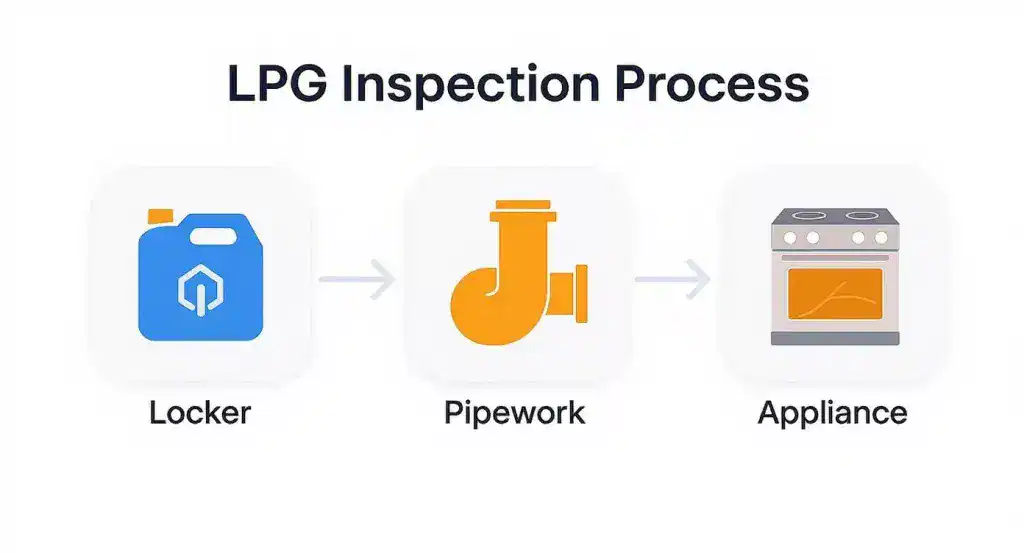
This gives you a good idea of how an engineer methodically works through your setup, highlighting the key areas that will be under the microscope.
Your Pre-Inspection Checklist
Before the engineer arrives, set aside some time for these checks. They’re straightforward but cover some of the most common reasons we see for a fail.
- Clear the Gas Locker: Your gas locker needs to contain nothing but the gas cylinders. Get rid of any tools, cleaning supplies, ropes, or electrical bits and pieces. An engineer has to see that it’s a dedicated, sealed unit with zero potential ignition sources.
- Secure the Cylinders: Make sure your gas bottles are strapped in tight and can’t move or topple over. A simple strap or clamp is usually all you need.
- Ensure Clear Access: The engineer needs to physically see and get to all the pipework and appliances. Clear out any cupboards and lockers that are hiding the gas lines running through your boat. If they can’t see it, they can’t pass it.
Finding a Qualified Engineer and What to Expect on the Day
Getting your boat’s LPG certificate sorted starts with finding the right person for the job. And no, your regular domestic heating engineer won’t cut it. You absolutely need a Gas Safe registered professional who specifically holds the ‘LPG (Boats)’ qualification. This is non-negotiable. Gas systems on boats have their own unique set of challenges and rules, a world away from a typical house installation.
The most reliable way to track down a properly qualified engineer is through the official Gas Safe Register website. You can pop in your postcode and, crucially, filter the search to only show engineers certified for “LPG” and “Boats”. This simple step guarantees the person turning up knows their stuff, from the importance of flame supervision devices to the specifics of correctly vented gas lockers.
It’s also a great idea to ask around your marina or check out boater forums on social media. A good word from a fellow boat owner can be worth its weight in gold, often leading you to someone who’s not just qualified, but also known for being reliable and familiar with the local waterways.
Preparing for the Inspection
On the day of the visit, the engineer will need clear, easy access to every single part of your gas system. That means you’ll need to empty out any cupboards hiding pipework and ensure your gas locker is completely clear and accessible. It’s also helpful to have any previous BSS or LPG certificates handy, though it’s not always a deal-breaker.
The engineer will work methodically through your entire setup, usually starting at the gas locker and following the pipework to each appliance. The main event of the inspection is the gas tightness test. For this, they’ll pressurise the system and use a manometer to check for any drop in pressure. Even the tiniest drop signals a leak somewhere in the system.
You can expect the gas inspection part of a BSS exam to take about an hour, though this can vary depending on how complex your boat’s system is.
“Our engineer was fantastic. He walked me through the whole tightness test, explaining what the readings meant. It was reassuring to see how thorough he was. He found a tiny leak on a connection I’d never have spotted myself.” – Testimonial from a narrowboat owner, Grand Union Canal.
After the Inspection: What’s Next?
Once the engineer has finished, there are two possible outcomes. If your system is up to scratch and meets all the standards, you’ll be issued with your pass documentation. This is a key part of your overall Boat Safety Scheme certificate, so keep it somewhere safe.
If the system fails, don’t panic. The engineer will give you a clear, written report that details exactly what the problems are and what you need to do to fix them. Think of it less as a failure and more as a clear roadmap to getting compliant. For more on this, you can get advice on finding a qualified boat gas engineer to handle the necessary repairs.
After a competent person has completed the required work, the engineer can come back to re-inspect the system and, all being well, issue your certificate.
Common Failure Points and How to Avoid Them
Learning from others’ mistakes is one of the quickest ways to get things right. When it comes to your boat’s LPG certificate, knowing the common pitfalls can be the difference between a pass and a fail. Gas Safe engineers see the same problems time and time again, but the good news is that most are surprisingly easy to spot yourself beforehand, so your engineer can arrive prepared for repairs.
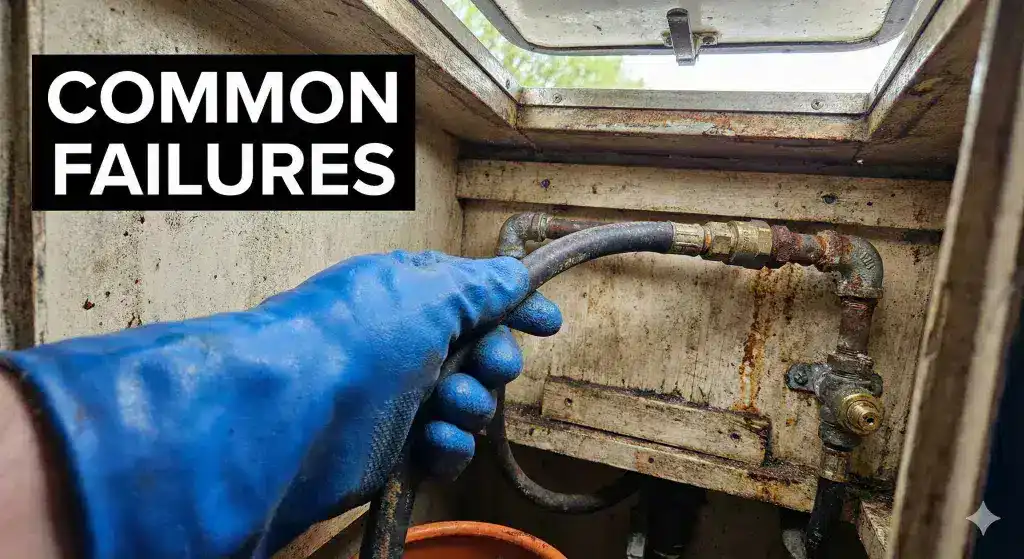
Perished Hoses and Dodgy Regulators
This is arguably the number one failure point we see. The flexible hose connecting your gas bottle to the fixed copper pipework has a limited lifespan. Over time, sunlight, weather, and general wear and tear cause it to become brittle and cracked, creating a serious leak risk.
It’s an easy fix, though. Just check the date stamped on your hose. If it’s past its expiry or looks cracked, stiff, or damaged in any way, let the engineer know to fix it during his visit. Regulators can also fail without warning. Understanding the function of LPG regulators and their safety devices is key to knowing when an upgrade might be on the cards.
Improperly Secured Gas Cylinders
An unsecured gas bottle is a disaster waiting to happen. If it topples over while you’re cruising or in choppy waters, it can put immense strain on the flexible hose—or worse, rupture it completely. That could lead to a major gas leak.
This is another simple one to sort out. Make sure your gas cylinders are held firmly in place with a robust strap, clamp, or a purpose-built housing. They shouldn’t be able to rock, slide, or tip over under any circumstances.
Inadequate Ventilation and Flueing
Ventilation is absolutely non-negotiable on a boat. This applies to both the gas locker, which must have a drop-out vent at the bottom to allow any heavier-than-air LPG to escape safely overboard, and your appliances.
Any appliance with a flue, like a water heater or a space heater or a cooker, needs correctly installed ventilation for combustion air.
“My first GasSafe certficate was a fail. The engineer found the gas locker wasn’t properly sealed from the engine bay and the cabin ventilation was undersized. It was a wake-up call. I sorted the issues he listed, and it passed with flying colours the next time. It’s not about passing a test; it’s about being safe.” – Testimonial from a liveaboard boat owner on the River Soar.
Corroded or Damaged Pipework
Finally, the fixed copper pipework that runs through your boat can be a hidden source of trouble. Corrosion is a big one, especially where pipes pass through damp bulkheads. This can weaken the metal and lead to tiny pinhole leaks that are hard to detect.
Physical damage from unsecured items is also a common problem. Have a good look at the visible sections of your pipework for any green discolouration (verdigris) or obvious dents and kinks. You should also check that it’s correctly clipped to the boat’s structure to prevent vibration damage. These simple checks can prevent a guaranteed fail.
Your Top Questions About Boat LPG Certificates Answered
Getting to grips with the rules around your boat’s gas system can sometimes feel a bit murky. But once you understand the essentials, you’ll feel much more confident managing it all safely. We get asked a lot of the same questions, so we’ve put together answers to the most common ones boaters have about the LPG certificate.
Hopefully, this will clear up what it’s for and what you need to do to keep things safe and compliant on the water.
How Often Does My Boat’s Gas System Need Checking?
Your LPG system should get a thorough inspection every twelve months. This will ensure appliances continue to function properly and the pipework installation hasn’t deteriorated.
Can I Do My Own LPG Work Onboard?
While you absolutely can—and should—do your own regular visual checks, any hands-on work is a job for the pros.
Any work on the system itself must be done by a Gas Safe registered engineer who holds the ‘LPG (Boats)’ qualification. This covers everything from installing new pipework to repairing or servicing your appliances. Trying to tackle this yourself isn’t just incredibly dangerous; it’s a surefire way to void your boat’s insurance policy.
Is a BSS Certificate the Same as an LPG Certificate?
They’re tightly linked, but they aren’t the same. Think of the BSS certificate as the overall safety MOT for your boat, covering its fuel systems, electrics, and fire safety measures.
The LPG inspection is a critical, mandatory part of that bigger BSS examination. You simply cannot get a full BSS certificate if your gas system fails to meet the required safety standards.
So, in short, getting a pass on your gas system is a crucial stepping stone to achieving your full BSS certificate.
Our Boat LPG Services
At Marine Heating Solutions, our Gas Safe registered engineers are specialists in boat LPG systems. Whether you need a full inspection, some advice on a new appliance, or repairs to make sure you pass your next BSS, we’re here to help you stay safe.