
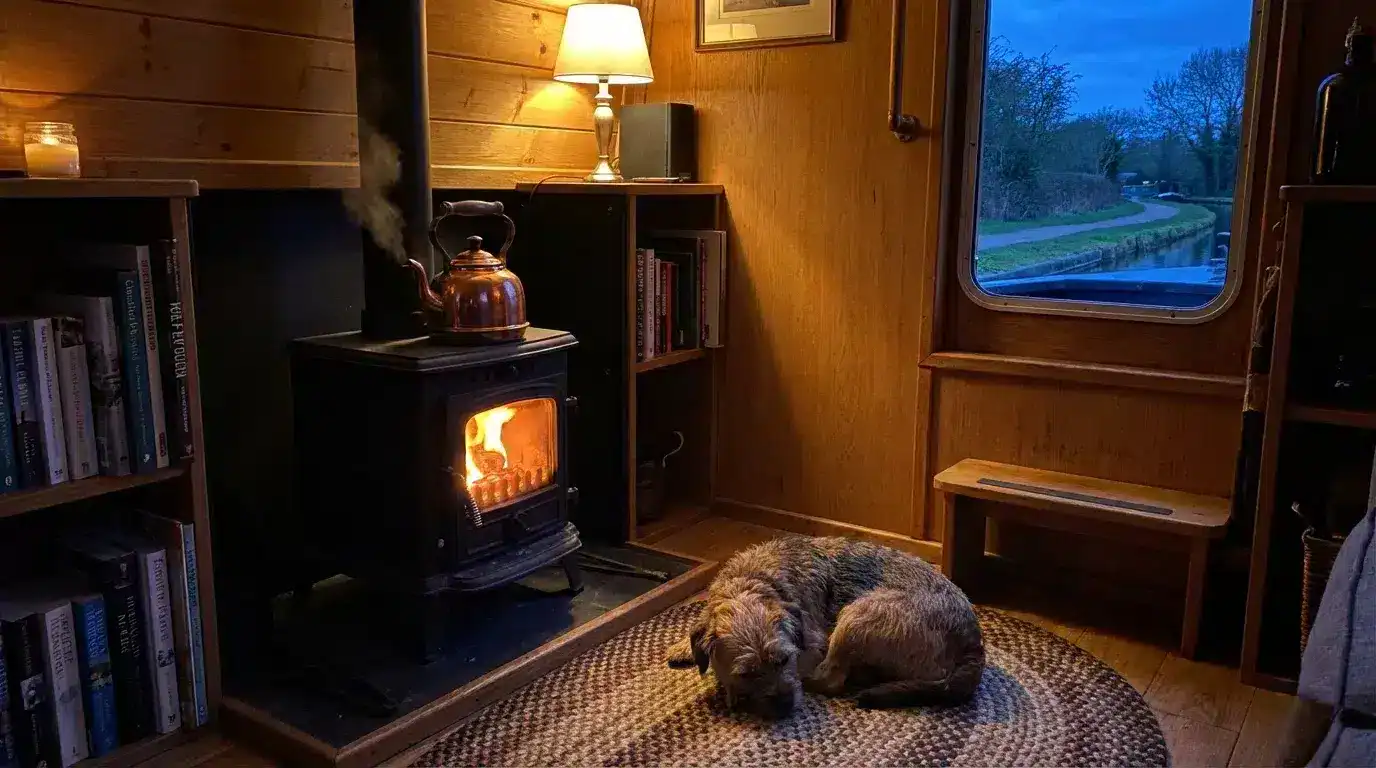

A reliable small boat stove is far more than just a heater; it’s the warm, beating heart of any narrowboat or canal barge. It provides a dry, sanctuary-like environment against the persistent damp and chill of the UK’s inland waterways. Selecting the right stove is essential for comfort, cooking, and creating that unmistakable atmosphere of life afloat.
Why a Dedicated Stove is the Heart of Your Boat
Unlike a house on land, a boat is essentially a steel box sitting in cold water. This makes it a magnet for condensation and allows heat to escape quickly. A well-chosen stove transforms this cold metal shell into a proper home by providing:
- Effective Moisture Control: Radiant heat is the best weapon against the pervasive dampness common on boats, protecting both your health and the vessel’s interior.
- Off-Grid Reliability: Stoves (particularly solid fuel) provide heat without needing electricity, which is vital when cruising remote areas or during winter when solar power is scarce.
- Versatile Utility: Many stoves feature a flat top perfect for boiling a kettle or slow-cooking a stew, adding value to a compact galley.
At Marine Heating Solutions, we specialise in ensuring these installations are both beautiful and safe. For a wider look at our expertise, visit our Boat Services page.
Choosing Your Fuel: Solid Fuel vs. Diesel
The first major decision is choosing between the traditional charm of solid fuel and the modern convenience of diesel.
The Case for Solid Fuel Stoves
Solid fuel stoves, burning wood or smokeless coal, provide a powerful, radiant heat that seeps into the “bones” of the boat. They require no electricity and offer a flickering focal point for the cabin. However, they do require manual refuelling and ash removal. For those leaning toward this traditional route, our Solid Fuel Boat Stove Installations section offers detailed technical insights.
The Appeal of Diesel Stoves
Diesel stoves are much like an integrated heating system. They draw fuel directly from your main tank and can often be controlled via a thermostat. While they require a small amount of 12V power, they offer “flick-of-a-switch” warmth. Explore our Diesel Boat Stove Installations for more on this option.
Calculating the Right Size for Your Cabin
Sizing a stove is a “Goldilocks” problem: too small and you’ll be cold; too large and you’ll be forced to open windows in mid-winter. The magic number is measured in kilowatts (kW).
As a general rule for UK narrowboats:
- 2kW – 4kW: Ideal for small cabins or secondary heating.
- 4kW – 6kW: The standard range for a 50ft – 70ft narrowboat.
- 6kW+: Reserved for widebeams or boats with exceptionally poor insulation.
We highly recommend consulting our Boat Services team to determine the specific heat output required for your insulation type and cabin layout before purchasing.
Safety, Regulation, and BSS Compliance
Installing a stove in the confined space of a boat carries risks of fire and Carbon Monoxide (CO) poisoning. All installations must strictly adhere to the Boat Safety Scheme (BSS) and standards set by the Canal & River Trust (CRT).
Our OFTEC-trained and Gas Safe registered engineers ensure your installation is fully compliant. For those using traditional wood or coal burners, we also recommend following the latest efficiency guidance provided by the Solid Fuel Association to ensure a clean and safe burn.
Our OFTEC-trained engineers ensure:
- Correct Hearth & Surrounds: Fire-resistant materials must protect the boat’s hull and fit-out.
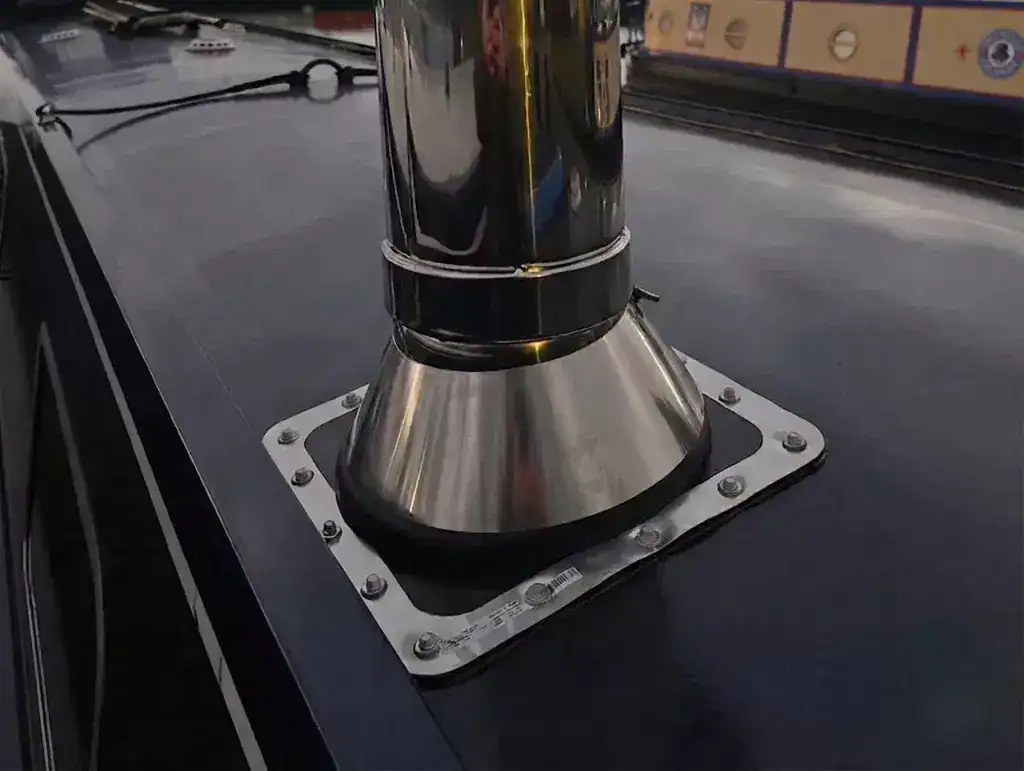
- Double-Insulated Flues: Essential to prevent the roof or ceiling from igniting.
- Ventilation: Ensuring enough fresh air for a clean, safe burn.
- CO Alarms: Professional placement of life-saving detectors.
For ongoing safety, consider our Boat Diesel & Oil Appliance Certificates service.
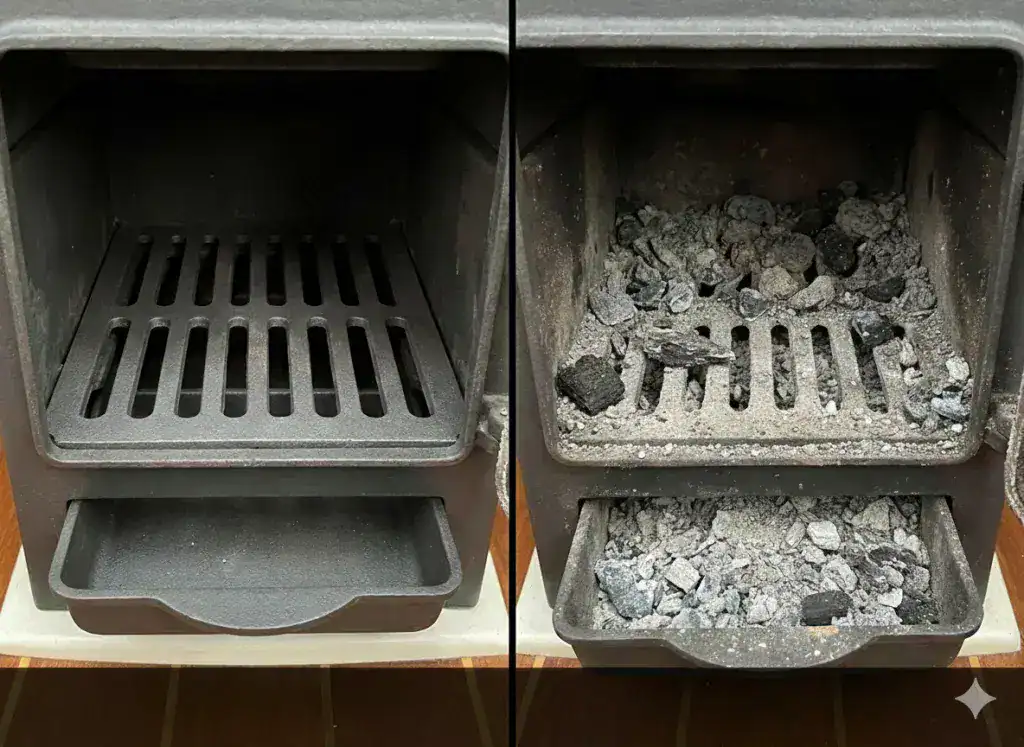
Maintenance for Peak Performance
To keep your stove efficient and safe, regular maintenance is essential:
- Annual Flue Sweeping: Prevents chimney fires and ensures a good draw.
- Door Seal Check: Replacing the rope seal ensures the stove doesn’t leak smoke or draw too much air.
- Grate Inspection: Ensuring the grate isn’t warped allows for proper airflow and a cleaner burn.
If your stove is looking tired, we offer a full Marine Appliance Refurbishment service to bring it back to life.