
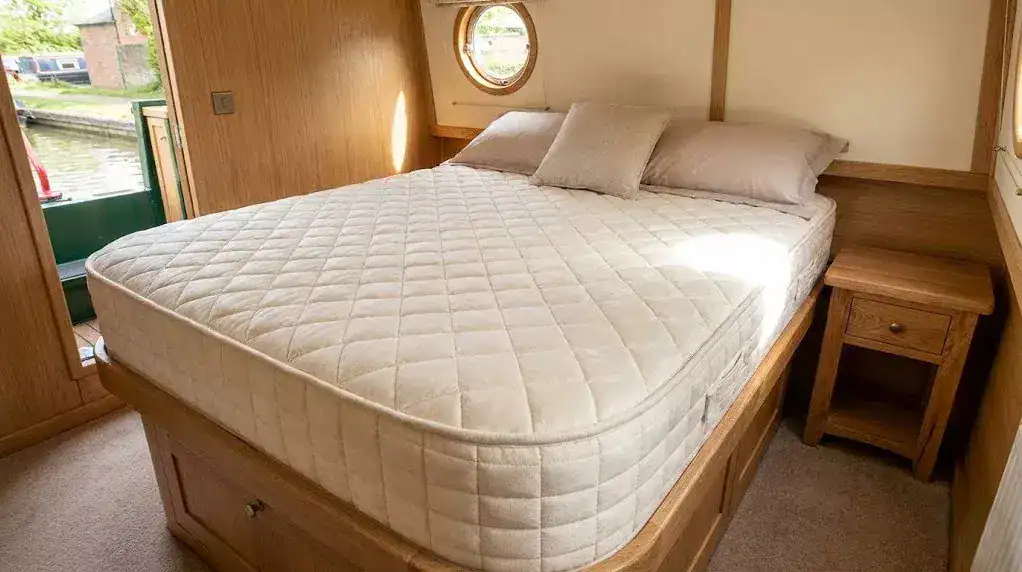



Sleep Better on the Water
On a boat, a mattress is more than just a place to sleep; it is a piece of precision-engineered furniture. Unlike a standard domestic bed, mattresses for boats must navigate unique challenges: odd shapes, restricted access, and the ever-present threat of condensation and mildew.
As we move into 2026, the focus is on “Dry-Sleep” technology—combining high-density memory foams with breathable under-layers to ensure your cabin remains fresh, even in the depths of winter.
Looking to refresh your entire cabin? View our Marine Heating Solutions to keep your sleeping quarters dry.
1. Custom Shapes: The “V-Berth” and “Island” Challenge
One of the main reasons you cannot simply use a domestic mattress on a boat is the shape. Marine beds are rarely perfectly rectangular.
- V-Berths: Common in yacht bows, these require a split or tapered design to fit the narrowing hull.
- Island Beds: Often found in widebeams and cruisers, these usually feature curved or “clipped” corners to allow for walking space in tight cabins.
- Custom Cut-outs: Many boats have side-on beds that require specific notches to clear wardrobes or bulkheads.
For 2026, we recommend bespoke templates. A professionally cut mattress ensures no “cold spots” where air can circulate and condense against the hull.
2. Material Choice: Memory Foam vs. Sprung
Which is right for me? The choice of material impacts both your comfort and the longevity of the mattress in a marine environment.
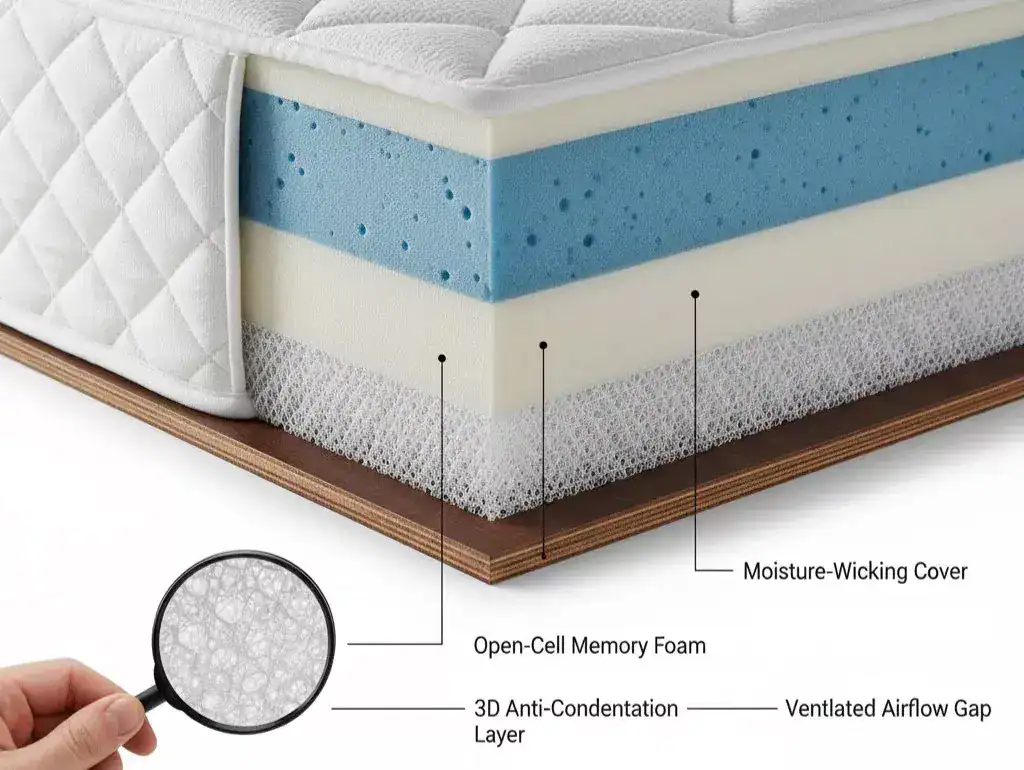
- Memory Foam & Reflex Foam: These are popular for boats because they can be easily cut to any shape. However, in 2026, look for “Open Cell” technology. Standard foam can trap heat and moisture; open-cell foam allows air to move through the material, preventing that “clammy” feeling.
- Pocket Sprung: Traditionally the most comfortable, but harder to customise. Modern marine-grade sprung mattresses now use rust-resistant springs to prevent degradation in salty or humid air.
- Hybrid Mattresses: The 2026 gold standard. These combine a supportive sprung base with a breathable foam top layer, offering the best of both worlds.
3. Combating Condensation
The biggest enemy of any boat mattress is the moisture that gets trapped underneath it. Because boat beds often sit on solid plywood boards, there is no airflow.
To pass a Boat Safety Scheme (BSS) hygiene check and protect your investment, consider these 2026 best practices:
- Anti-Condensation Matting: Use a 3D mesh layer (like Drymat) under the mattress to allow air to circulate.
- Breathable Covers: Ensure your mattress cover is “Hydrophobic” or treated with an anti-microbial finish to prevent mould growth.
Conclusion
Investing in specialised mattresses for boats is an investment in your health and your vessel’s upkeep. By choosing the right materials and ensuring proper airflow, you can enjoy a domestic-level sleep with marine-level durability.
Comments are closed.