Clean Water, Healthy Crew
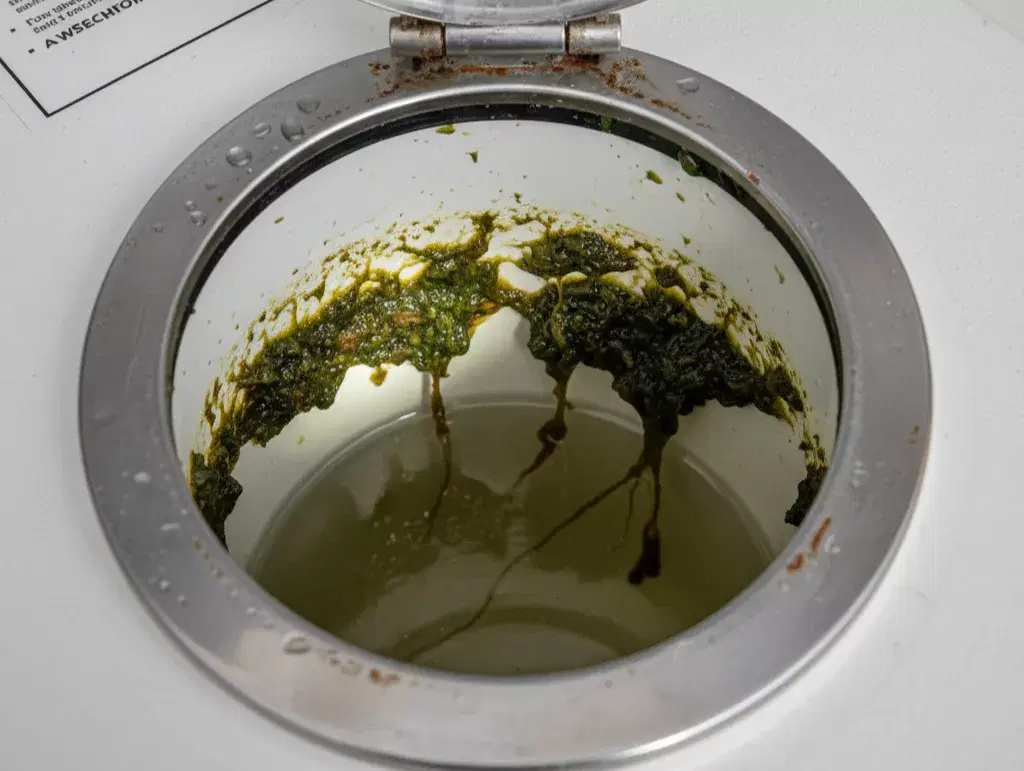
Maintaining your freshwater system is about more than just taste; it’s about safety. Over time, narrowboat and yacht water tanks develop biofilm—a slimy layer of bacteria and algae that can harbour harmful pathogens.
As we head into 2026, the emphasis is on “non-chlorine” treatments that are tougher on bacteria but gentler on your pump’s internal seals and the environment.
Need a full system flush or a tank inspection? Contact our Marine Plumbing Team.
1. Why Standard Bleach is a Risk
While many boaters historically used household bleach, modern marine standards advise against it for two main reasons:
- Seal Damage: The high sodium hypochlorite content in bleach can perish the rubber diaphragms in 12V pumps, like those from Whale or Jabsco.
- Aftertaste: Bleach is notoriously difficult to flush out, often leaving a chemical residue that lingers for weeks.
Instead, 2026 best practices suggest using specialised oxygen-based cleaners or stabilised chlorine dioxide, such as Elsil by Clean Tabs, which is tasteless and odourless.
2. The 2026 Step-by-Step Sanitisation Process
To meet Boat Safety Scheme (BSS) hygiene recommendations, follow this semi-annual routine:
- Empty the System: Run your taps until the tank is as low as possible.
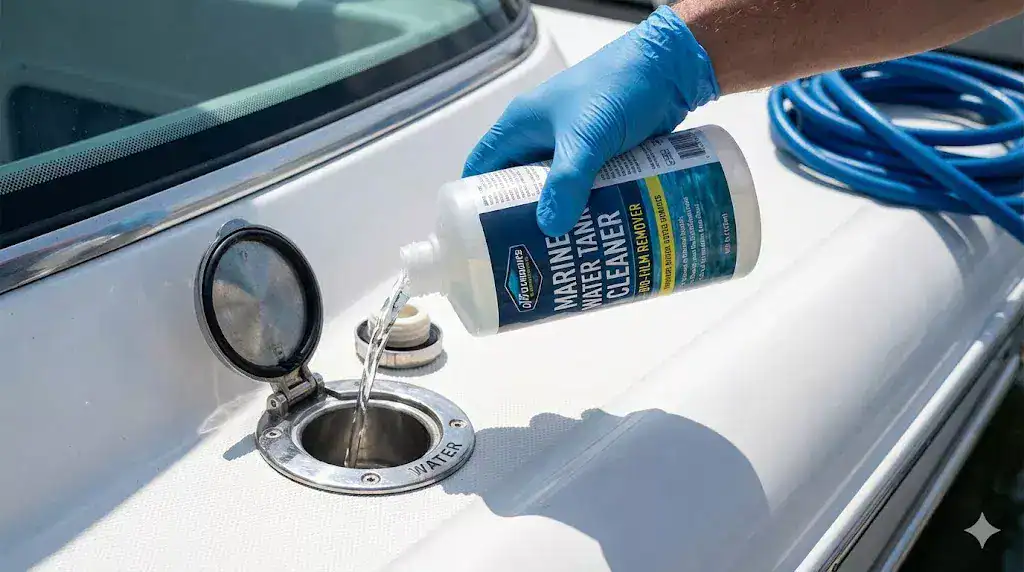
- Dose the Tank: Add your chosen water tank cleaner according to the tank capacity (standard narrowboat tanks are approx. 200-400 litres).
- Draw Through: Open every tap (hot and cold) until you smell or see the cleaning agent, then close them. This ensures the cleaner is sitting in the pipework, not just the tank.
- Soak: Leave for the manufacturer’s recommended time (usually 1–12 hours).
- Flush: Drain the system and refill with fresh water. Repeat the flush if any residue remains.
3. Dealing with Biofilm
If your water has a “rotten egg” smell or a metallic tang, you likely have a heavy biofilm build-up. In these cases, a simple liquid additive might not be enough. You may need a heavy-duty “shock treatment” cleaner that physically breaks down the scale.
Pro-Tip: Always check your pump’s pre-filter after a deep clean. The cleaning process often dislodges “flakes” of biofilm that can quickly clog your pump’s intake.
Conclusion
A clean water tank is the foundation of a healthy boat. By using the right water tank cleaner twice a year, you protect your health and extend the life of your plumbing components.