
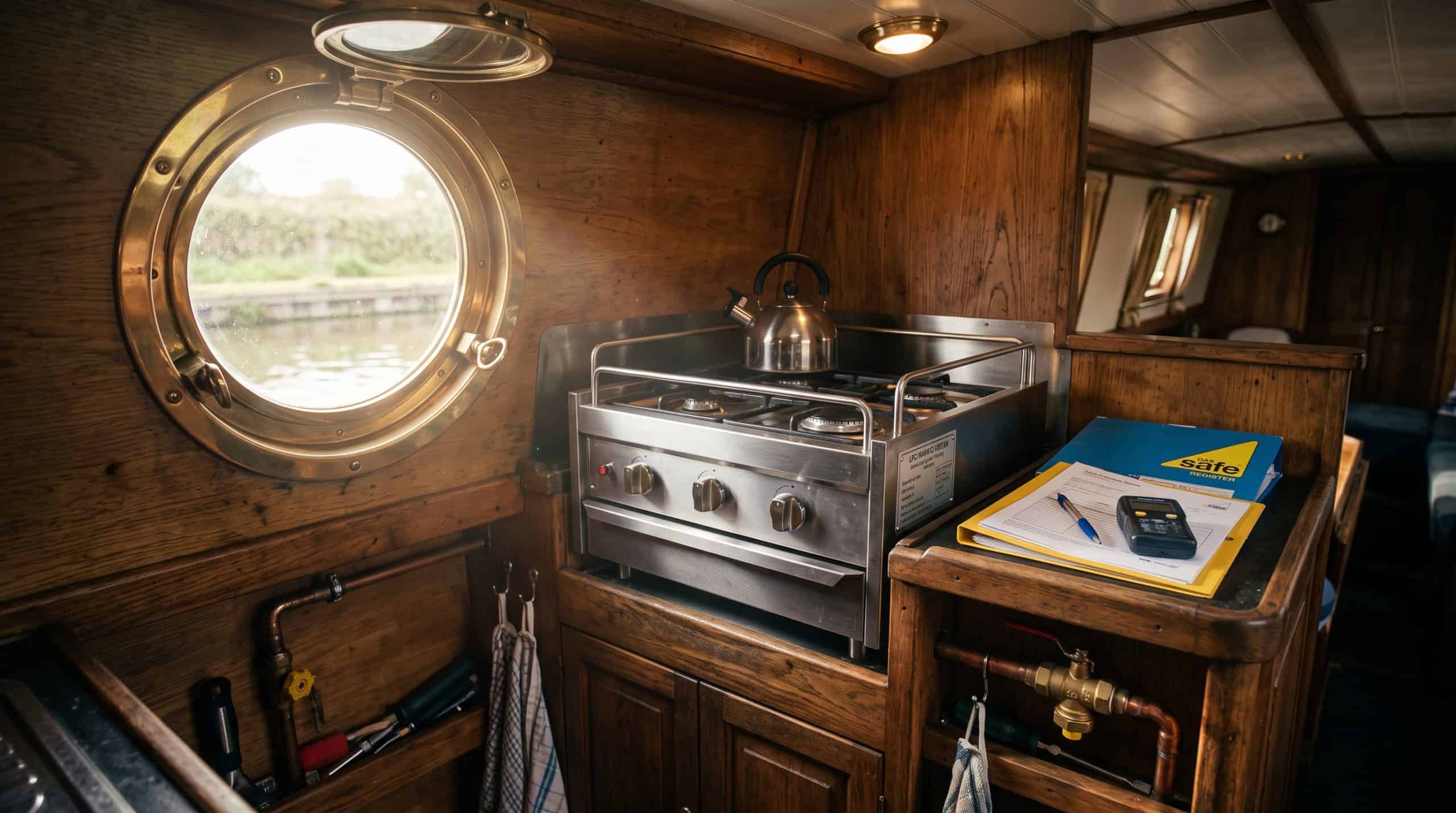



For decades, boat owners, builders, and marine gas engineers turned to familiar brand names like Thetford for galley cookers and hobs, and Alde for central heating. Chandleries sold them off the shelf, and engineers routinely fitted them across inland waterways and coastal vessels alike.
However, over the last few production cycles, manufacturers have quietly dropped any mention of boats from their appliance manuals—almost exclusively without informing sellers and installers. Combined with the recent update of BS EN ISO 10239, this has created a critical compliance crisis: many widely used LPG appliances are no longer approved by their manufacturers for installation in boats, rendering them legally non-compliant for new installations.
Whether you are planning a new boat build or refitting a galley, this regulatory shift directly dictates what can legally be installed on your vessel.
The Legal Hierarchy: Standards vs Regulations
To understand why these popular appliances can no longer be signed off on boats, we have to look at the direct link between statutory UK law and marine technical standards.
Under UK law, the Gas Safety (Installation and Use) Regulations 1998 (GSIUR) apply to inland waterway craft:
- GSIUR 1998 Regulation 5(3) gives technical standards statutory force:“No person shall carry out any work in relation to a gas fitting … otherwise than in accordance with appropriate standards …”
- GSIUR 1998 Regulation 2(1) defines gas fittings:“‘gas fittings’ means … appliances designed for use by consumers of gas …”
For small craft and recreational vessels, the “appropriate standard” mandated by law is BS EN ISO 10239.
What the Marine Standard Demands
The latest revision, BS EN ISO 10239:2025, makes manufacturer intent the absolute legal benchmark for compliance:
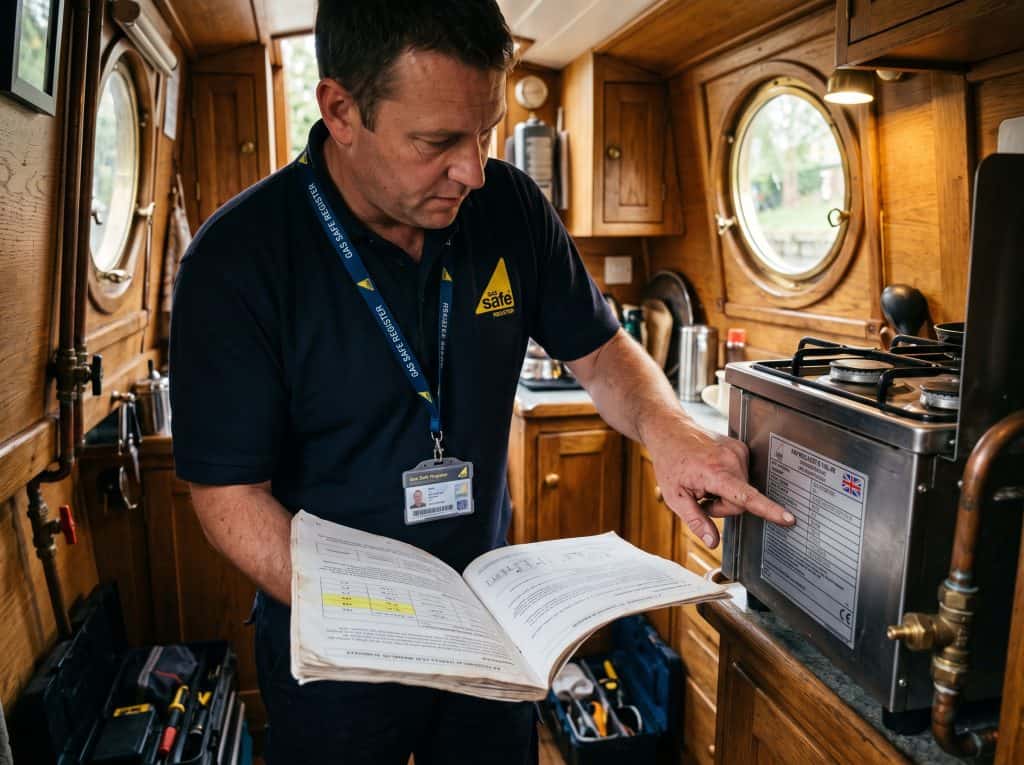
- Clause 7.1 states: “Only appliances manufactured for use with LPG in a marine environment shall be installed in the LPG system. They shall be fitted in accordance with the manufacturer’s instructions for installation in craft.”
The legal reality is unambiguous: if an appliance manual does not provide explicit instructions for installation in craft, or explicitly restricts the unit to land vehicles, a boat GasSafe registered engineer cannot legally sign off on its installation.
What Changed: The Industry-Wide Scope Shift
Older appliance revisions across the leisure sector occasionally included generic, catch-all references to boats. Over recent years, however, major manufacturers have systematically rewritten their documentation to align strictly with land-vehicle directives.
Why has this happened? It comes down to disproportionate compliance costs and liability risk. Road leisure vehicles represent the vast majority of sales volume for European appliance manufacturers. Because marine standards require distinct, costly testing—covering vessel motion, heel angles, marine corrosion, and specialised ventilation—it is no longer commercially viable for manufacturers to maintain dual testing files for small marine markets. Consequently, corporate insurers and legal teams have advised manufacturers to write craft completely out of their documentation to eliminate marine liability.
Common Catch-Outs for Installers and Owners
- Widely Used Cookers, Hobs, and Ovens (e.g., Thetford Triplex, Duplex, Caprice, Topline, and 330/345 series): Current installation manuals across these mainstream ranges state explicitly: “The appliance is only meant for installation inside a caravan, camper or holiday home.” They are certified solely to road-vehicle standards with zero marine scope. Regardless of how chandleries catalogue them, they carry no valid manufacturer approval for craft.
- Central Heating Boilers (e.g., Alde Compact 3030 / 3030 Plus): While older boilers (such as the 3010) historically included boats, modern revisions like the 3030 have restricted their declared scope strictly to land-based recreational vehicles (caravans and motorhomes).
- Instantaneous Water Heaters and Generic Hobs: Various European water heaters and drop-in hobs frequently fitted to narrowboats now certify strictly against domestic or static caravan standards, omitting the dedicated marine draft diverters and vessel installation directives required for craft.
Expert Insight: When an LPG installation is challenged during an insurance claim or technical dispute, investigators look straight at the manufacturer’s published manual. If the documentation restricts the appliance to land-based vehicles, the installation fails statutory compliance, regardless of how neatly it was fitted.
Fully Compliant Marine Alternatives
Compliant LPG cooking, heating, and hot water options where manufacturers have actively certified their units under marine standards remain readily available for vessels :
- Galley Cookers: The UK-manufactured 4500 series by Leisure Products / LP Bolton (sold under brands like Voyager, Neptune, Pacific, and Tasman) is the primary off-the-shelf choice fully certified under BS EN ISO 10239. These units come with dedicated vessel-fixing instructions, sea rails, and gimbal options. While a handful of continental marine brands exist, the 4500 range remains the only widely stocked, fully compliant cooker family readily available through mainstream UK chandleries.
- Blown-Air Space Heating: The Propex Heatsource HS2000 and HS2800 blown-air systems are fully approved for vessels when installed using the official Propex Marine Through-Hull Fitting Kit.
- Water Heating: Morco instantaneous LPG water heaters (such as the room-sealed Morco EUP11RS) provide compliant hot water solutions supported by official manufacturer guidance and dedicated flue arrangements for craft installations.
A Note on Private Leisure Craft “Exemptions”
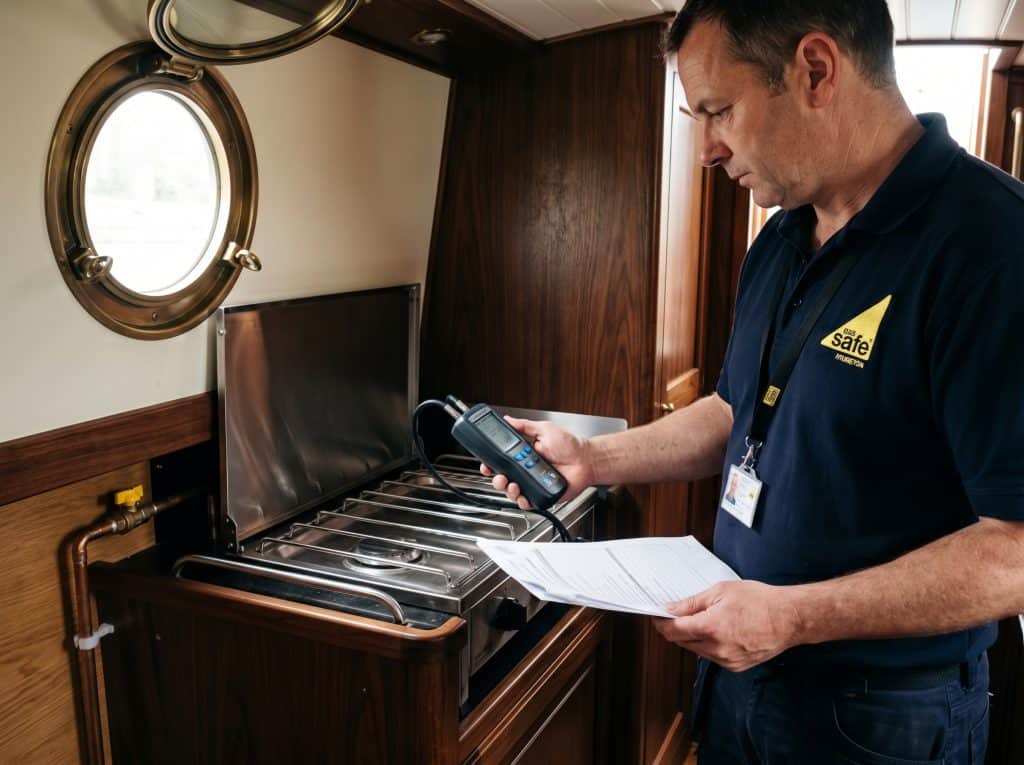
It is sometimes argued that purely private, non-residential leisure craft fall outside certain statutory enforcement scopes of GSIUR. However, treating this technicality as a loophole is a dangerous false economy. Vessel usage is fluid—a weekend boat can quickly become a liveaboard, instantly bringing it under full statutory regulation.
Furthermore, statutory exemptions do not eliminate legal or financial liability. While professional engineers remain bound by a statutory duty of care under the Health and Safety at Work etc. Act 1974, private owners face personal civil liability and strict contractual terms. Most marine insurance policies explicitly require all appliances to be installed correctly and in accordance with manufacturer instructions. Because the normative standard—BS EN ISO 10239—applies to small craft universally with no distinction between residential and leisure use, fitting an out-of-scope appliance provides insurers with legitimate grounds to contest or repudiate a claim. Relying on an academic exemption argument after an incident will shield neither an installer nor an owner from rejected claims or serious legal exposure.
The Boat Safety Scheme (BSS) Misconception
The Boat Safety Scheme (BSS) is a vital public safety framework—the inland boating equivalent of an MOT—designed to establish essential minimum safety baselines to prevent fires, explosions, and pollution on shared waterways. It plays an indispensable role in allowing navigation authorities (such as the Canal & River Trust and Environment Agency) to license vessels safely.
However, a common misconception is that a BSS pass equals full technical and regulatory compliance across the board. The BSS is a third-party, risk-assessment inspection focused on public safety and basic installation integrity; it is not designed to audit individual manufacturer installation manuals or certify adherence to BS EN ISO 10239. A valid BSS certificate does not mean an appliance has been fitted within its manufacturer-approved scope, nor does it override GasSafe rules. While a BSS certificate is mandatory for keeping your boat licensed, it will not shield an installer or vessel owner from civil liability, statutory enforcement, or rejected insurance claims if an out-of-scope appliance causes an incident.
The Bottom Line
Under GSIUR Regulation 5(3) and BS EN ISO 10239:2025, an engineer’s sign-off depends entirely on the manufacturer’s scope. If the manufacturer’s manual excludes boats or fails to provide explicit installation instructions for craft, the unit cannot be legally installed on water.
Always verify the manufacturer’s installation manual before purchasing any LPG appliance for your vessel.