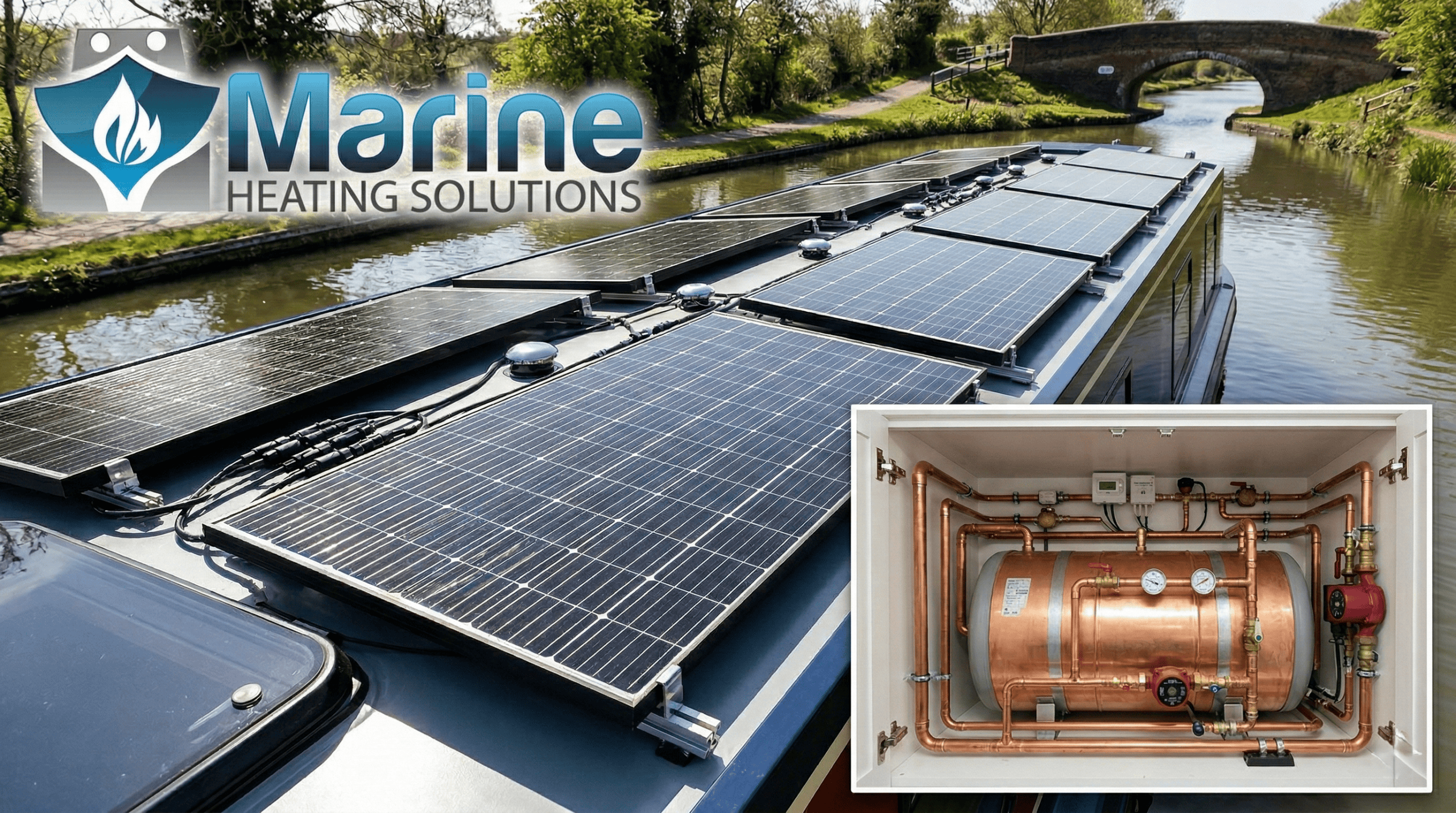


If you use solar power on the inland waterways, you’ve likely noticed a frustrating trend: by midday in the summer, your batteries are “full,” and your solar controller throttles back. Meanwhile, you’re still firing up your LPG boiler or diesel heater just to get hot water for a shower.
That “idling” solar energy is a wasted resource. By installing a Solar Energy Dump, we can harvest that excess power and divert it directly into your existing calorifier. It’s an efficiency upgrade designed to keep your gas cylinders full and your diesel tank topped up for longer, following the Canal & River Trust’s guidance on greener boating.
How it Works: Harvesting the Excess
The goal of a solar dump isn’t to replace your heating system, but to augment it. We use the programmable intelligence of a high-end MPPT controller to detect when your battery bank no longer needs a charge. Instead of letting the panels go dormant, the system “dumps” that current into your water tank’s immersion heater.
This setup works in perfect tandem with your current 12V or 24V supply and your existing heating—whether that’s an LPG boiler, a diesel heater, or a solid-fuel backboiler.
The “Throttled” Specification
To protect your batteries and ensure a steady, reliable heat, we don’t just “throw” the switch. We use a “throttled” approach to limit the draw to roughly 500W (approx. 45-50 Amps). This ensures your solar array and battery bank can keep up with the demand in real-time.
| Component | Specialist Specification |
| Solar Input | 3 to 5 Large Domestic Panels |
| MPPT Controller | Victron SmartSolar |
| Inverter | Victron Smart |
| The Switch | AC Contactor |
| The Throttle | Voltage Regulator |
The Silent Upgrade: Inverter Protection Standard electronic voltage regulators are cost-effective, but chopping the AC waveform can cause harmonic distortion and an annoying hum in high-end inverters. As a premium alternative, we can install a compact Variable Autotransformer. By stepping down the supply voltage cleanly through a physical transformer coil, it proportionally throttles the heat output of your calorifier’s existing element without needing to swap out elements or void warranties.
Safety & Calibration: The Engineer’s Approach
As a BSS Examiner, I see many DIY electrical projects that compromise boat safety. A solar dump involves integrating high-current DC with 230V AC, which requires precision fusing and heavy-duty cabling to meet Boat Safety Scheme (BSS) electrical standards.
1. The Fusing Hierarchy
We utilise a multi-stage fusing strategy to ensure the circuit is foolproof:
- DC Fuses: One for each panel string in a dedicated combiner box.
- MIDI Fuse: Protecting the connection for the Victron SmartSolar 150/100-Tr.
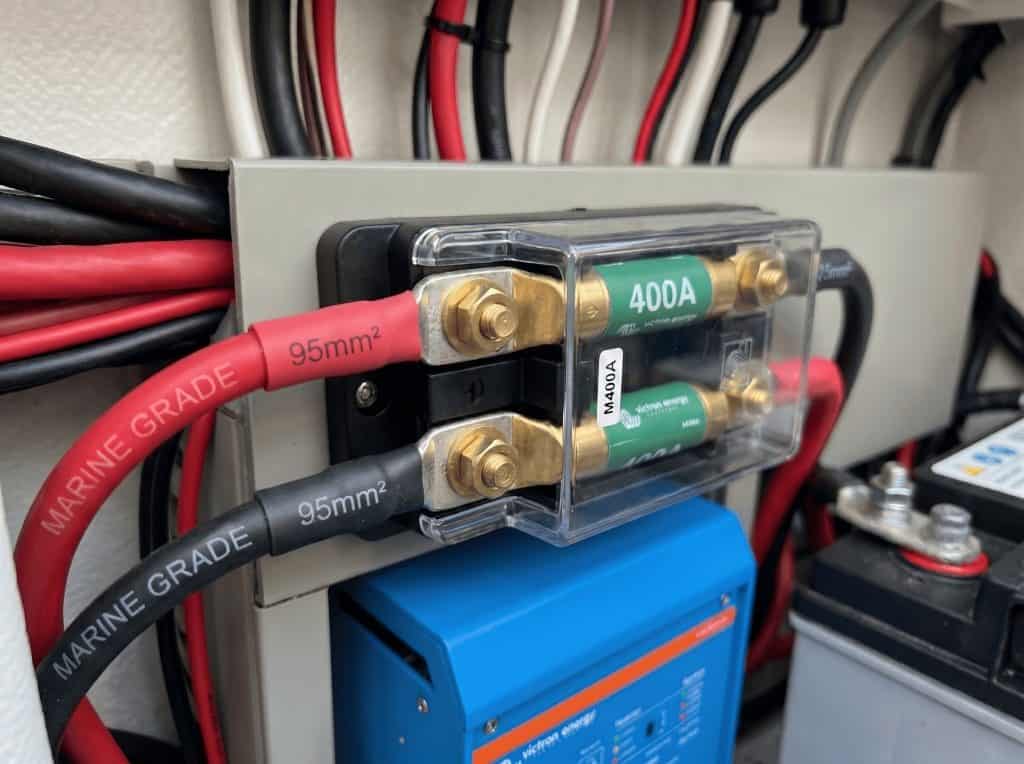
- Mega Fuse: Protecting the 95mm² copper cables between the battery and inverter.
- MCB: An AC breaker that physically limits the circuit, ensuring it only trips in the event of a major fault.
2. Set-and-Forget Logic
We program the Victron MPPT relay to trigger the dump only when the batteries are healthy, to ensure that your domestic power needs always come first. The moment a cloud passes or the sun sets, the dump shuts down automatically, preserving your battery bank.
Why Choose a Specialist Installation?
Plumbing a solar dump into a system already supported by marine diesel heating or LPG requires an understanding of how these systems interact. At Marine Heating Solutions, we don’t just fit pipes; we engineer integrated energy systems.
Because we are Gas Safe Registered, we understand the critical safety requirements for Marine LPG installations, ensuring your new solar dump works in harmony with your existing appliances. Our mobile marine engineers provide callouts almost nationwide, bringing 20 years of experience to your towpath to ensure your energy harvest is both safe and efficient.