When upgrading a marine heating system, the focus is usually on the new appliance—the BTU output, fuel efficiency, or the sleek finish of a new Morso or Thetford unit. However, a professional installation often involves structural changes that many “standard” engineers aren’t equipped to handle.
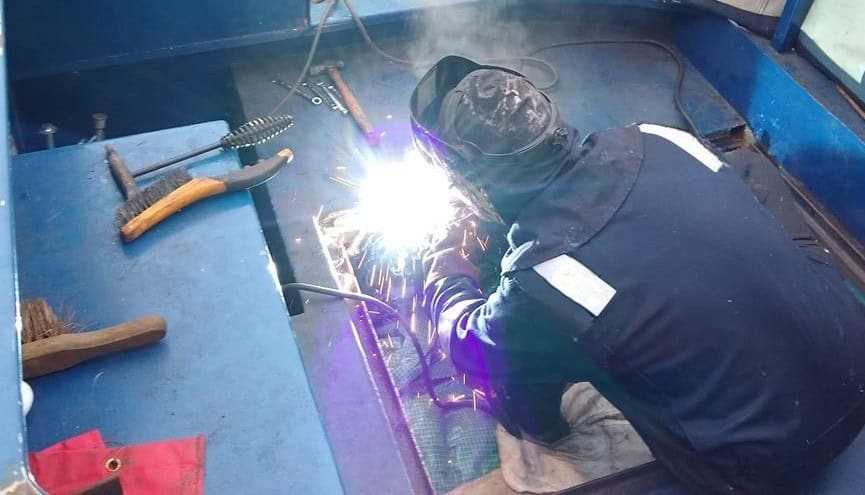
If you are moving a diesel heater or shifting a solid fuel stove to a more efficient location, you are inevitably left with a “ghost” of the previous system: a redundant flue hole or exhaust outlet. At Marine Heating Solutions, we provide integrated mobile welding services to ensure your vessel remains watertight and aesthetically sound during these transitions.
Closing the Gap: Why Patching Old Flues Matters
Moving a stove or heater often leaves an unsightly and potentially problematic hole in your cabin side or roof. While some might suggest a temporary “blanking plate” and sealant, as a specialist, I recommend a permanent steel repair.
On the inland waterways, moisture ingress is the primary enemy. A permanent weld ensures:
- Structural Integrity: Returning the cabin side or roof to a single, solid piece of steel.
- Preventative Maintenance: Eliminating the “trap” between a bolt-on plate and the hull where rust often starts unseen.
- Aesthetic Finish: Once ground flush and primed, the repair is invisible, maintaining the vessel’s lines and resale value.
Above-the-Waterline Maintenance & Repairs
It is important to clarify that while we provide expert welding services, we are not coded welders. This means our services are strictly for repairs above the waterline on the cabin and superstructure. We do not undertake structural hull over-plating or any work on the hull itself.
However, keeping the cabin “envelope” secure is vital for protecting your interior and your heating system. Before the winter sets in, we can assist with several critical maintenance tasks:
- Patching Redundant Openings: The most common requirement when relocating stoves or heaters. We permanently weld plates over old flue and exhaust holes to ensure the cabin remains weather-tight.
- Gas Locker Integrity: Ensuring the locker remains a solid, sealed environment to prevent gas pooling and ensure safety compliance.
- Handrail & Gunwale Seams: Fixing localised corrosion that can lead to water tracking behind cabin linings and damaging your insulation.
- Appliance Mountings: Ensuring that heavy stoves or diesel heaters are mounted to sound, stable steelwork to prevent vibration and movement.
By addressing these maintenance issues early, you ensure your heating system isn’t fighting a losing battle against damp air and cold drafts.
Why Choose a Multi-Disciplinary Specialist?
Most general welders don’t understand the specific risks associated with boat work—specifically the proximity of wood linings, 12v wiring looms, and gas lines.
As Gas Safe, OFTEC, and NCC Electrical certified engineers, we take a holistic approach to every job. We don’t just spark up the torch; we isolate gas systems, protect your sensitive 12v and 240v electronics from surge or heat transfer, and ensure that any welding performed is consistent with Boat Safety Scheme best practices. We bridge the gap between structural repair, electrical safety, and mechanical installation.